 English
 Français
  Deutsch
  Español
  Italiano
 How to pick your Canary island
Fuerteventura, Lanzarote, Tenerife or Gran Canaria: which fits your level, season and travel style.
Read guide →
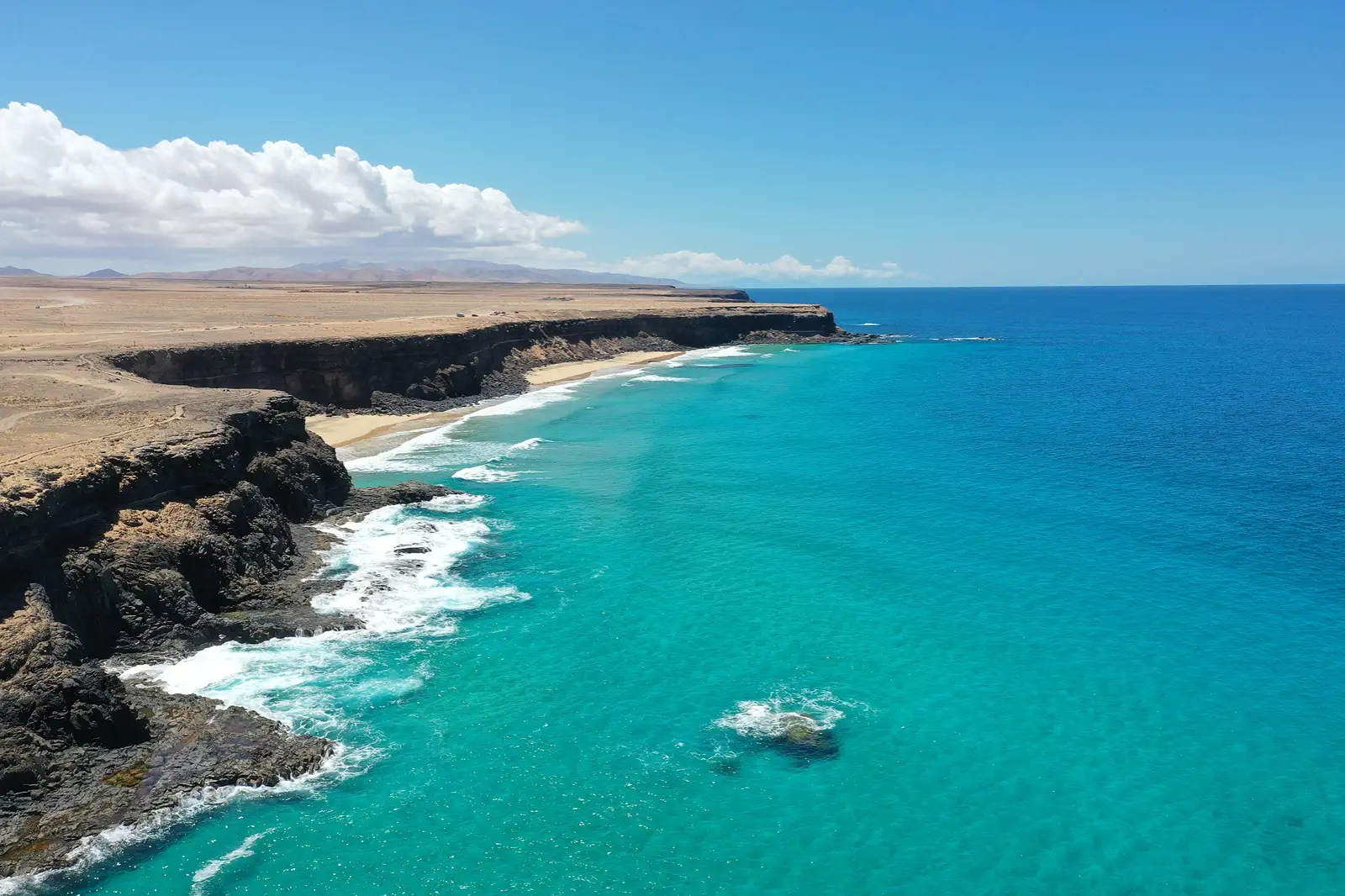
The wind island. 150 km of Atlantic coast, sand-bottom beach breaks in the north, reef setups around El Cotillo, and trade winds that almost never quit.
The wind island. 150 km of Atlantic coast, sand-bottom beach breaks in the north, reef setups around El Cotillo, and trade winds that almost never quit.
The action sits on the north shore. Corralejo and El Cotillo hold beginner-friendly beach breaks most of the year, with reef setups (Rocky Point, Hierro, Generosa) firing up when north swell hits in winter.
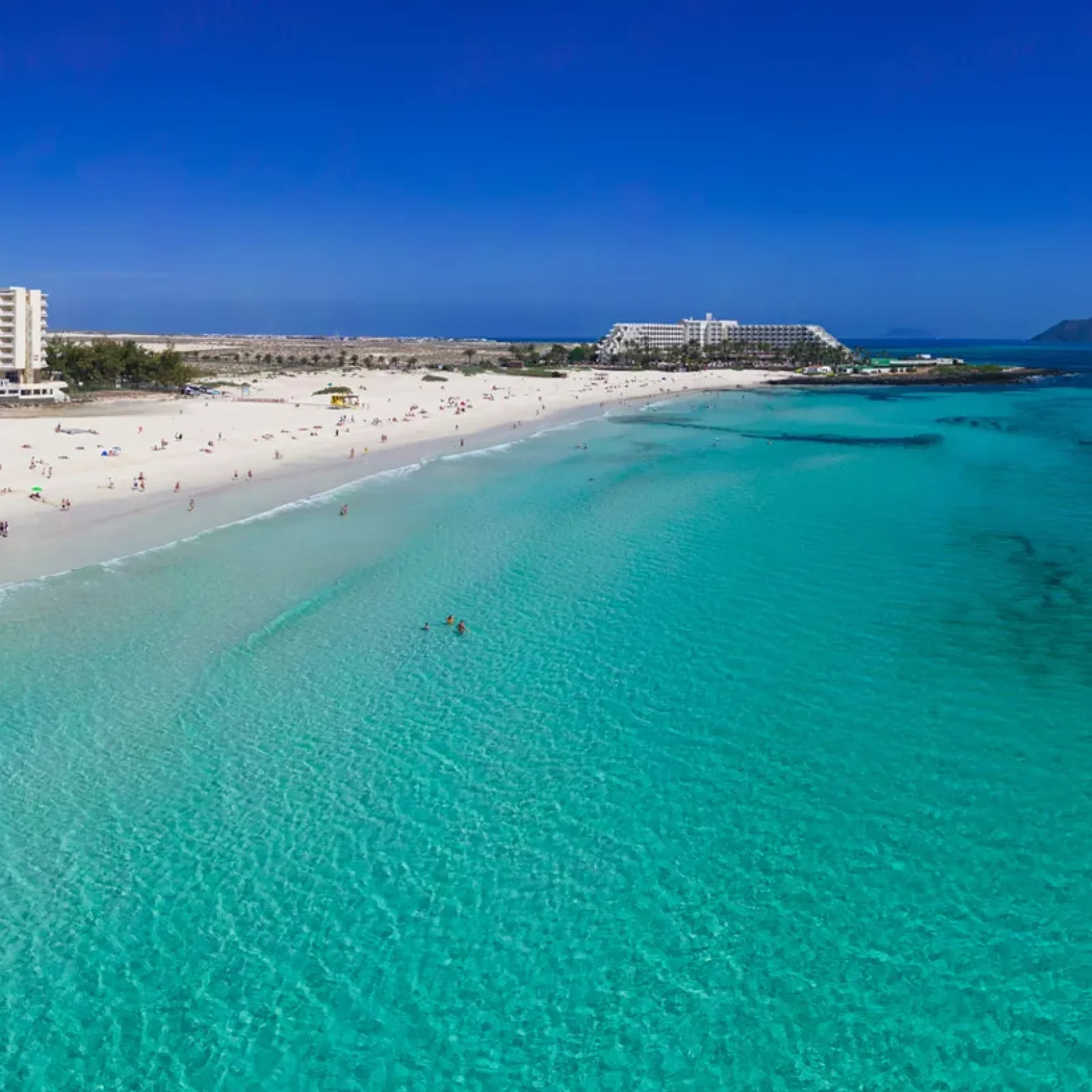
Down south, Costa Calma and Sotavento are kite and wind country. Constant alisios trade winds blow from June to September, the lagoon at Sotavento turns into a windsurf playground, and it stays warm enough to surf in board shorts.
The vibe is laid back. Volcanic interior, long white-sand beaches, low-density villages. Pack a kite or a wing if you have one, the wind will reward you.
Fuerteventura, Lanzarote, Tenerife or Gran Canaria: which fits your level, season and travel style.
Read guide →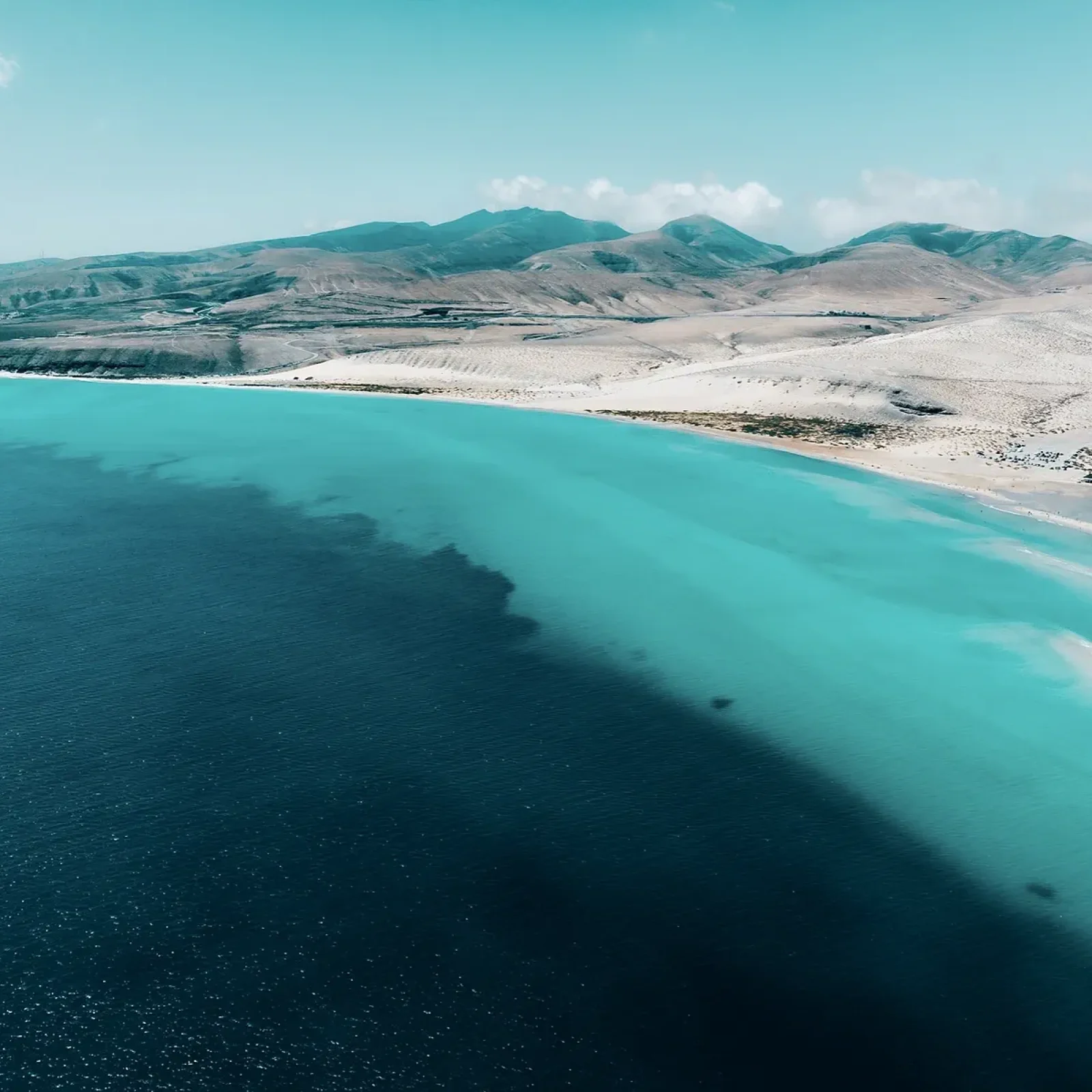
From beginner sand at Cotillo to heavy reef at Generosa, plus the alisios that shape the season.
Read guide →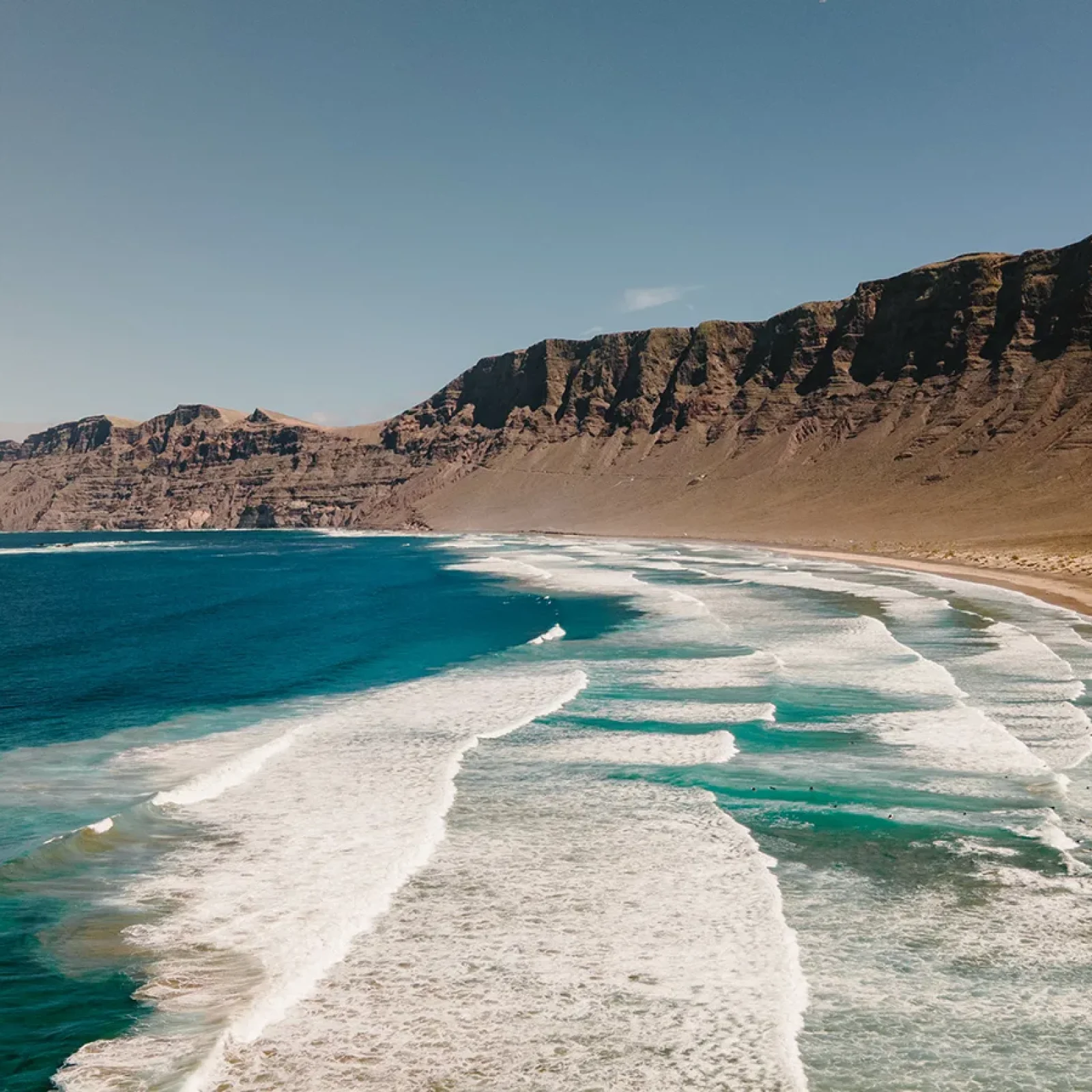
Famara beach for all levels, El Quemao for heavy left reef, plus seasons and safety.
Read guide →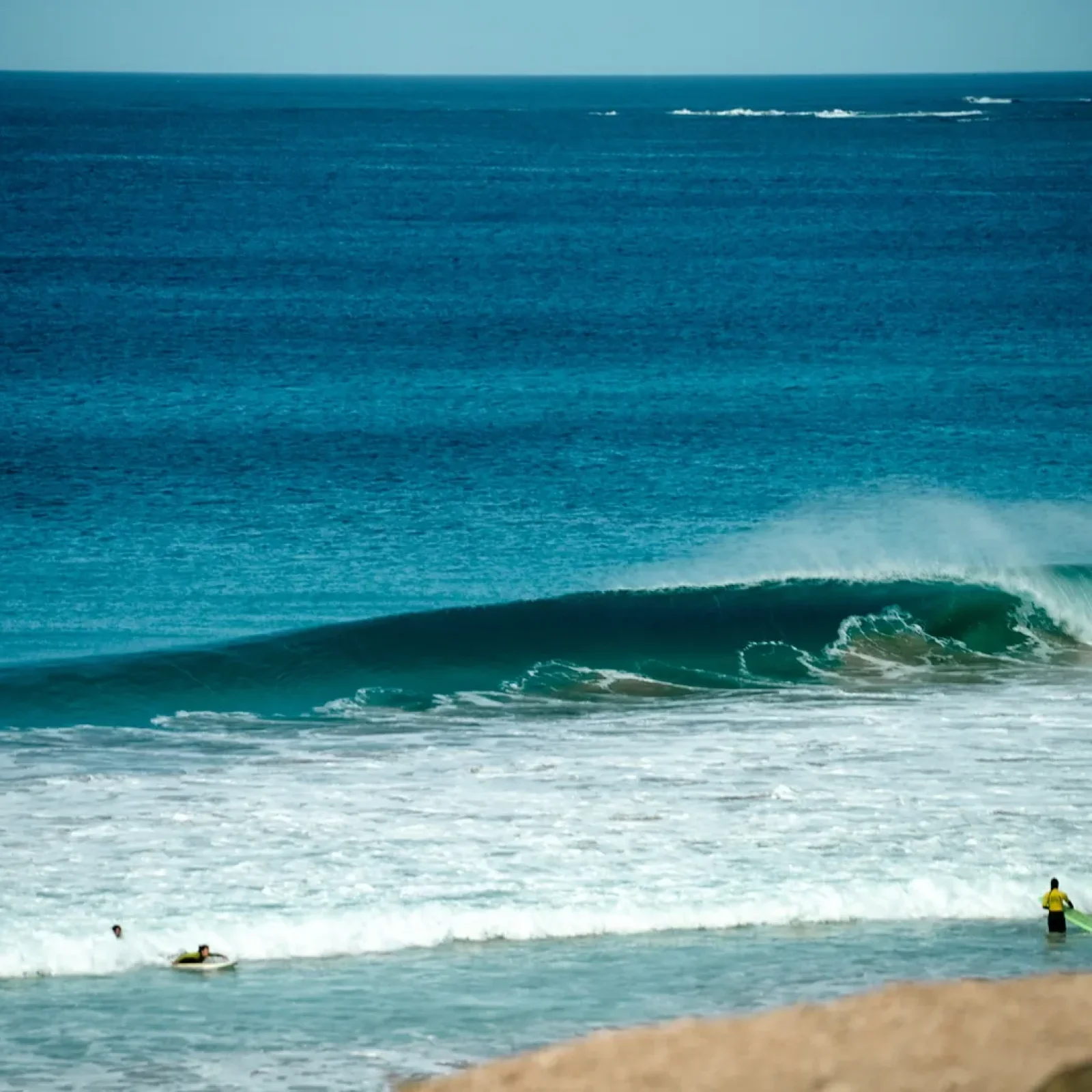
Sotavento lagoon for freestyle, Flag Beach for waves, trade-wind season from June to September.
Read guide →October to April for surf. June to September for wind sports. Water 19 to 23°C year-round.
From €150 / 2 nights at International Surf School Fuerteventura. Tapas + Tropical beer in El Cotillo: €15.
Fuerteventura airport (FUE), 4 hours from London, Berlin, Madrid. Rent a car: north shore spots need wheels.
Beginners: Cotillo beach, Glass Beach (Corralejo). Intermediate: Rocky Point, Punta Blanca. Advanced: Generosa, Hierro, Bubble.
North Atlantic winter swell (Oct to Apr). Trade winds (alisios) Jun to Sep, side-onshore most days, ideal for kites and wings.
Papas arrugadas, fresh vieja fish, cabra (goat) stew in Betancuria. Plenty of vegan-friendly spots in Corralejo.
Camps in the north shore: Corralejo, El Cotillo, and the surf villages between.
See Fuerteventura Surf CampsYes, one of the best in Europe. Cotillo beach and Glass Beach in Corralejo have long sand-bottom beach breaks with mellow whitewater rolls, surf schools running daily lessons, and a forgiving setup for first weeks. Avoid the north reefs (Rocky Point, Hierro) until intermediate level.
November to February for swell size and consistency. October and March are the sweet-spot months: solid waves, water still 20°C+, and fewer crowds. Summer (Jun to Sep) is small for surf but perfect for wind sports and learners.
Corralejo for the social scene and easy access to north shore spots. El Cotillo for a quieter village vibe and direct beach access. Lajares (10 min inland) for a relaxed surf-village base with cafes and yoga studios. Avoid the resort south unless you only kite.
Possible from Corralejo or El Cotillo (walk or bike to local breaks). For the reef spots on the north shore (Rocky Point, Hierro, Bubble), you need a 4x4 or shared transport. Most surf camps include daily transfers to the spots in the package.
A 3/2 from December to April. A 2mm shorty or board shorts from June to October. Water hits 23°C in summer. Bring booties if you plan to surf the volcanic reef at Hierro or Generosa.
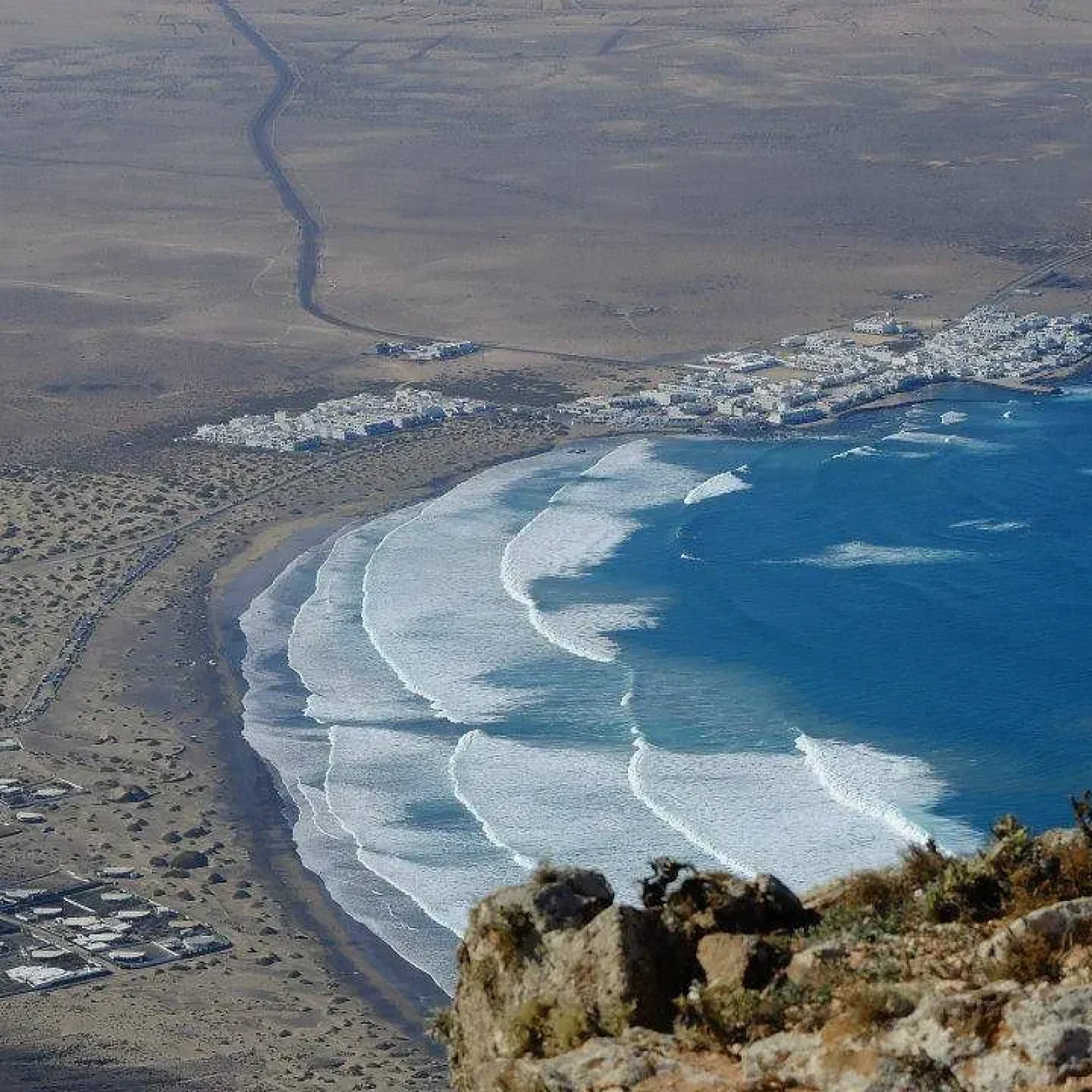
The surf island. Famara holds size all winter, El Quemao breaks on heavy reef, and the volcanic backdrop turns every session into a postcard.
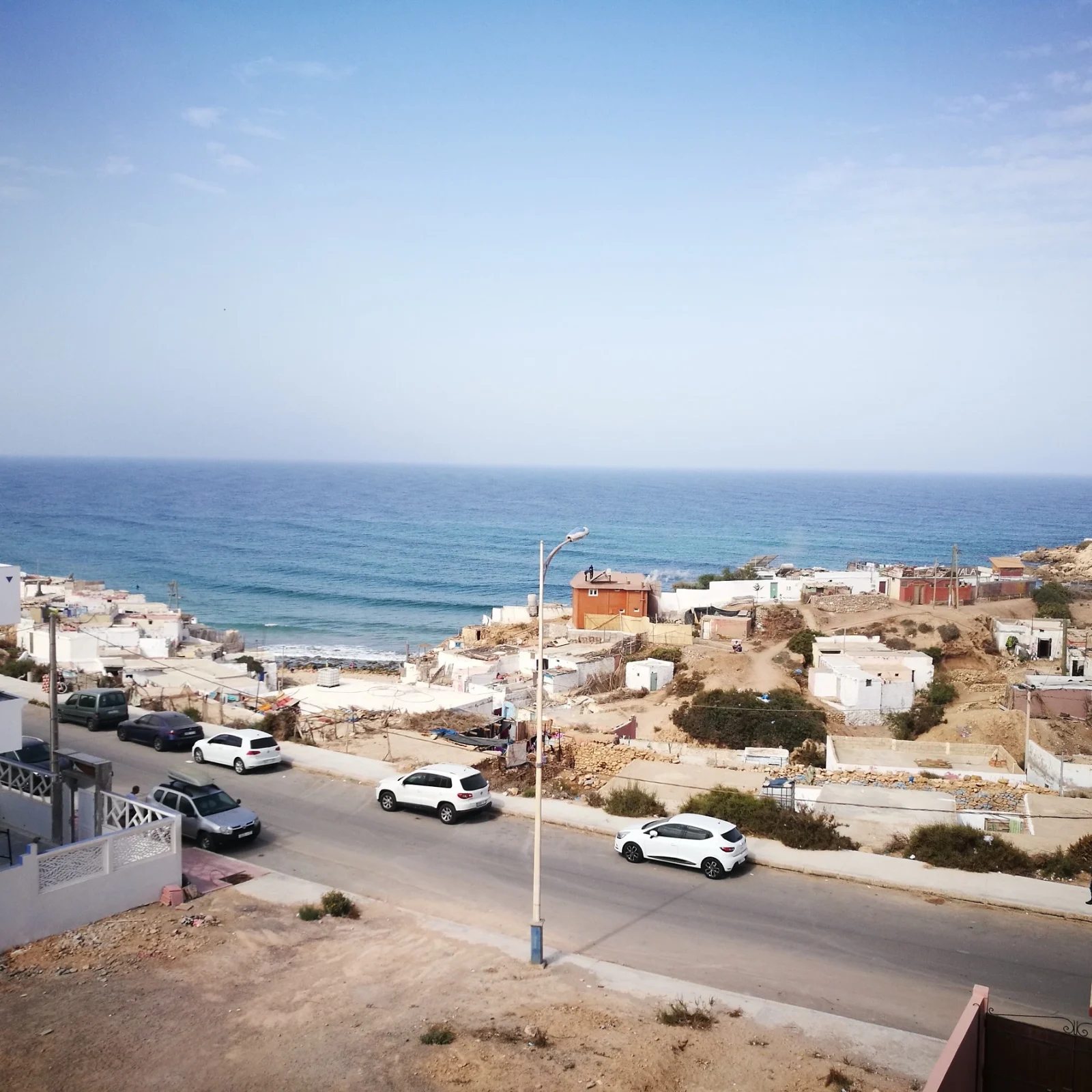
Africa’s longest right-hand wave wraps the bay for up to 800 metres. Cathedral Point sits next door for the heavier days. A tiny fishing village in between, two hours north of Taghazout.
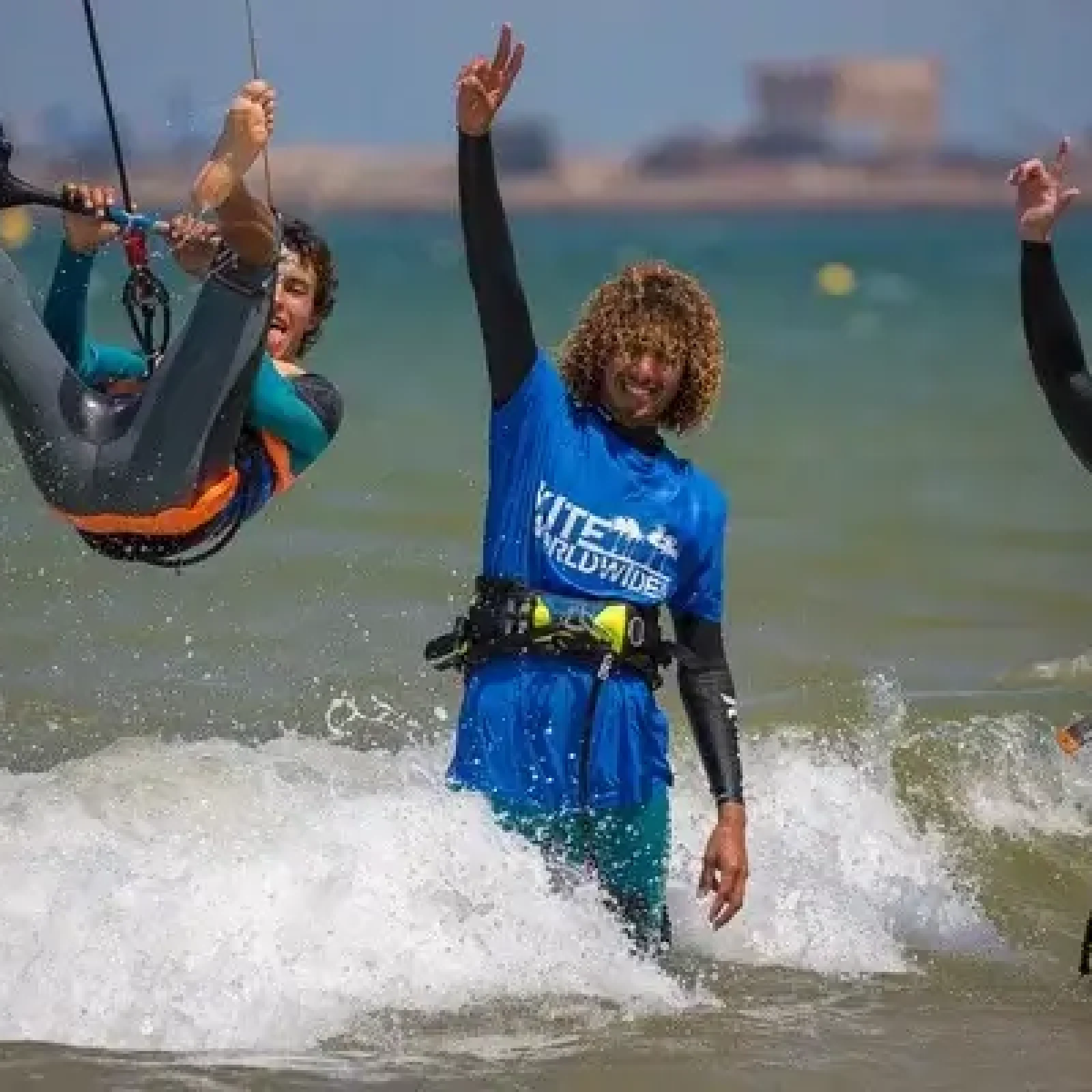
Beach breaks, year-round trade winds, and the quiet village of Sidi Kaouki just down the coast. Essaouira is where surf meets wind sports and Gnaoua music sets the evening tempo.
