 By Steeve
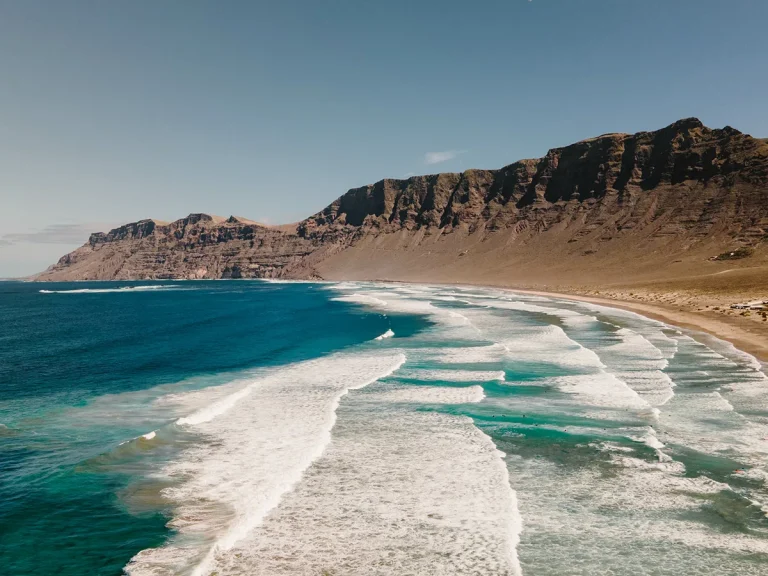
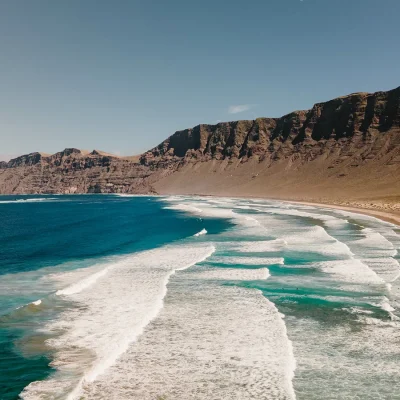
Fuerteventura runs on wind. 150 km of Atlantic coast, the steadiest forecast in Europe, and a north shore that has shaped a generation of European surfers. The action sits between Corralejo and El Cotillo, where 30 km of sand breaks and a string of lava reefs catch every north Atlantic swell from October to April.
This is where you surf. The stretch between Corralejo town and El Cotillo village holds the highest concentration of quality spots on the island. The drive from one end to the other takes 25 minutes. Pick a base in one of the two villages or in Lajares (10 minutes inland) and you can hit a different spot every day for two weeks without repeating.
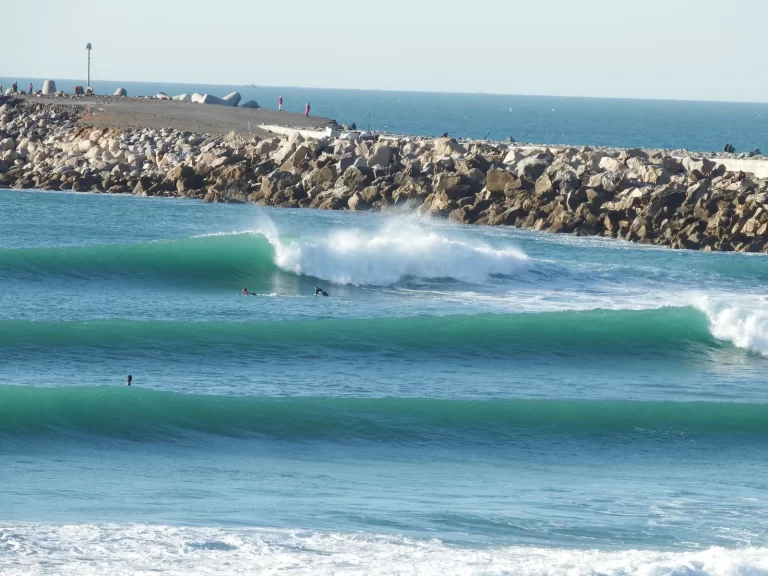
Long sand-bottom beach break inside the dunes-national-park stretch east of Corralejo. Mellow shoulder-high rolls, consistent across the year, surf schools running daily lessons. Best at low to mid tide. Bring water and shade: the dunes have zero infrastructure.
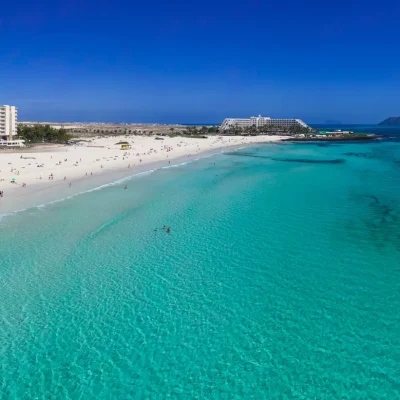
A protected pool at the south end of El Cotillo with the gentlest waves on the island. Whitewater rolls, no current, sand bottom. The dedicated learners’ zone. Walk to it from the village in 5 minutes.
The inside section of Punta Blanca breaks small enough for confident beginners. Sand-bottom, but watch for the lava ledge that defines the outer peak: stay inside until your level matches.
A reef break 10 minutes north of Cotillo town. Right-hand wave, lava bottom, fun shape on a clean north swell. Holds size up to head-high before it gets serious. Booties recommended for the entry and exit.
The main peak at Punta Blanca, north of Cotillo. Lava reef, right-hand, breaks fast and short on the takeoff. A natural step up from beach breaks for surfers ready to deal with a reef bottom.
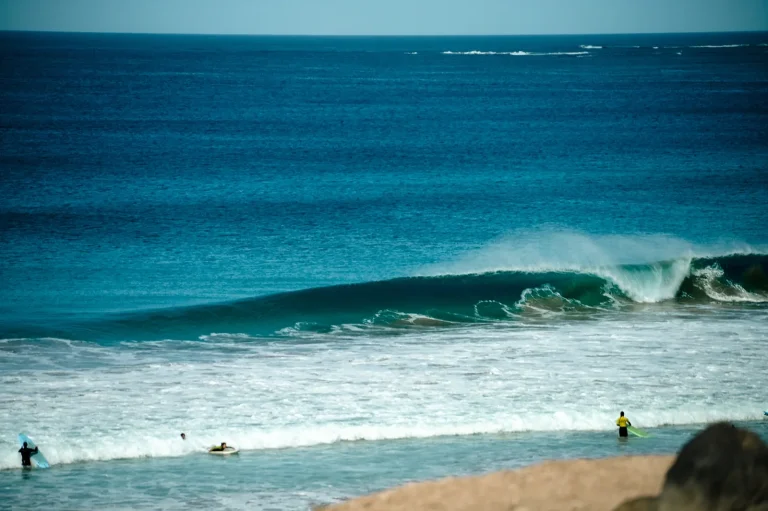
One of the famous reefs on the island. Right-hand wave breaking over shallow lava, fast and hollow, often crowded with locals. Best on a clean north or northwest swell at low tide. Bring spare boards.
A heavier left, often called the most powerful wave on the island. Short, thick, lava-bottom, with a current that pushes you toward the inside reef. For experienced surfers who know how to read this kind of wave.
A short right on a slab of reef, breaking close to the rocks. Probably the most photographed wave on the island. Surfers travel from across Europe to ride it in the right conditions. Crowded when it works.
The trade winds, called alisios in Spanish, are the island’s defining climate feature. They blow from the north-northeast at 15 to 25 knots from June to September, almost without interruption, dropping in the off-season but still common on summer-edge months.
For surfing, the trades are mixed. Side-onshore on most north-shore spots, they kill clean wave shape in the afternoon. The trick is to surf early: dawn patrol from 6:30 to 9:30 catches the cleanest water before the wind picks up.
For kitesurfing and wing-foiling, the trades are a gift. Fuerteventura has one of the most reliable wind seasons in Europe between June and September. Sotavento beach in the south becomes a flat-water playground (the Sotavento lagoon is a windsurf institution). Flag Beach in the north handles wave-riders.
For surf, October to April. November to February is peak: consistent head-high to overhead swell, mild air around 20°C, water still 19 to 21°C. October and March are the sweet spots if you want fewer crowds with slightly smaller waves. December and January get the biggest swell but also the strongest winds.
For wind, June to September. The alisios blow most days, water hits 22°C, and the surf goes small and clean enough for beginners. Costa Calma and Corralejo book out for wind-sport bookings.
Avoid late August and the first half of September if you want quiet beaches: that’s high tourist season.
The lava reefs at Hierro, Generosa, Rocky Point, and Punta Blanca will cut you. Wear booties on anything reef-bottom. The reef cuts are slow to heal in salt water: a small one becomes a problem after a week.
The currents on the north shore push west toward the open Atlantic on a falling tide. If you get into trouble, paddle parallel to the beach to escape, not into the swell.
The locals are friendly but expect basic respect: don’t drop in, don’t paddle inside, sit a wave out when it’s crowded. The reef spots have small lineups and a strong sense of who-belongs-where.
Yes, especially for beginners and intermediates. The north shore has one of the highest concentrations of quality surf spots in Europe, water stays above 19°C year-round, and there’s a strong network of surf schools and camps. Advanced surfers find serious reef setups at Hierro, Generosa, and Bubble.
The Cotillo Lagoon at El Cotillo for total beginners (protected pool, no current). Glass Beach in Corralejo for first-week learners after the lagoon. Both have surf schools running daily lessons in the dry season.
Wave period over 12 seconds usually means clean, long-range groundswell hitting the coast. Below 12 seconds the swell is wind-driven and choppy. Fuerteventura’s north shore needs a 12+ second period to fire up the reef breaks; below that the beach breaks still work.
Three things: lava reefs (wear booties, cuts heal slowly), currents (stay parallel to the beach in trouble), and the late-summer wind season (water sports yes, surf often not). Sunburn is a fourth: the trade winds mask UV intensity.
A 3/2 covers December to April. A 2 mm shorty or board shorts the rest of the year, when water sits at 21 to 23°C. Booties are essential for the reef spots.
Compare camps in Corralejo, El Cotillo, and Lajares on the Canary Islands surf camps directory. Or go deeper into the wider region:

 English
 Français
  Deutsch
  Español
  Italiano