 By Steeve
Lanzarote has one beach you can learn on, and a string of north-shore reefs that have made the island’s reputation. The surf is concentrated in the northwest corner: Famara village, the cliffs of Risco de Famara, and the lava-bottom setups within a 15-minute drive. If you’re willing to drive and to know your level, the island delivers more than its size suggests.
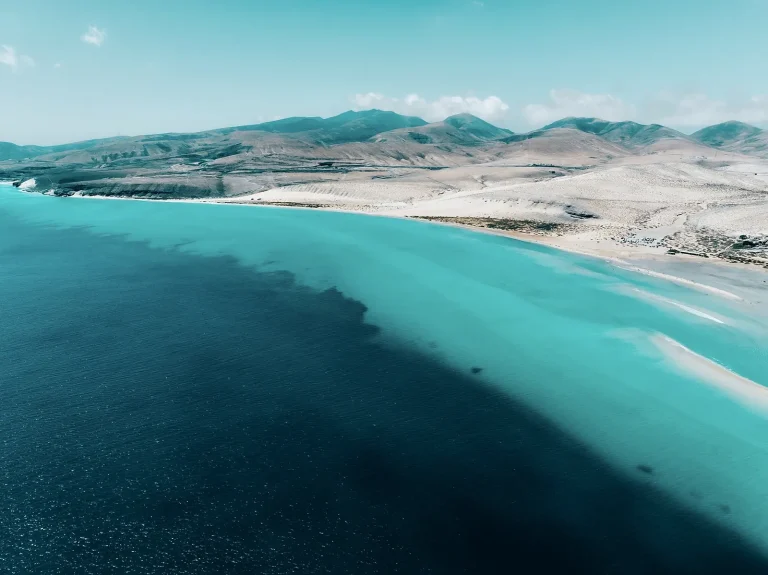
Caleta de Famara is a 6 km arc of sand below the 600-metre cliffs of Risco de Famara. It’s the island’s main surf town: a few hundred residents, a handful of camps and schools, no high-rises. The drive from Lanzarote airport takes 30 minutes.
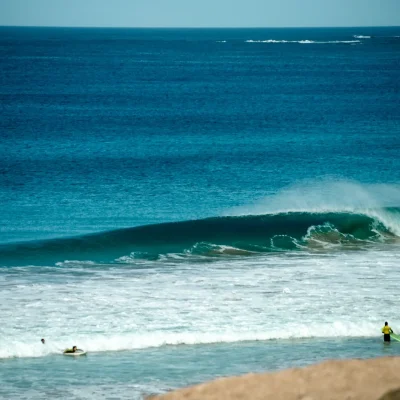
The beach itself works as a multi-tiered spot. The inside (closer to the village) breaks on sand with mellow whitewater that’s perfect for first weeks. The outside peaks (further along the beach toward the cliffs) hold size up to overhead, with a mix of left and right peaks depending on swell direction. Different sections suit different levels, which is why the schools and intermediate surfers share the same beach without much conflict.
The inside zone of Famara, in front of the village, is the standard learner’s setup. Long sand-bottom rolls, manageable currents, surf schools running daily lessons. Best at mid tide. Crowds peak between 10am and 1pm when the lessons go in.
The lagoon at the far west end of the beach (near the salt flats) gets even gentler waves on big-swell days, when the inside Famara washes out. Useful as a backup spot for total beginners.
Walk or drive 1 km along the beach toward the cliffs and you find the outside peaks. Both lefts and rights, sand bottom, breaking from chest-high to overhead. Less crowded than the inside zone (no schools out here). Best at low to mid tide. Bring a 7-foot board or longer.
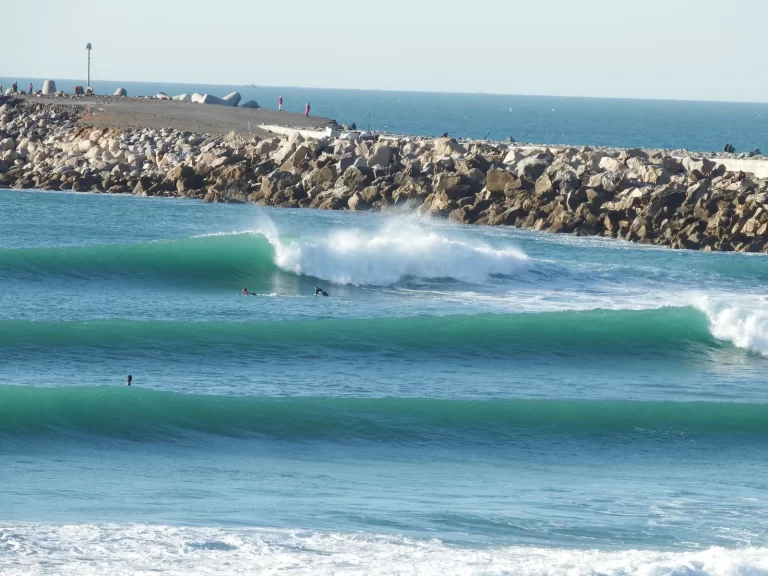
The point break at La Santa, 15 minutes east of Famara, holds the size when Famara closes out. Right-hand, sand-and-reef bottom, longer rides than most spots on the island. Crowds reflect the limited peak: don’t expect empty waves.
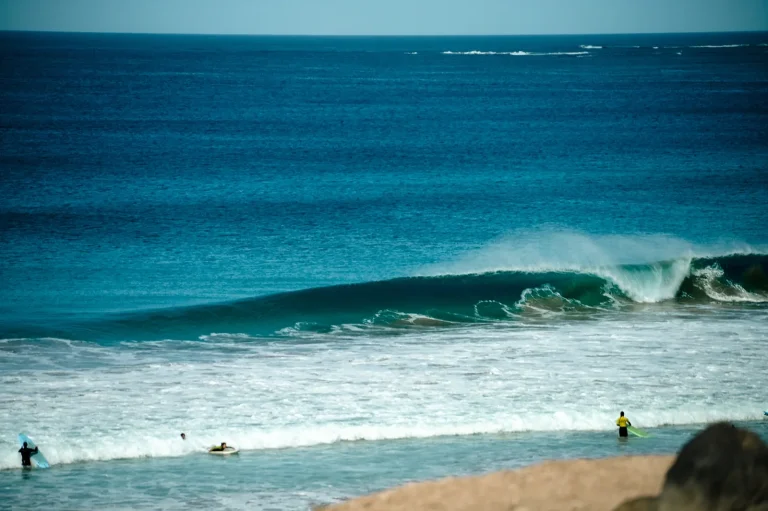
The island’s most famous wave. A left-hand reef on the north coast near La Santa village, often called “the European Pipeline” for its short, hollow, lava-bottom barrel. Best on a clean north or northwest swell at low to mid tide. Surfers come from across Europe in winter to ride it. Crowded when it works. Bring booties and a board you don’t mind losing.
A right-hand reef on the same stretch of coast as El Quemao, working on the same swells but less crowded because it’s harder. Short ride, fast section. Booties essential.
A more remote spot east along the north coast, requiring a longer drive and some scrambling to access. Works a few days a year on the right swell direction. Worth the effort when it lines up; pointless to chase.
For surf, October to March. November to February is peak: head-high to overhead swell on the reefs, consistent at Famara, mild air around 20°C, water still 19 to 20°C. December and January often deliver the biggest swells of the year but also bring stronger winds and bigger crowds at the famous spots.
October and March are the sweet-spot months for trip planning: smaller crowds, water still 20°C+, reefs still firing on most decent swells.
Summer (June to September) drops to small surf. The Famara beginner zone still works, but the reefs go quiet. The wind picks up on the north coast (lighter than on Fuerteventura), making it more comfortable for sunbathing and side activities than surfing.
The reefs at El Quemao, San Juan, and Boca del Mejillón break over shallow lava. Wear booties. The cuts from this rock are slow to heal in salt water and need cleaning after each session.
The Famara current pulls west toward the cliffs on a falling tide. Total beginners should stay close to the village end of the beach where the current is weakest. If you get pulled, swim parallel to the beach, not into the swell.
The lineup at El Quemao is small and local. Wait your turn, don’t drop in, and surf inside until you’ve earned the outside. The same applies at La Santa point. The schools at Famara have right of way on their teaching zones (marked with flags); give them space.
Lanzarote earns more interest than its surf scene alone justifies, because the volcanic landscape and architecture genuinely deliver. Timanfaya National Park (the volcanic plains in the south) is unlike anywhere else in Europe. La Geria’s volcanic vineyards produce a Malvasía wine you can taste at the cooperatives. The César Manrique foundation in Tahíche shows how the architect shaped the island’s visual identity.
For low-swell days, the basic loop is: morning surf at Famara if anything is breaking, drive to Timanfaya midday, taste wine at La Geria on the way back, dinner of fresh fish at La Santa harbour. Repeat as needed.
Yes, especially from October to March. Famara beach works for all levels, with a long sand-bottom main beach and outside peaks for intermediates. The north-coast reefs (El Quemao, San Juan, La Santa) hold size for advanced surfers when Atlantic winter swell arrives.
The inside zone of Famara beach, in front of the village. Long sand rolls, surf schools daily, manageable currents. The west-end lagoon near the salt flats is even gentler when Famara is too big.
It’s the nickname locals and visiting surfers use, and the comparison holds for the wave shape (short, hollow, fast over shallow reef). The volume of surf coming through is smaller than in Hawaii, and the swell window is narrower (mostly winter), but on a clean north swell at low tide, the wave delivers what the nickname suggests.
Yes if you want to surf reefs (El Quemao, San Juan, La Santa, Boca del Mejillón). The drives from Famara take 15 to 40 minutes. If you stay in Famara and only surf the main beach, you can walk to your sessions for the whole trip.
Famara for atmosphere and reef potential nearby. Corralejo (Fuerteventura) for variety of beach-break spots and a bigger town vibe. Both work for all levels. Famara wins if you want the volcanic-cliff aesthetic; Corralejo wins if you want spot diversity within walking distance.
Compare camps in Famara on the Canary Islands surf camps directory. Or go deeper:

 English
 Français
  Deutsch
  Español
  Italiano