 By Steeve
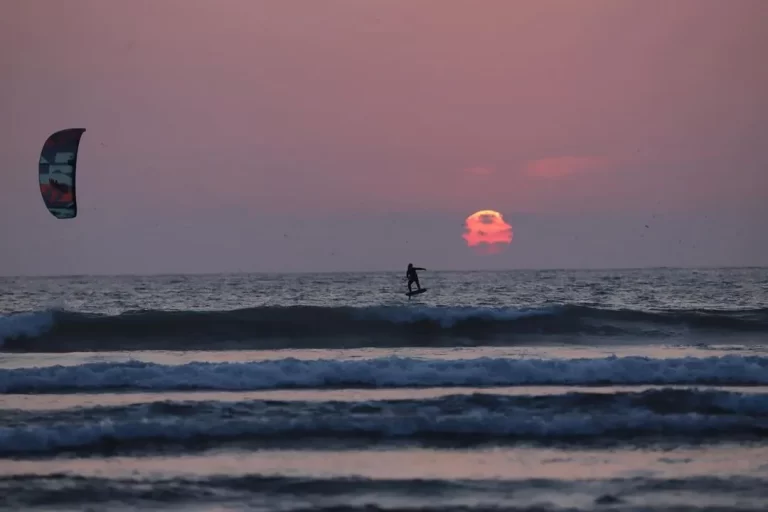
Fuerteventura is one of the most reliable kitesurf destinations in Europe. The trade winds (alisios) blow consistently from June to September, the south coast has a flat-water lagoon that hosts professional freestyle events, and the north shore mixes wave riding with manageable conditions for intermediates. The whole package fits within a 1-hour drive.
The alisios are the reason this island has a kitesurf scene at all. They blow from the north-northeast at 15 to 25 knots from June to September, almost without interruption. Off-season months (April, May, October) get the wind on about 60 percent of days. Winter is too unreliable to book a kite trip around.
The wind shape is consistent: morning starts light, builds through midday, peaks 3pm to 6pm, drops by sunset. This pattern means schools can plan reliable afternoon lessons across the season.
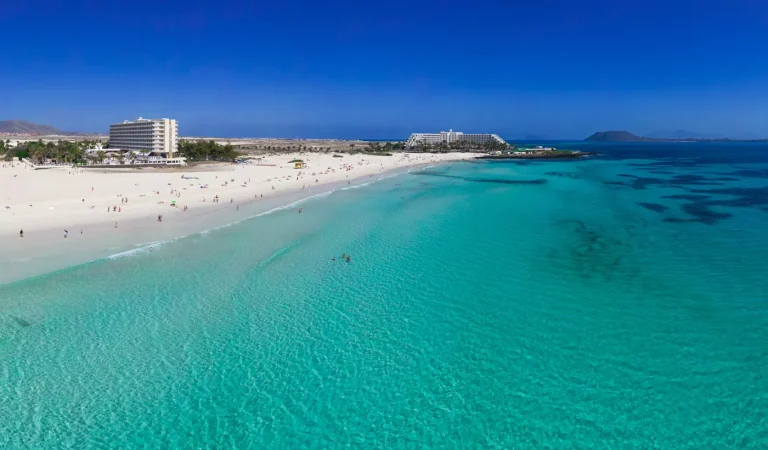
The signature spot of the island. A 5 km flat-water lagoon protected by a long sand bar, working on incoming tide. Knee-to-waist-deep water at low tide, up to chest at high. Perfect for freestyle, beginners building confidence, and downwinders.
Sotavento hosts the Fuerteventura World Cup (PKRA/GKA freestyle and wave events) each July. The lagoon’s wind is side-onshore from the left, ideal for jumping. Schools rent gear and run lessons at the beach.
10 minutes north of Sotavento. Open ocean conditions with consistent side-onshore wind. Smaller crowds than Sotavento, more chop. Wave and freestyle mixed. Most of the resort area’s kite traffic launches here.
The main kitesurf spot in the north, 5 km east of Corralejo town. Side-onshore wind, manageable wave conditions (small to head-high), and easy launching from the sand. Suits intermediate kiters who want wave practice without the commitment of dedicated reef spots. Schools and rental kiosks on the beach.
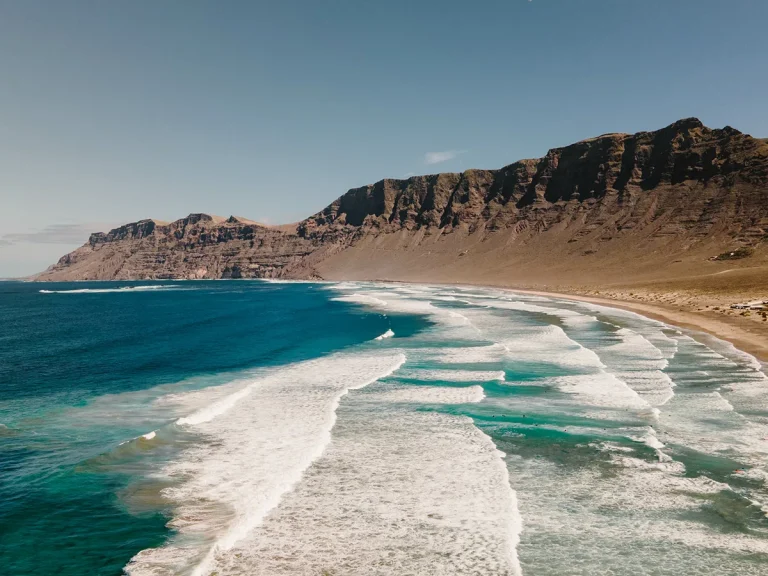
The neighbouring beach to Flag, technically inside the dunes national park. Bigger waves, less protection, more advanced. Same wind, harder conditions. Booties optional but smart for the lava patches.
Total beginner. Book a course at Sotavento. The lagoon’s flat shallow water lets you stand up and try things without consequences. Most schools offer 3 to 5-day beginner packages with gear.
Intermediate. Sotavento for jumps and tricks, Flag Beach for first waves. Both spots have rental gear if you don’t want to ship boards.
Advanced. Sotavento for freestyle progression, Glass Beach or further into the dunes for wave-riding in side-shore. The local wave-riders sometimes head south to Punta Pesebre when conditions line up.
For pure kite, July and August. The trades blow daily, water hits 22°C, and you can plan a week of guaranteed sessions. The downside is high-season crowds and pricing.
June and September are the sweet spots. Wind still consistent, fewer people, lower hotel rates. Water still 21°C.
May and October are bookable but riskier. The wind drops by 30-40 percent of days. Book flexible.
November to April is off-season for kite, but a small wind-savvy crew rides the winter storm fronts. Not recommended unless you’re already familiar with the spots.
The Sotavento lagoon is forgiving but can get crowded with hundreds of kiters at peak season. Keep visual contact with other riders, especially downwind. The sand bar emerges at low tide; check the schedule before launching.
The north shore (Flag, Glass Beach) has stronger currents and waves. Don’t kite alone in big conditions, and stay within sight of the rental kiosks.
Local schools enforce zones: beginner area, freestyle area, downwind launch. Follow the marked boundaries. The same applies at Flag Beach where surfers and kiters share the lineup; respect the surfers’ wave-priority etiquette.
Fuerteventura has a dense network of certified IKO and VDWS schools clustered around Corralejo (north) and Costa Calma (south). Typical course rates run €60-€90/hour for private lessons, €30-€50/hour for group lessons. Full beginner course (10-12 hours over 3-5 days) runs €350-€500.
Rental gear: €80-€120 per day for kite + board + harness. Schools include gear in lesson packages. If you bring your own gear, factor in airline kite charges (€80-€150 each way is typical).
Yes, and it’s one of the best European destinations for it. The trade winds blow consistently from June to September, the south coast has a flat-water lagoon for freestyle (Sotavento) and the north has wave-friendly spots (Flag Beach, Glass Beach).
Fuerteventura. The combination of the Sotavento lagoon (for learning and freestyle) and Flag Beach (for waves) plus the trade-wind reliability makes it the strongest of the four main islands. Gran Canaria has Pozo Izquierdo, a windsurf legend, but more advanced.
Depends on what you want. South (Sotavento, Costa Calma) for flat-water freestyle, beginners, and the safest learning conditions. North (Flag Beach, Glass Beach) for waves, side-shore wind, and integration with the surf scene. Many trips do both.
Total beginners are welcome at Sotavento (best learning lagoon in Europe). Intermediates can rent and ride solo at Sotavento or Flag. Advanced kiters have access to the entire south coast plus the north-shore wave spots.
Three things: the Sotavento sand bar at low tide (don’t get stranded), crowds at peak season (visual contact with riders downwind), and the stronger north-shore conditions if you’re not ready for waves (start at Sotavento, build up to Flag).
Compare surf and kite camps on the Canary Islands camps directory. Or go deeper into Fuerteventura:

 English
 Français
  Deutsch
  Español
  Italiano