 English
 Français
  Deutsch
  Español
  Italiano
 Surfing in Sri Lanka: A Complete Guide to the East and South Coasts
A practical guide to surfing Sri Lanka across two coasts and two seasons. Arugam Bay, Ahangama, Weligama, Mirissa, Hikkaduwa. When to go, where to stay, what it costs.
Read guide →

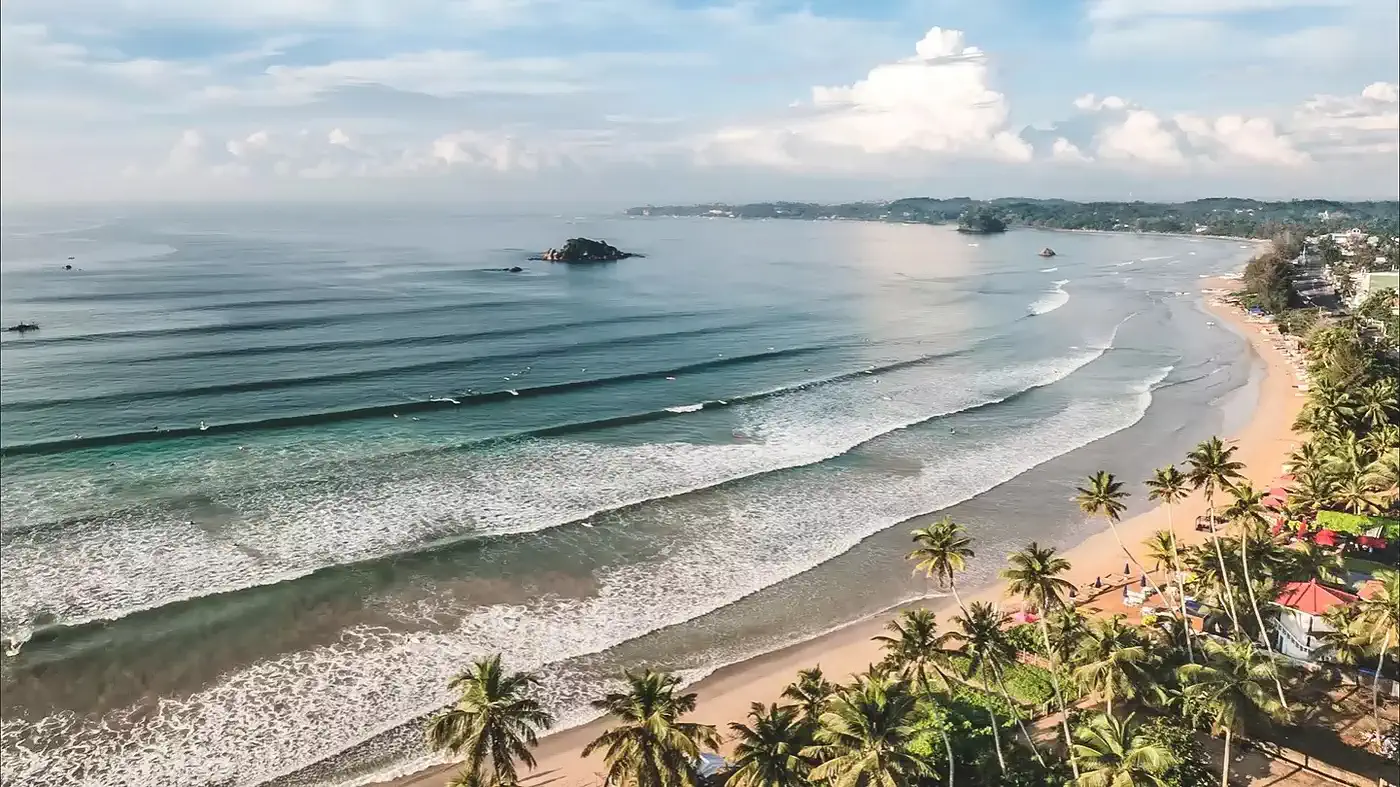
Sri Lanka is the warm-water surf country that works year-round. The southern coast handles the European winter season from November to April. The east coast opens up from April to October. Two coasts, two seasons, the same island.
Sri Lanka is the warm-water surf country that works year-round. The southern coast handles the European winter season from November to April. The east coast opens up from April to October. Two coasts, two seasons, the same island.
The south coast around Ahangama, Weligama and Mirissa is where most surfers start. It is friendly, beginner-strong, with sandy beach breaks and gentle reef points spread over 20 kilometres. Soft-board lineups stay calm even in peak season. Local surf schools teach in three languages and the food culture is one of the easiest in Asia for new travellers.
The east coast is a different country. Arugam Bay is remote, simple and entirely surf-driven. Main Point, Peanut Farm, Whiskey Point and Elephant Rock sit within a 10 kilometre tuk-tuk ride. The wave quality climbs as the season builds through May, peaks in July and August, and tapers by October.
Tuk-tuks to the lineup, king coconuts at the kade, an elephant on the road between Pottuvil and Panama. Sri Lanka is the easiest tropical surf trip to plan and one of the hardest to forget.
This hub maps the spots, the seasons, the camps and the practical side of planning. The four-article cluster below goes deeper into each region.
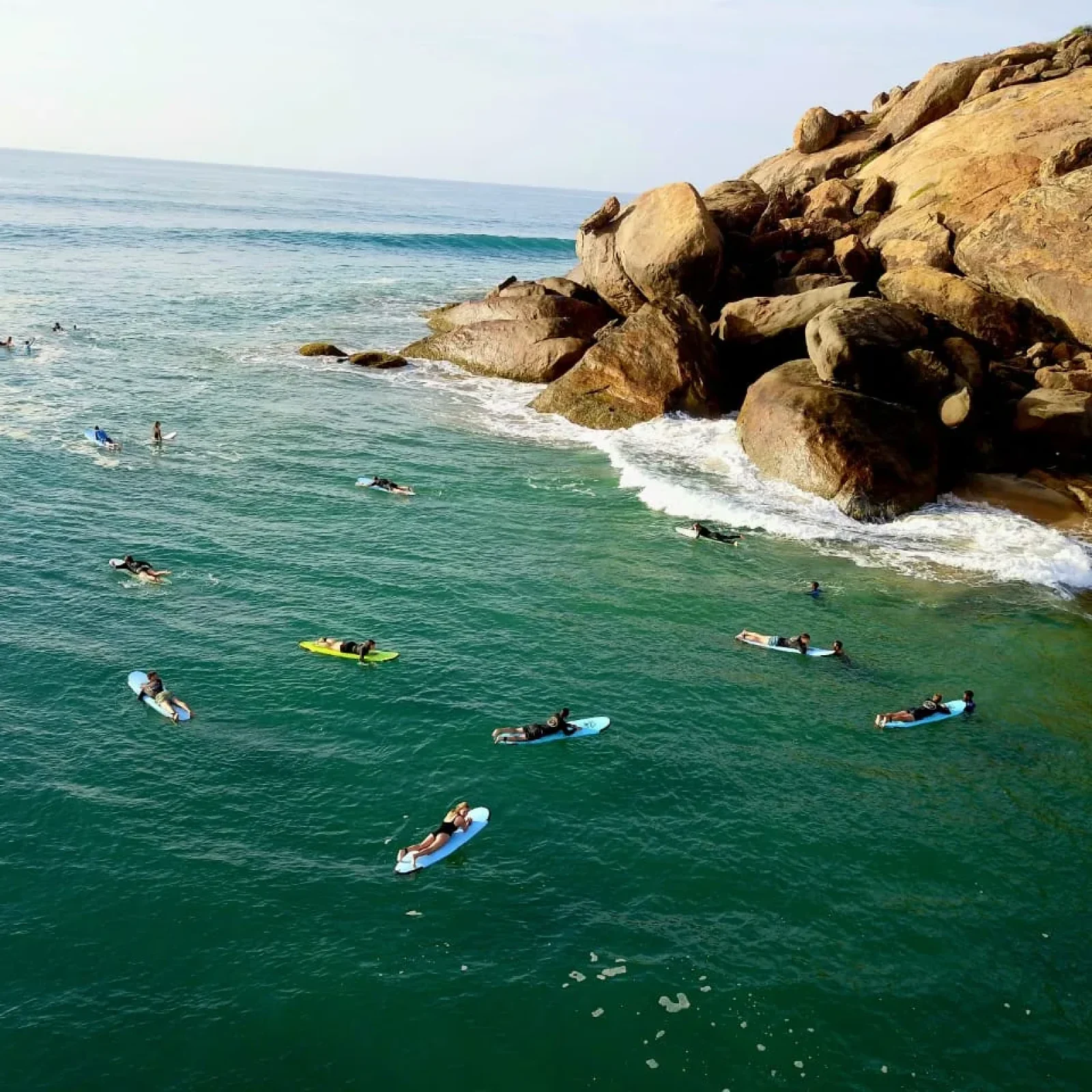
A practical guide to surfing Sri Lanka across two coasts and two seasons. Arugam Bay, Ahangama, Weligama, Mirissa, Hikkaduwa. When to go, where to stay, what it costs.
Read guide →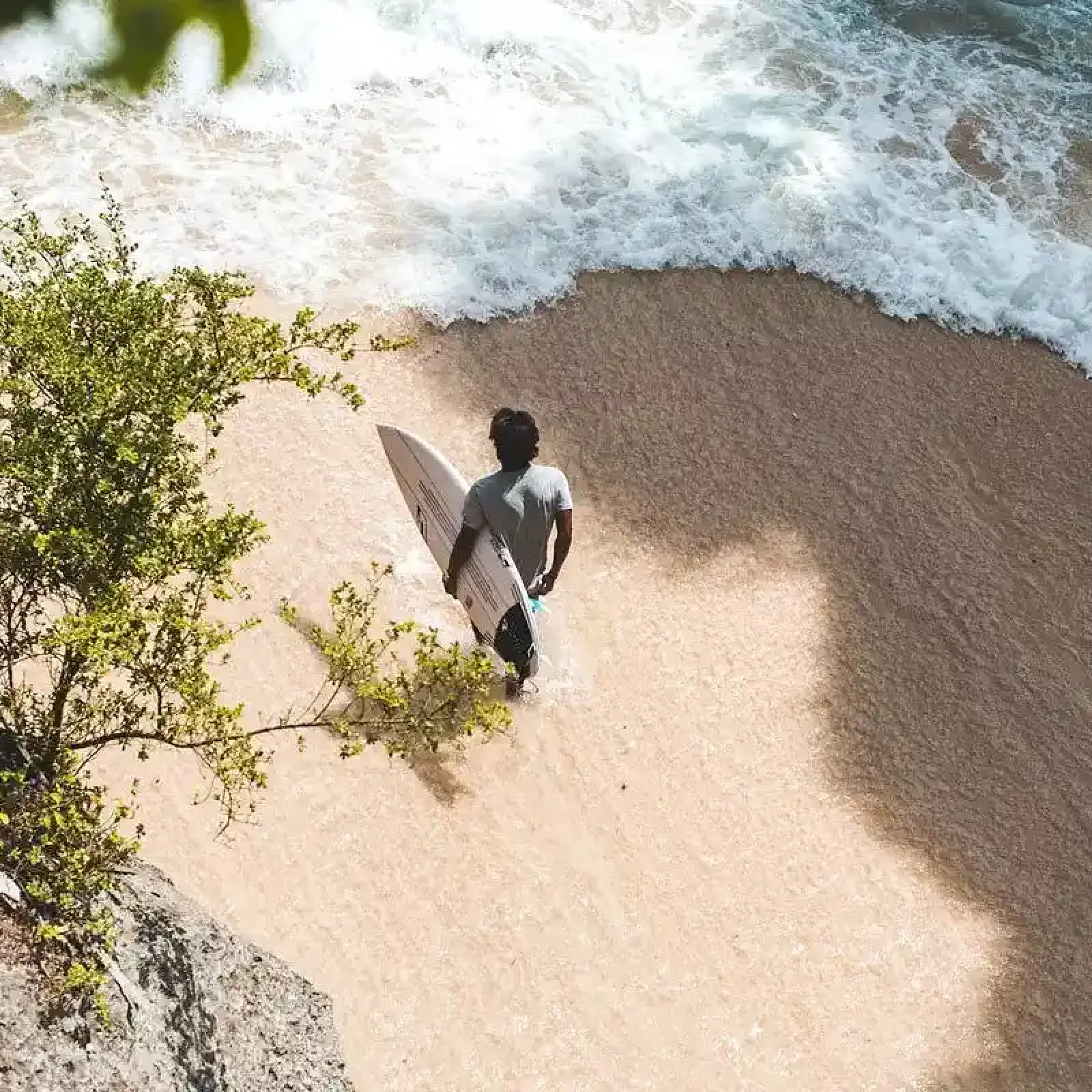
A practical guide to surfing Sri Lanka's south coast. Weligama, Ahangama, Mirissa, Hikkaduwa, Midigama. The beginner zone, the improver belt, and how to plan a trip.
Read guide →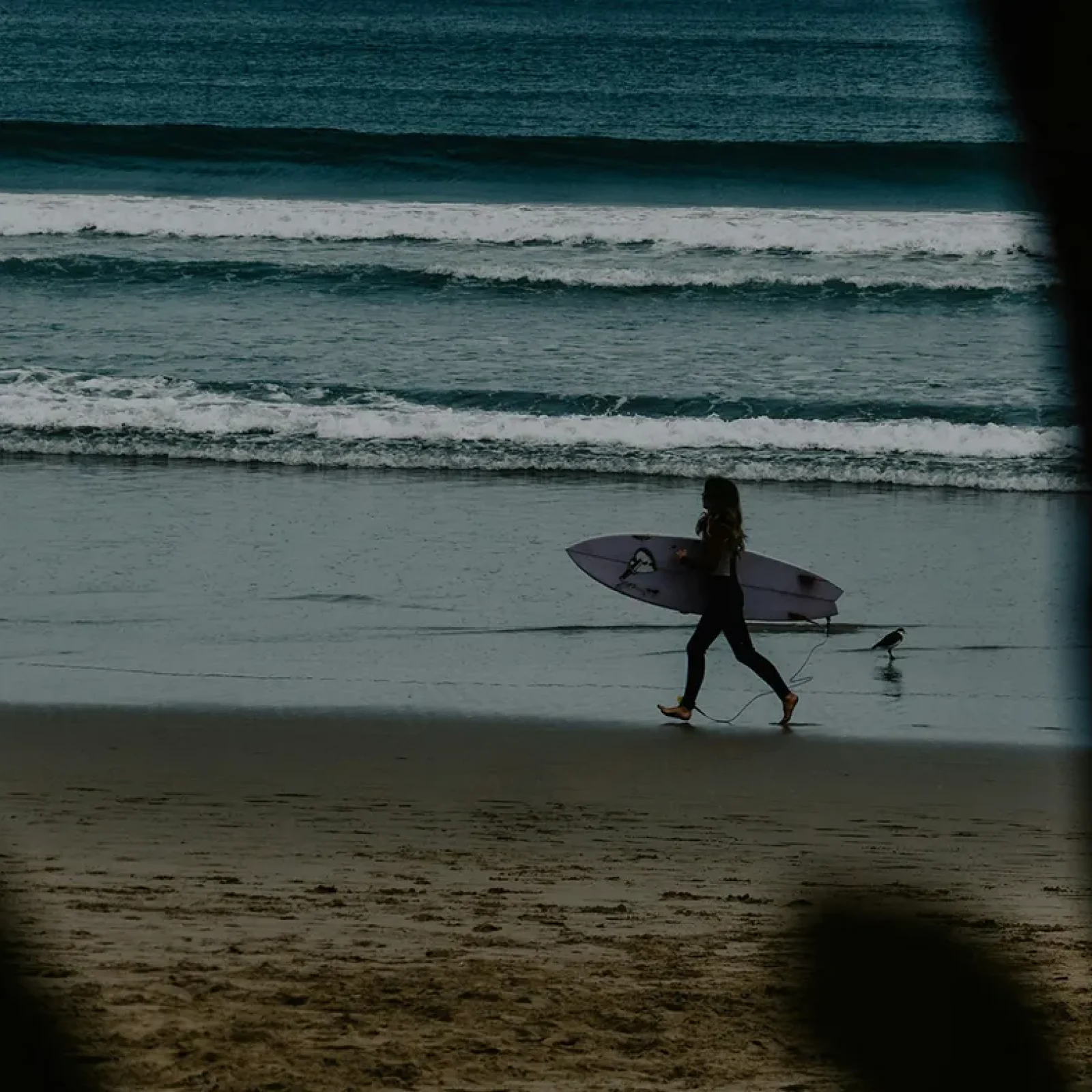
A practical guide to surfing Arugam Bay, Sri Lanka's east coast surf town. Main Point, Whiskey Point, Peanut Farm and Elephant Rock from May to September.
Read guide →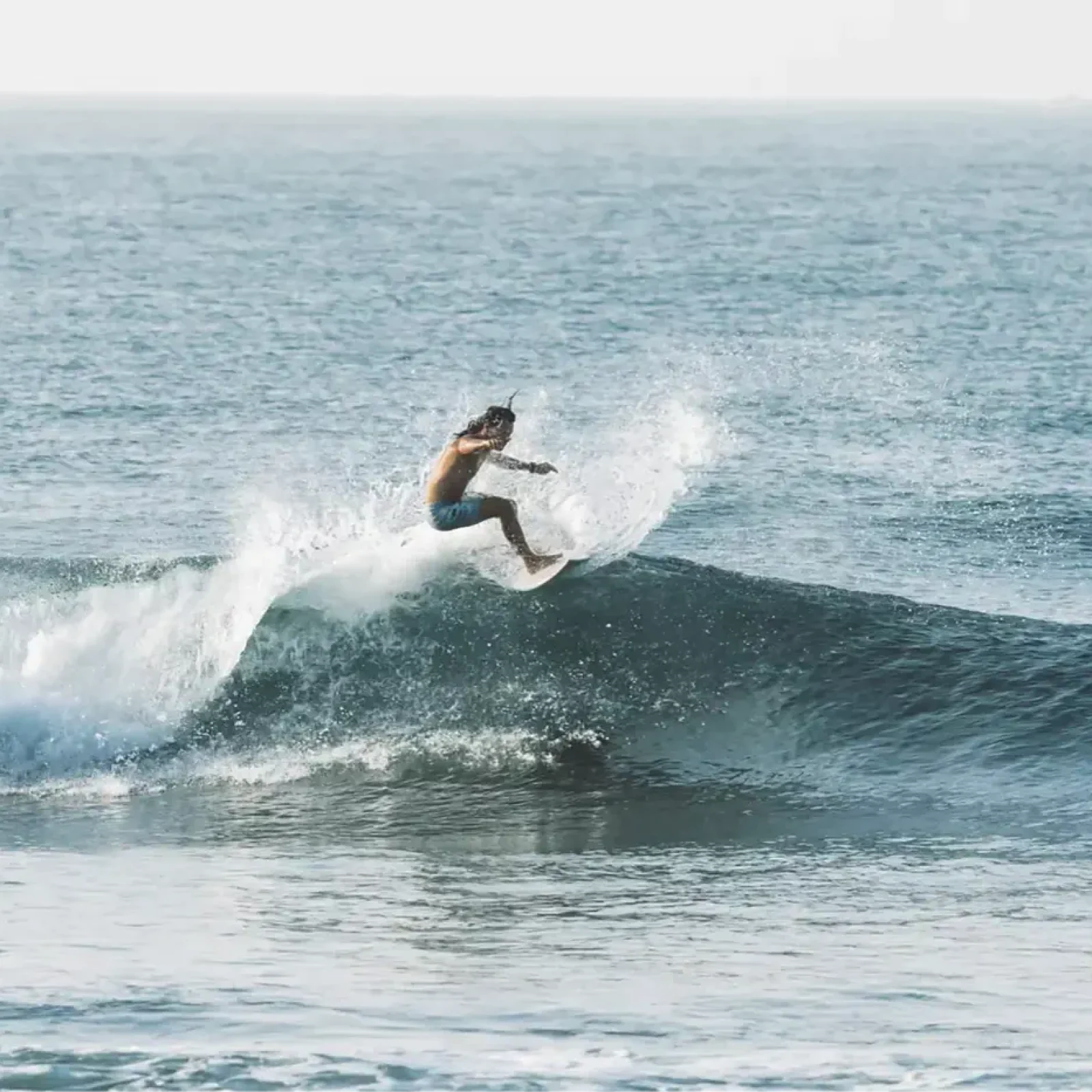
When to surf Sri Lanka, month by month. South coast Nov to April, east coast Apr to Oct. The fast answer, the wind physics, and how to pick your dates by level and priority.
Read guide →Bandaranaike International (CMB) in Colombo serves the south coast, about 2 hours by car to Ahangama. For Arugam Bay, Mattala International (HRI) is closer at 4 hours, but most travellers still fly into Colombo and book a domestic transfer or overnight in Ella on the way.
Gota Dagua Ahangama runs structured small-group lessons on the south coast with daily theory, video review and soft-board sessions at Kabalana Beach. Most south coast camps welcome beginners, while Arugam Bay leans more intermediate.
Rice and curry with five vegetable sambols, kottu roti from the kade at midnight, egg hoppers at sunrise, fish ambul thiyal from coastal villages, king coconut on the beach. Sri Lankan food is spiced but adjusts well for travellers, and most surf camps cook a mix of local and international dishes.
From €171 / 3 nights at Gota Dagua Ahangama. Tuk-tuk to the lineup: €1.
Four Waverick camps: three on the south coast at Ahangama and Weligama, one on the east coast at Arugam Bay. Real prices, full packages, instant booking.
See Sri Lanka Surf CampsIt depends on the coast. The south coast from Ahangama to Mirissa works November to April, with the cleanest swell from January to March. The east coast around Arugam Bay works April to October, peaking in July and August. December and August are the two safest months for first-time visitors who want consistent waves in the right place.
Yes, particularly the south coast. Weligama Bay, Kabalana, Mirissa and the inside section at Ahangama are sandy beach breaks with consistent small waves through the season. Surf schools are well-priced, instructors speak English, and the water sits at 28 °C year-round. Arugam Bay is friendlier for intermediates who can already paddle out and read a point break.
For a one-week trip, yes. The drive between the two coasts is 8 to 10 hours via the central highlands. For a two-week trip in April or November, the shoulder months work for both. May to October locks you to the east, December to March locks you to the south.
Calm in the south, more crowded at Main Point Arugam in July and August. Local surfers are friendly and patient with travellers. The unwritten rule on every spot: priority to the local in the inside position, no dropping in, no paddling around. Most coaches will teach you the lineup rules on the first session.
Tuk-tuks. Every camp has a regular driver who takes guests to the surf for 200 to 500 rupees per ride. In Arugam Bay this is the default morning shuttle to Whiskey Point or Peanut Farm. On the south coast, surfboards strap to the roof and the driver waits at the beach. It is the most reliable surf transport in Asia.
Yala and Udawalawe National Parks for leopards and elephants, the highland tea train from Kandy to Ella for cliffside scenery, Galle Fort for old-town walking, whale watching from Mirissa from November to April, blue trains and red curries. Sri Lanka rewards adding three or four non-surf days to a surf trip.
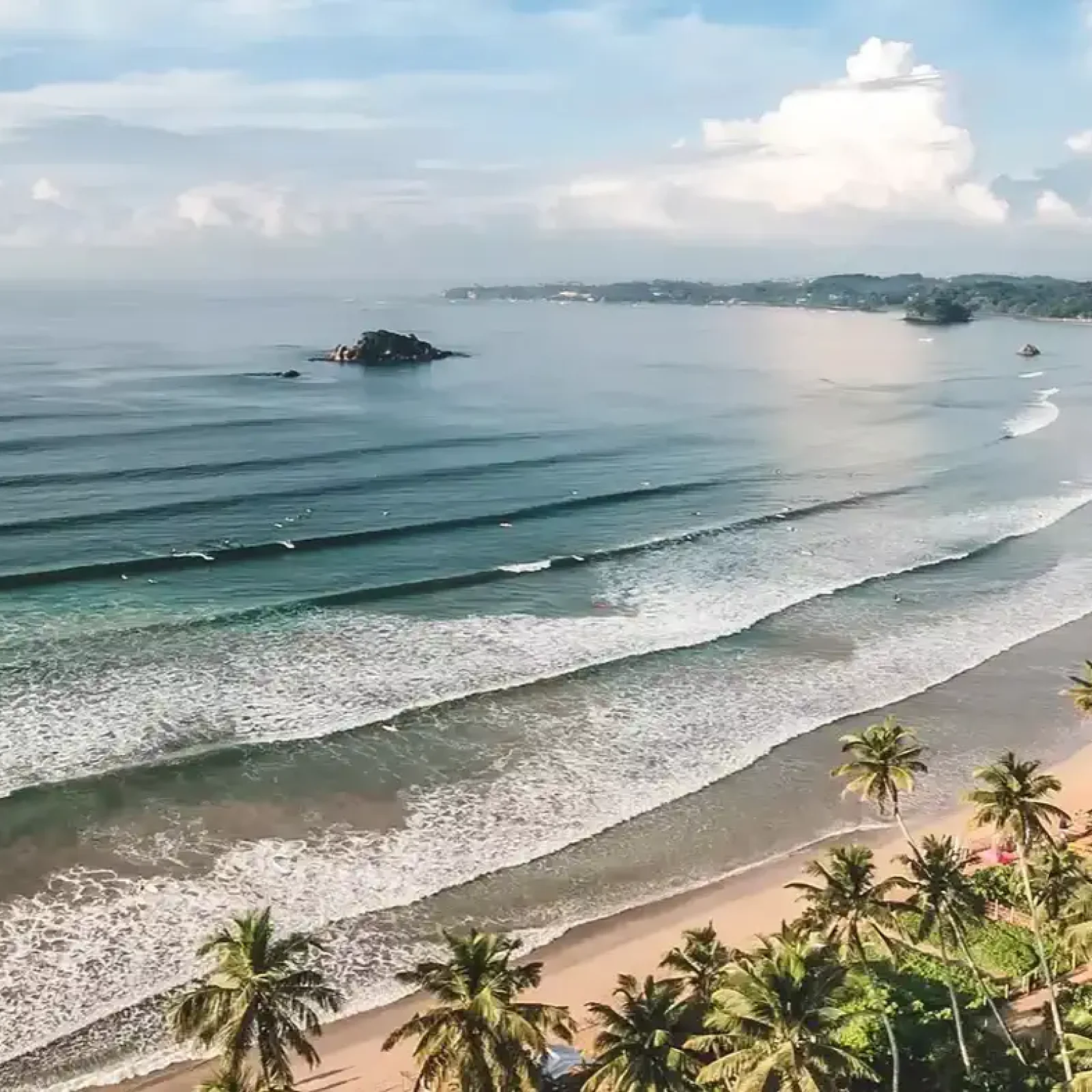
Sri Lanka's south coast surf-school capital. Sandy beach breaks at Kabalana, friendly reef points at Plantations, and a 20-kilometre cluster of named breaks from November to April.
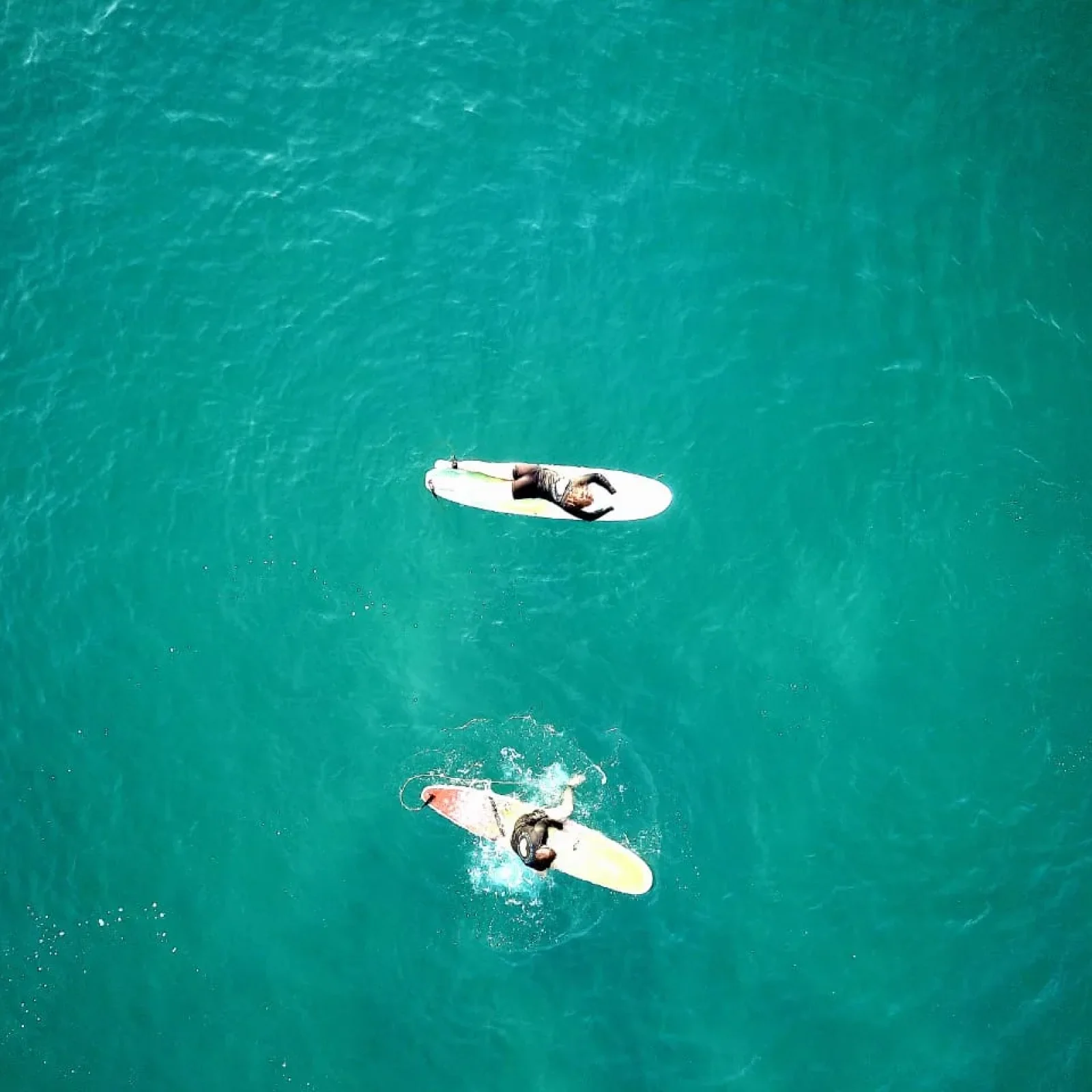
Sri Lanka's east coast surf town. Five named points within 10 kilometres of tuk-tuk: Main Point, Whiskey Point, Peanut Farm, Elephant Rock, Pottuvil Point.
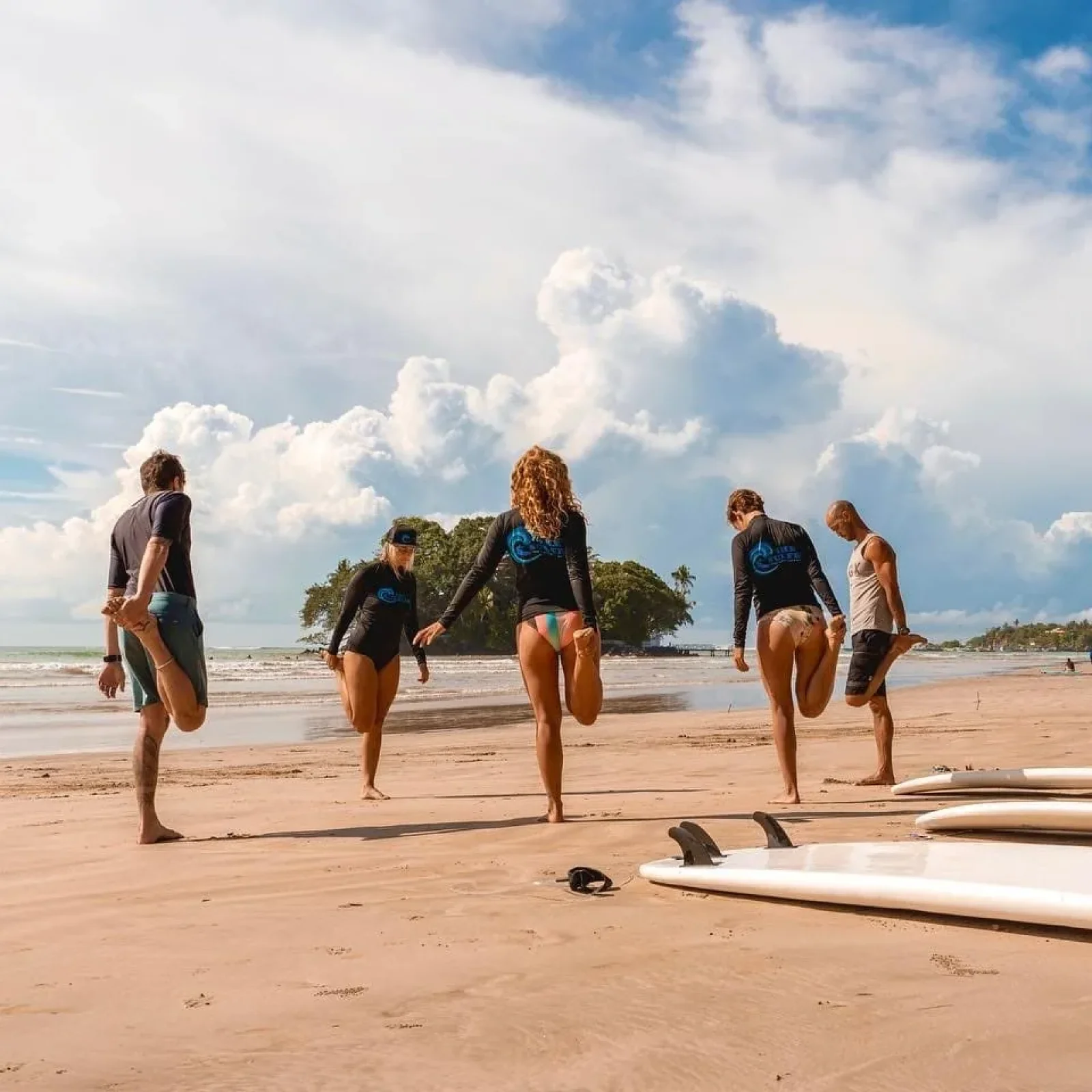
South Sri Lanka's surf hub: a 2 km horseshoe bay, beginner-friendly beach break, nine spots within tuk-tuk range.
