Short answer: yes, Tamarindo is one of the best places in Central America to learn to surf, but the answer comes with three conditions you should know before booking. Sandy bottom, gentle peaks at high tide, instructors everywhere, and a wave that forgives almost every mistake a first-timer can make. That’s the case for. The case against is mostly about crowd, which has a fix.
Here’s the honest breakdown: when Tamarindo works for beginners, when it doesn’t, and how to set up your week so you actually leave able to stand up on a board.
Short answer: when Tamarindo works (and when it doesn’t)
Tamarindo’s main beach is built for learning. The sandy bottom means a wipeout doesn’t end on rocks. The wave breaks gently at high tide, which lets you take off without being pinned to the lip. There are something like a dozen surf schools running daily group lessons, which keeps prices competitive and instructor quality high.
It stops working when the surf gets too big (May to November on the wrong day) or when the crowd at the main peak makes paddling out feel like rush hour. Both have fixes you can plan around.
Works for beginners
Doesn’t work for beginners
Season
Dec to Apr (1 to 4 ft, clean offshores)
Big-swell days May to Nov (6 ft+ at the main peak)
Time of day
7 to 9 am, before the lesson rush
10 am to noon (peak crowd)
Tide
High tide (softer, more forgiving)
Low tide (faster takeoffs, stronger currents)
Where in the bay
Main beach in front of town
Pico Pequeño or the river mouth (intermediate+)
Why Tamarindo is good for beginners
Sandy bottom, no rocks
The main beach in Tamarindo runs on a sandy bottom for the full stretch in front of town. That matters more than most first-timers realise. Costa Rica has plenty of beautiful surf spots that break over rocks or shallow reef (Playa Negra is 50 minutes south and would not be appropriate for a first lesson). Tamarindo is the opposite. If you fall (and you will, repeatedly, in week one), you fall on sand.
Gentle peaks at high tide
High tide in Tamarindo softens the wave. The takeoff slope gets gentler, the wave gives you longer to pop up, and the white water you’ll be catching for your first sessions runs further and more predictably. Most surf schools time their morning lessons around the high-tide window.
Instructor density and competitive pricing
There are surf schools every 30 metres along the main strip. The market is saturated, which is good news for beginners: standard group-lesson pricing in Tamarindo runs around USD 50 for a 90-minute session, semi-private around 65, and private around 80. Most surf camps bundle 5 lessons into their weekly packages. Compare that to other Central American surf towns where lessons are scarcer and prices are 30 to 50 per cent higher.
Year-round surf with a beginner-tuned season
Tamarindo has waves every month of the year, but Dec to Apr is the dry season window with consistently smaller, cleaner conditions. Wave heights stay in the 1 to 4 ft range, offshore east winds groom the surface, and the swell direction (mostly NW) is less aggressive than the South Pacific swells that arrive from May onwards. This is the booking window where you’ll get the cleanest learning sessions.
The honest case against (and how to fix each one)
The crowd at the main peak
By 9 am on any typical morning, there can be 60+ people in the water at the main beach. The lineup is dominated by surf-school groups, all targeting the same takeoff zones. It’s not aggressive (no localism, instructors keep things orderly), but it is busy, and busy water makes paddling out harder and getting clean waves rarer.
Fix: book a 7 am lesson. Most schools run them, and most international guests skip them. You’ll have a third of the crowd to paddle into.
Big-swell days in green season
May through November the swell comes up. On the right day the main beach goes from 1 to 4 ft to 6 ft and above. That’s outside what most beginners can paddle through, let alone surf. Don’t try to push through it.
Fix: two options. Either move your lesson 10 minutes south to Playa Langosta, which holds its size differently and often has a smaller corner accessible for learners. Or book the day off and take the boat to Playa Grande, which has more powerful waves but better-shaped peaks on big days. A good surf school will read the morning report and re-route you on swell days automatically.
The river mouth and the crocodile question
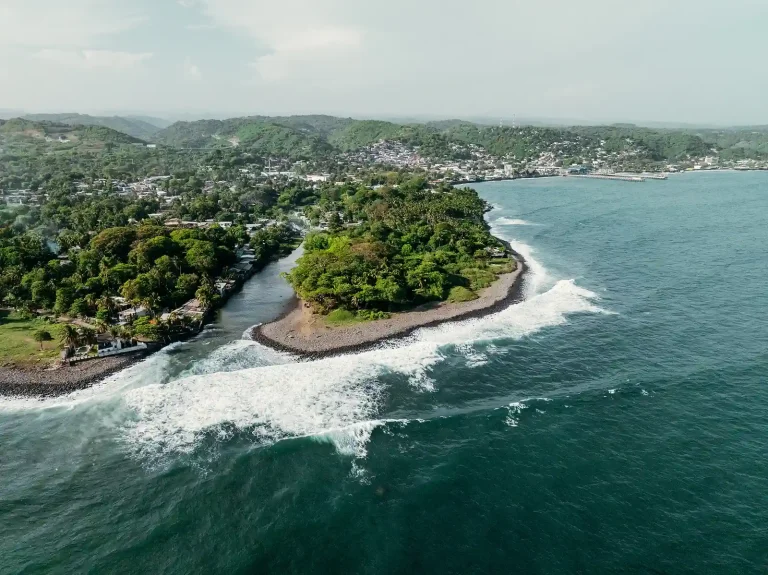
Tamarindo’s river mouth is at the northern end of the bay. It’s a real surf break (the long right that Tamarindo is technically famous for in surf publications), but it’s an intermediate-plus wave: fast water, sandbar shifts, currents. Beginners shouldn’t be paddling out there.
Crocodiles do live in the estuary. They don’t bother surfers in the wave itself (which sits offshore in the ocean), but they’re a real reason to never cross the estuary on foot to walk to Playa Grande. Take the boat. The boat is five minutes and cheap.
How to set up your week as a beginner
Five practical pieces of advice from local instructors and from how the better surf camps structure their beginner programmes.
Book a week, not a weekend. You will not learn to stand up consistently in a weekend. Five to seven days is what you need to go from “white water on a soft-top” to “your first proper green wave.” Most surf camps in Tamarindo run Saturday-to-Saturday packages built around this timeline.
Use a soft-top board for the first three days. Don’t be tempted to graduate to a hard board on day two. The volume and forgiveness of an 8’0 to 9’0 soft-top is what lets you catch enough waves to practise the pop-up. Schools rent these for free with lessons.
Take more than one lesson per day if you can. The fastest improvers do two short sessions: a 7 am paddle-out with the instructor, and a 4 pm self-directed session in the same conditions. Your body remembers, and the second session is where things click.
Pick a camp with video review. Watching yourself attempt a pop-up changes how you understand the movement. Iguana Surf Boutique Hotel includes video analysis in their daily lesson packages. Witch’s Rock Surf Camp does too. The difference is faster than another five sessions of trial and error.
Get the photo package if it’s offered. Sounds vain. Isn’t. The photos taken by your camp on the final morning are a reference you’ll return to next time you’re trying to fix a stance or a takeoff angle.
Tamarindo vs other Costa Rica beginner spots
Tamarindo isn’t the only beginner-friendly wave in Costa Rica. The honest comparison:
Tamarindo vs Jaco: Both work for beginners and both have surf-school infrastructure. Jaco’s main beach can have stronger currents and tends to break with more punch. Tamarindo wins on dry-season conditions and lesson availability. Jaco is closer to San Jose airport (1.5 hours) versus Tamarindo’s 75 minutes from Liberia (LIR).
Tamarindo vs Santa Teresa: Santa Teresa is consistent and uncrowded but more difficult to access (long drive plus ferry) and the wave is faster and harder for first-timers. Better as a second-trip destination.
Tamarindo vs Nosara: Nosara (Playa Guiones) is genuinely also good for beginners, with wide sandy beaches and consistent year-round waves. The trade-off is vibe: Nosara is yoga-and-wellness-focused, Tamarindo is surf-town-with-bars. Pick on lifestyle.
Tamarindo vs Playa Grande: Playa Grande is across the estuary, has more powerful waves on the same swells, and is significantly less crowded. The downside for first-timers is the same as the upside: more power means a steeper learning curve. Better as a second-week move once you’ve got the basics.
For the full long-form comparison on choosing between Tamarindo, Nosara and Santa Teresa, see our separate guide on picking your Costa Rica surf base.
Surf camps in Tamarindo built for beginners
Three camps in Tamarindo run beginner programmes worth booking:
Iguana Surf Boutique Hotel. Boutique-format property right behind the main beach, daily lessons with video review, photo package included, Liberia Airport pickup. The Iguana Surf shop has been teaching in Tamarindo since 1989, so the instructors know the bay’s sandbars by name. Packages from 5 nights, Saturday-to-Saturday, from $806.
Witch’s Rock Surf Camp. The most institutional beginner programme in Tamarindo. 7-night beginner package at $2,290 per person includes lessons, meals, video review, and access to the demo board centre. Higher price point but the most structured route from never-surfed to standing-up.
Dreamsea Surf Camp Costa Rica. The budget-friendly structured option. $445 per person for the dorm-bed week with 5 lessons and daily yoga included. Heavily social atmosphere, mostly 18-25 demographic. Good fit if you’re a solo traveller comfortable with hostel-style accommodation.
For the full roundup including Playa Avellanas and Playa Grande, see our separate guide on the best surf camps in Costa Rica.
FAQ
Is Tamarindo good for absolute beginners who have never surfed?
Yes. The main beach is sandy-bottomed and the wave breaks softly at high tide, which is the right setup for first-timer lessons. Book a 7 am lesson to avoid the late-morning crowd, plan for the Dec to Apr dry season if you can, and use a soft-top board for the first three days. Most beginners stand up by day two or three with structured coaching.
What’s the best beach in Tamarindo to learn to surf on?
The main beach in front of town. It runs sandy bottom for the full stretch, has multiple peaks so groups can spread out, and softens at high tide. Avoid Pico Pequeño (the wedging peak on the northern end) and the river mouth: both are intermediate-plus waves with sharper takeoffs and stronger currents.
How much do surf lessons in Tamarindo cost?
Group lessons run around USD 50 for a 90-minute session, semi-private around 65, and private around 80. Most beginner-focused surf camps bundle 5 lessons into a weekly package. À la carte rentals of soft-tops run $15 to $20 per day if you want extra board time outside lessons.
How many days do I need to learn to surf in Tamarindo?
Plan a full week. Most never-surfed beginners stand up consistently by day three to four with structured daily coaching, but it takes another two or three sessions before you’re catching unbroken waves. A weekend is too short. Five to seven days is the realistic minimum.
When is the best time to come to Tamarindo as a beginner?
December through April. The dry season delivers smaller, cleaner waves in the 1 to 4 ft range with offshore east winds, which is the ideal first-timer window. May to November brings bigger waves from South Pacific swells, which work better for intermediates. If you’re set on a green-season trip, July and August balance both: solid swells but with dry-season offshores.
Are there crocodiles to worry about as a beginner surfer in Tamarindo?
There are crocodiles in the Tamarindo estuary at the northern end of the beach. They do not bother surfers in the open ocean. Your beginner lessons will be at the main beach in front of town, not near the river mouth. The only real risk is walking across the estuary to get to Playa Grande, which you should never do. Take the boat shuttle (5 minutes from the marina) if you want to surf Playa Grande.
Complete the form, and we’ll suggest camps that fit your budget and needs.
Welcome
30€ OFF WITH THIS CODE
SURF30OFF
Offer Details:
Make your travel experience affordable with Waverick. Apply this coupon coupon code at checkout and get a 30€ discount on all orders. Minimum spend 500€.


 By Steeve

 English
 Français
  Deutsch
  Español
  Italiano