 By Steeve
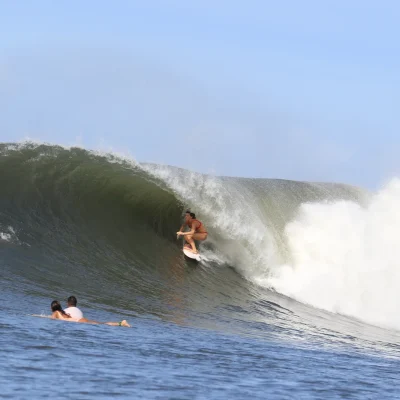
Las Flores is one of the best right-hand point breaks in Central America. A long peeling right that runs across a cobble-and-reef setup, breaks at chest height to overhead in season, and stays significantly less crowded than anything on the famous La Libertad coast four hours west. Most travel guides write it off as too remote. They are wrong: the four-hour transfer is the only reason the lineup is uncrowded, and the wave is worth every minute of the drive.
This is the honest guide. Wave shape, season, what gear to bring, how to get there, where to stay, and who Las Flores is and is not for. No marketing fluff, no aspirational “world-class” filler that does not tell you what to actually expect when you arrive.
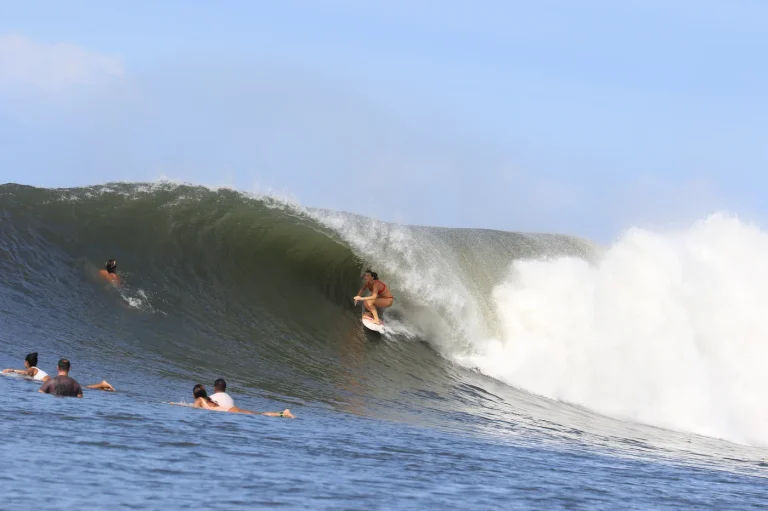
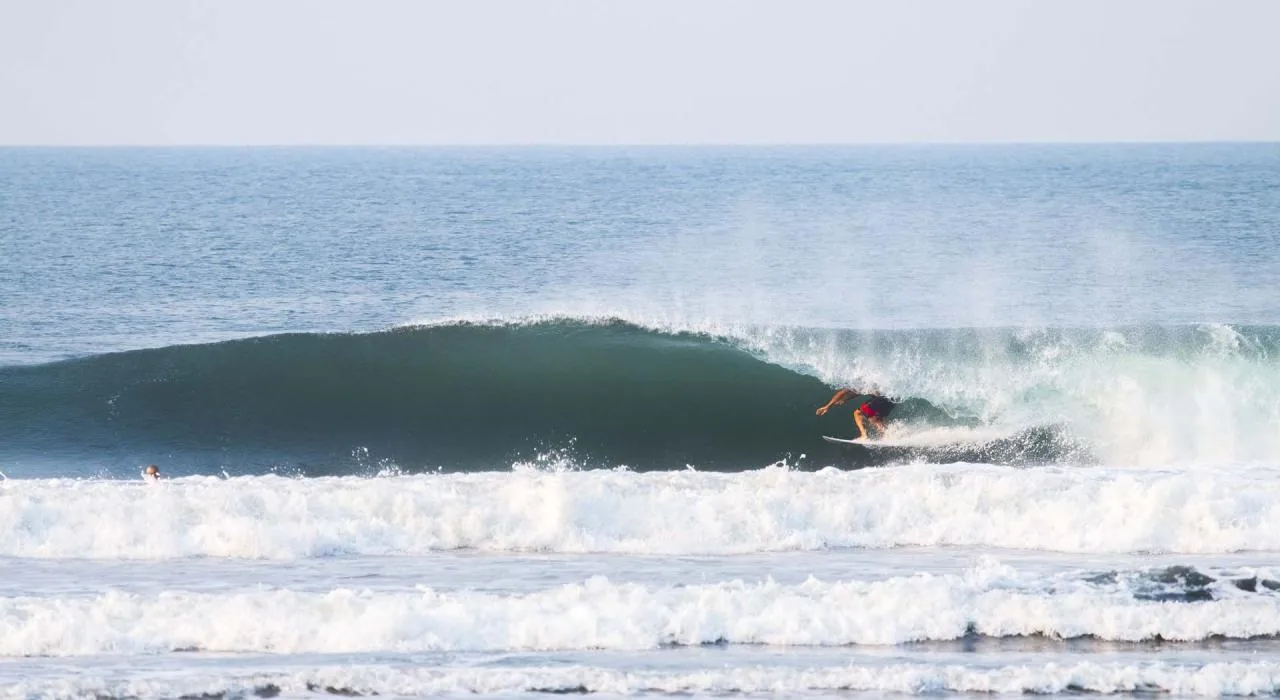
Las Flores breaks on the east coast of El Salvador, near the town of El Cuco in the Usulután department. It is a right-hand point break that wraps around a small headland: swell comes in from the south-west, hits the point at an angle, and unrolls in a long line for two to four hundred metres on a good day. The take-off zone sits over reef on the outside. The shoulder peels onto a sand-and-cobble inside reform that softens out as you ride towards shore.
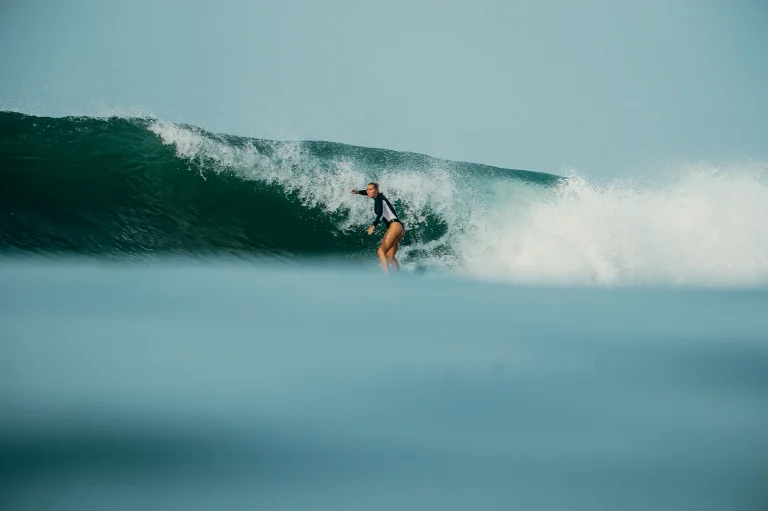
At its best — solid south swell, light north-east offshore wind, mid-to-high tide — Las Flores delivers chest-to-overhead lines that hold their shape from take-off to channel. Sets come in waves of three to five. On smaller days the inside reform still works, which is the only reason confident learners ever surf here at all.
| Detail | Las Flores |
|---|---|
| Type | Right-hand point break |
| Bottom | Reef outside, cobble + sand inside |
| Best swell | South to south-west groundswell |
| Best wind | North-east offshore (typical morning trades) |
| Best tide | Mid to high |
| Wave length | 200-400m on solid days |
| Take-off | Steep over reef, manageable on small-to-medium swell |
| Skill level | Confident intermediate and up; stronger beginners on the inside on small days only |
Like the rest of El Salvador’s Pacific coast, Las Flores receives swell year-round, but the wave is at its best during the southern-hemisphere groundswell window from April through October. Peak power runs June through September. Off-season (November to March) the wave still breaks on smaller swells and is genuinely uncrowded, but the lineup feels quieter, the inside reform dominates, and you will see overhead days only on the rare storm pulse.
For a full month-by-month breakdown including water temperature, wind patterns and crowd levels, see our When to surf El Salvador guide.
Early April through early June. The first south-west swells of the year are arriving, water sits around 27-28 degrees, mornings stay reliably glassy thanks to north-east trades, and the Northern Hemisphere summer holiday crowd has not turned up yet. You get most of the upside of peak season without the downsides.
San Salvador International Airport (SAL) is the only realistic gateway. From there, Las Flores is about four hours by road via the coastal highway through Usulután and El Cuco. The road is paved the whole way; a normal saloon car or 4×4 both work fine. Most surf camps include the transfer in their package — confirm before booking.
Domestic-flight option: Some partners run a domestic flight plus shuttle combination that cuts the door-to-door time to about two hours. It is more expensive but worth it if you are arriving late or on a short trip.
Driving yourself: Doable but rarely worth it. Rental cars run €40-60 per day, parking at most camps is included, but the time saved is marginal versus the included transfer.
The east coast is not crammed with options. The serious choices come down to a couple of established surf properties and a thin layer of independent rooms.
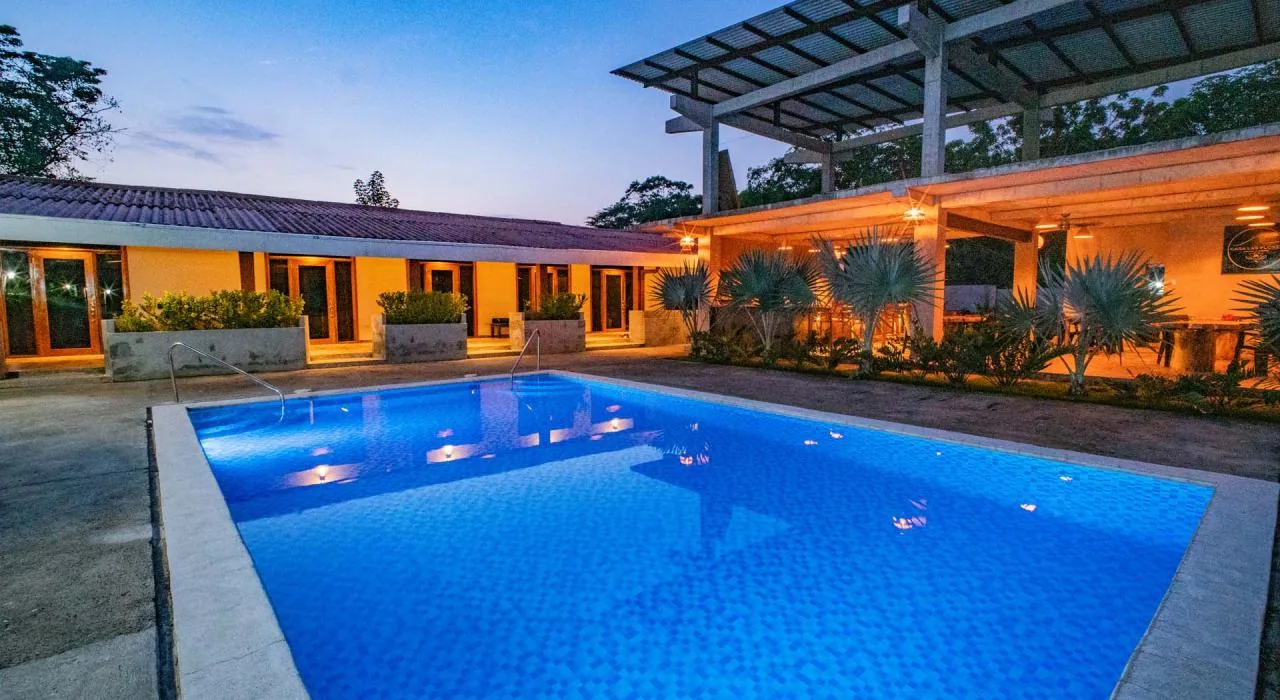
A small camp with a boutique feel, right at the wave. Three package tiers cover the full progression: Coaching for surfers still learning lines, Guiding for intermediates picking off sets, Surf Trip for boat days to harder-to-reach waves further down the coast. Five-night minimum makes a flexible weekend-plus-week format possible.
Check Casa Las Flores availability →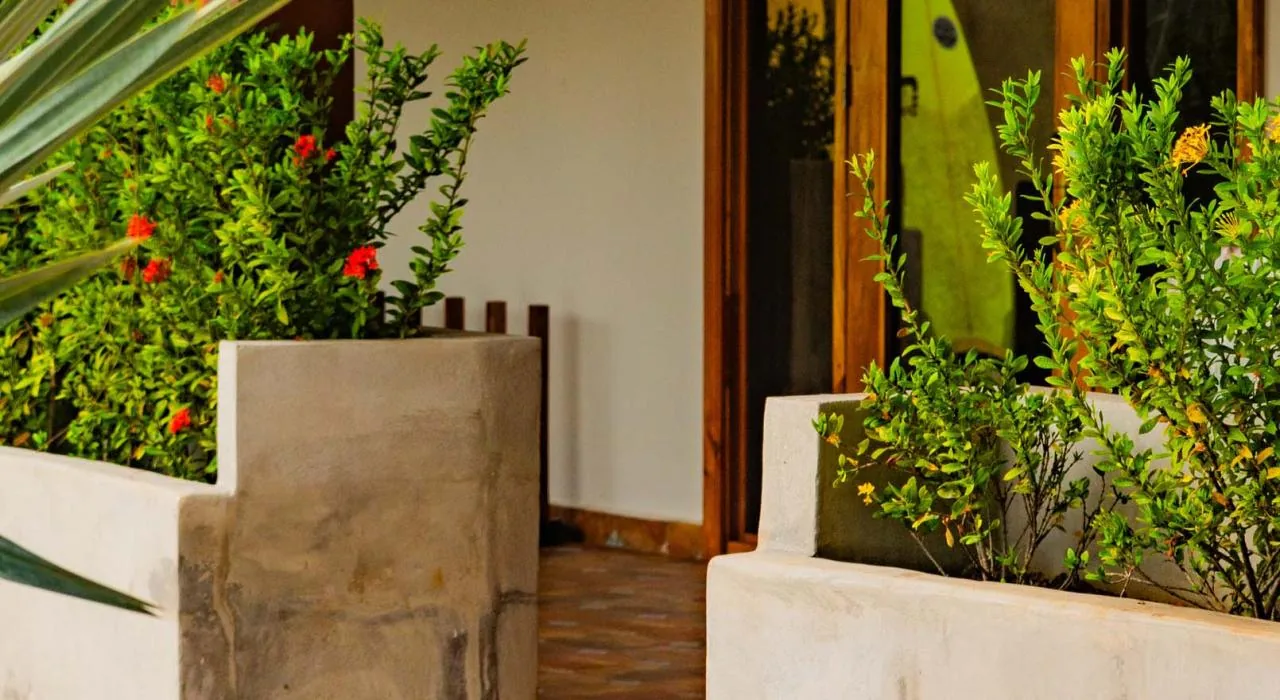
Beyond Casa Las Flores, the area has a couple of larger surf-and-resort hotels (the most prominent is the Las Flores brand itself) and a handful of independent backpacker rooms in nearby El Cuco. None of the independents include coaching or board hire in the same structured way the Waverick partner does, so if it is your first time here, the camp model is the smoother option.
The honest numbers from the calendar:
Las Flores is the main attraction but it is not alone. Within a half-day move you have access to several other east-coast spots, most of them with serious credentials of their own.
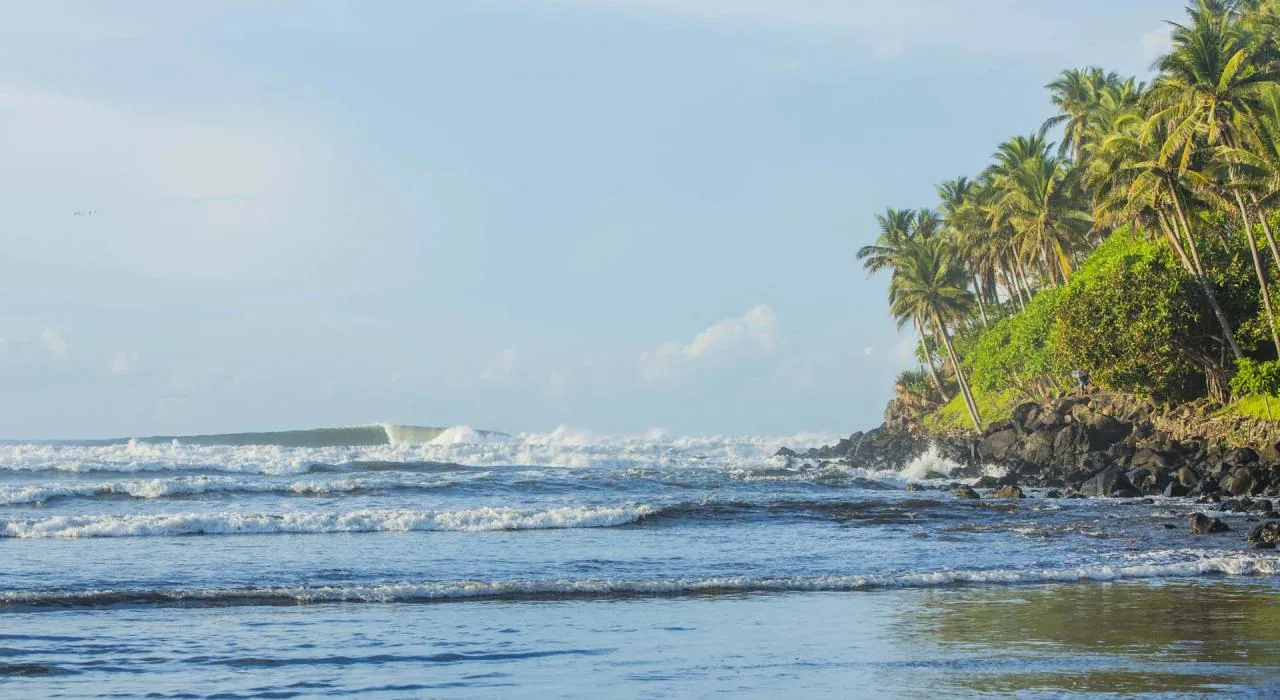
Two things to set straight. First, the wave: this is a reef-bottom point break. The outside take-off zone sits over coral and rock. Bring booties if you are sensitive, and respect the locals’ priority on sets. The inside reform is sandier and forgiving, but the heavier sets break in the open ocean and demand competence.
Second, the country. El Salvador’s east coast is well outside the urban-gang-violence narrative most foreigners still associate with the country. The Usulután coast specifically has been the focus of tourism investment since 2021 and has a strong police presence on the surf-corridor roads. Surf travellers from Europe, the US, Canada and Australia visit year-round without incident. Standard Central America common sense applies: do not flash valuables, take registered taxis at night, ask your camp about specific neighbourhood advice.
In the water: sun is the biggest risk. Pack zinc, a UPF rash vest, and twice the sunscreen you think you need. Stinging hydroids show up briefly in wet season — if you get welts, vinegar fixes them in an hour. Sea snakes occasionally appear in El Cuco bay but are not aggressive.
The outside take-off is not. The wave breaks over reef, the take-off is steep, and the consequences of a mis-paddled set are not what you want for your first trip. The inside reform works for stronger learners on small days, but if you have never stood up on a board, you want El Sunzal on the La Libertad coast first. See our El Salvador for beginners guide.
Different waves for different surfers. El Tunco is a beach break on the La Libertad coast with a faster, hollower wave and a party-village atmosphere. Las Flores is an east-coast point break with longer, peeling rights and a quieter scene. If you are progressing as a surfer, Las Flores is the better wave. If you want bars and beach-break variety, El Tunco wins.
Both are east-coast right-hand point breaks. Las Flores is the longer wave with a slightly more forgiving take-off; Punta Mango is heavier, faster, and only reachable by boat. Most surf trips do both: stay at Casa Las Flores for the week and add a boat day to Punta Mango via the Surf Trip package.
Significantly less crowded than the La Libertad coast even in peak season. You will share the lineup with local guides, a handful of camp guests, and the occasional travelling pro. Compared to Punta Roca on a south swell day, Las Flores feels empty.
Yes, but if it is your first session here, paddling out with a local who knows the take-off zone, the keyhole, and the rip patterns will save you a hour and a couple of mistakes. After two or three sessions you will know the spot well enough to surf it independently.
June through September delivers the most powerful and consistent surf. For a balance of decent swell and minimum crowd, target late April to early June or the second half of October. December through March still has rideable waves but smaller.
No wetsuit required year-round. A 3-fin (thruster) setup in the 5’10”-6’4″ range is ideal for the wave. A longboard or fish makes sense for small-day inside-reform sessions. Bring booties if you are sensitive to reef. Camps rent boards if you do not want to travel with your own.
Most Las Flores trips are five to seven nights. December through February books with one to two months’ lead time. April through September books two to four months ahead — peak July and August can be sold out four months out because the property is small. If you want both coasts, pair Casa Las Flores with a separate week at Laola El Sunzal on the La Libertad side.

 English
 Français
  Deutsch
  Español
  Italiano