 By Steeve
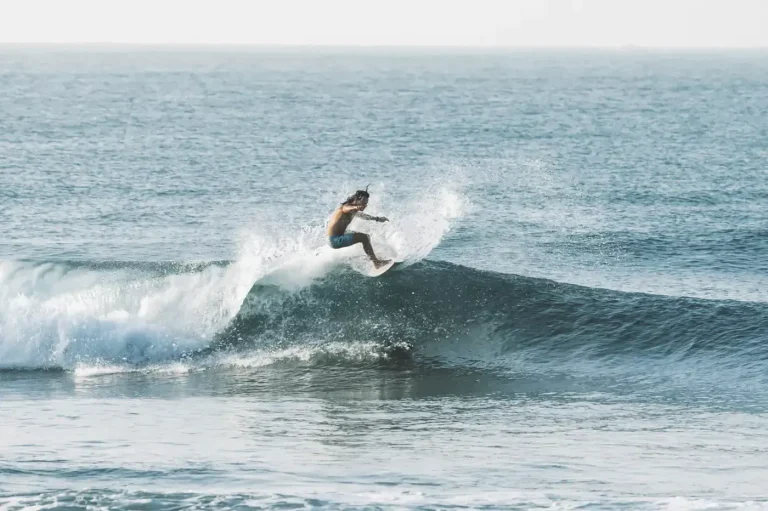
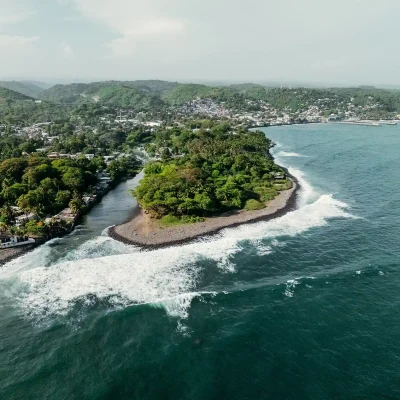
El Salvador’s best beginner wave is El Sunzal: a long right-hand point break that peels for hundreds of metres at chest height, with a slow take-off and a forgiving shoulder. Most surf schools in the country teach here for one simple reason. The wave gives you time to think. You paddle, you stand up, you ride a green wall for thirty seconds, you fall off, you do it again. By day three you have something to show your friends back home.
Forget what the travel blogs say about El Tunco being the beginner capital. El Tunco is fun and full of bars, but the wave is a fast beach break that punishes paddle errors. If you are learning, you want El Sunzal. Here is the honest playbook for surfing El Salvador as a first-timer, written from what works and not what reads well on Instagram.
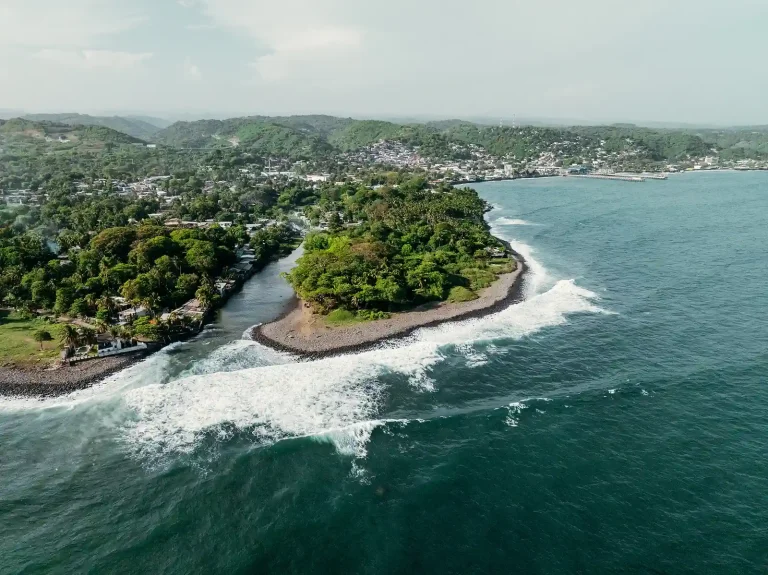
The difference matters and most travel guides get it wrong. El Sunzal is a right-hand point break breaking over a cobble bottom on the outside and a sandy reform on the inside. The take-off is slow and predictable, the wave peels rather than closes out, and the inside section is the friendliest learning environment in Central America. El Tunco is a beach break with a hollower, faster wave that breaks closer to shore. Locals love it. Beginners get worked.
| Spot | Wave type | Take-off | Bottom | Best for |
|---|---|---|---|---|
| El Sunzal | Right-hand point | Slow, peeling | Cobble outside, sandy inside | First-timers, longboarders, intermediates |
| El Tunco | Beach break | Fast, hollow | Sand and rock | Confident intermediates and up |
| El Zonte | Point + reef | Medium | Cobble and rock | Intermediates progressing |
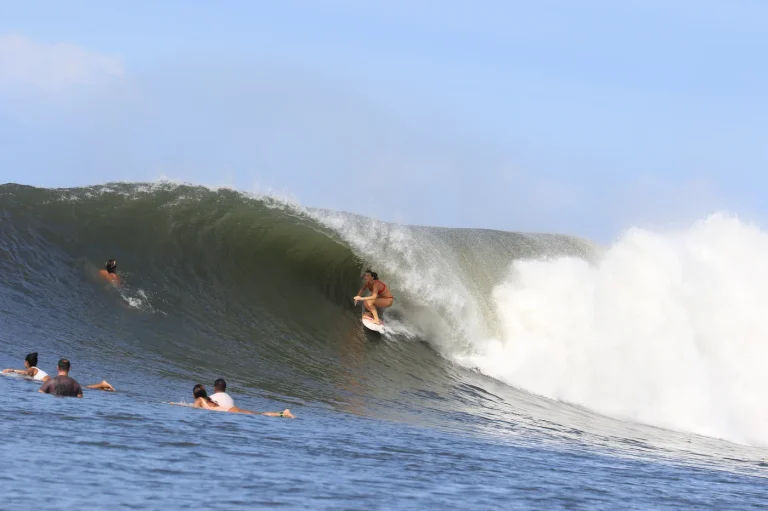
| Punta Roca | World-class right-hand point | Fast, critical | Lava reef | Advanced only |
Spend your first three or four days at El Sunzal. Once you can paddle into green waves and angle down the line, you can graduate to El Tunco for a session or two and see how you go.
El Salvador has two seasons and they look very different from the water.
Dry season (November to April). Smaller waves, sunny mornings, glassy water before lunch, light offshore breeze. This is the beginner window. Swells are still consistent enough to push the inside reform at El Sunzal, but they rarely close out or get bigger than waist height on the inside. Water sits around 27 to 28 degrees. You will not need a wetsuit.
Wet season (May to October). Bigger Pacific swells (south to south-west), warmer water (28 to 29 degrees), and afternoon rain. Mornings are still clean. This is the progression window: by July you can be paddling out into shoulder-high sets at El Sunzal and surviving them.
If this is your first surf trip and you want the easiest possible week, book December, January or February. Mornings are reliably glassy, the inside at El Sunzal stays small and friendly, and you will not waste a single session waiting for swell to back off.
Prices in El Salvador are low for the Pacific. A standalone surf lesson with board, leash and 90 minutes of coaching runs between USD 25 and 40 at any reputable school in El Sunzal or El Tunco. Board rental on its own is USD 10 to 15 per day. The savings come from staying at a surf camp: a week including accommodation, breakfast, daily guided sessions and airport pickup typically lands between USD 450 and 800 per person, depending on the camp.
For a worked example, Waverick lists Laola Surf Camp El Sunzal from €980 per person for a 7-night Surf Coaching package. That covers room (private double), daily breakfast, six guided surf sessions, and a video review. Direct partner bookings on lower-tier rooms can run lower; the listed price reflects the cheapest available option on the Waverick calendar.
Add USD 30 to 60 for the airport transfer from San Salvador (SAL) and you have a complete week for under USD 1,000 in most cases. Lessons and rentals can usually be paid in US dollars or Bitcoin (yes, really, see safety section).
Three villages cover almost all of the beginner surf scene, and they are within fifteen minutes of each other by tuk-tuk.
El Sunzal village. Quiet, residential, right at the wave. If your priority is rolling out of bed and being in the water, this is the choice. Restaurants are local and informal. Nightlife is minimal.
El Tunco. Ten minutes down the coast. The party town: bars, hostels, food trucks, a young backpacker crowd. Surf at El Sunzal in the morning, walk to a bar in the evening.
El Zonte. Twenty minutes further down. Smaller, calmer, with a strong yoga and digital-nomad scene (this is the original Bitcoin Beach). Good if you want a slower week.
For the full list of Waverick-verified camps in El Salvador (with real prices and partner reviews), browse surf camps in El Salvador.
You will mostly surf El Sunzal during a beginner week, but it is useful to know what else is around for the day the wind switches or the swell drops out.
The El Salvador beginner-surf coast is safer than its reputation suggests. The country went through a brutal stretch with gang violence through 2022. Since then the La Libertad tourism corridor (El Sunzal, El Tunco, El Zonte and Surf City) has seen heavy police presence and very few incidents reported by foreign surf travellers. Use the same common sense you would use anywhere in Central America: do not flash valuables, take registered taxis at night, do not wander dark streets alone.
In the water, El Sunzal inside is sandy and forgiving. The outside has cobbles and the odd rock; bring booties if you are sensitive. K59 and Punta Roca have lava reef that demands respect. The sun is the bigger risk than the wave: bring zinc, a UPF rash vest, and double the sunscreen you think you need.
What to pack: reef-safe sunscreen, zinc stick, rash vest (UPF 50), travel surf insurance, board socks if you bring your own board, and a small dry bag for the beach. You will not need a wetsuit. Stinging hydroids show up briefly in wet season; if you get welts, vinegar fixes them in an hour.
Yes. El Salvador has the best long right-hand point breaks in Central America, warm water year-round, and consistent Pacific swells from April through October. For learners, El Sunzal is one of the most forgiving point breaks anywhere in the region.
The La Libertad coast (El Sunzal, El Tunco, El Zonte, Punta Roca) has been the focus of national tourism investment since 2021 and has a strong police presence. Surf travellers from Europe, the US, Canada and Australia visit week-round without incident. The standard travel advice for Central America applies: do not flash valuables, take registered transfers, ask your accommodation about night safety in their specific area.
Different products. Costa Rica has variety (Pacific and Caribbean coasts), more developed surf-camp scene, and stronger jungle and nature focus. El Salvador has the better point breaks (long, peeling rights), a tighter coastline (you can surf five spots in one day), and lower prices. For first-time learners, El Sunzal is more forgiving than the popular beach breaks in Costa Rica’s Guanacaste province.
No. Every surf school and camp in El Sunzal, El Tunco and El Zonte rents soft-top longboards and intermediate boards. If you have favourite fins (FCS or Futures), bring them. If you have a thruster you love, board socks and a travel bag make the flight manageable.
Three to five days at El Sunzal is normal for a first-timer with no previous experience. By the end of a seven-day camp, most beginners are paddling into unbroken waves on their own and angling down the line. The slow take-off at El Sunzal is what makes this realistic; on a faster beach break it would take longer.
December through February. The dry season delivers smaller waves, clean morning conditions, sunny weather, and water around 27 degrees. There is enough swell to push the inside reform at El Sunzal all week, but rarely too much to handle. Avoid the wet season for your first trip; come back for it once you can confidently take off on shoulder-high waves.
All three. US dollars are the official currency. Cards work at most camps and restaurants. El Zonte was the original Bitcoin Beach community, and Bitcoin Lightning is accepted at many surf businesses across the coast. Carry some cash for tuk-tuks and small local restaurants.
The Waverick El Salvador surf-camp directory has the country’s verified beginner-friendly camps with real prices, partner reviews, and what is actually included in each package. Most beginner weeks book around four to eight weeks ahead in dry season. Two weeks ahead is usually still fine in wet season.

 English
 Français
  Deutsch
  Español
  Italiano