 English
 Français
  Deutsch
  Español
  Italiano
 Surfing Punta Roca, El Salvador
El Salvador's world-class right-hand point. Wave, skill bar, and where to base.
Read guide


Punta Roca is the heavy advanced right at Puerto de la Libertad, a fishing port 30 minutes south of San Salvador. The wave breaks fast over a rock-and-cobble bottom and runs long when it lines up. Locals call it Surf City.
Punta Roca is the heavy advanced right at Puerto de la Libertad, a fishing port 30 minutes south of San Salvador. The wave breaks fast over a rock-and-cobble bottom and runs long when it lines up. Locals call it Surf City, the name El Salvador's tourism board picked up for the wider coast.
One of the most consistent right points in Central America: holds size cleanly to triple overhead. The take-off zone is small, the lineup respectful, the pecking order real. Bring a shortboard, watch first, then paddle.
Surf City is the government label. Punta Roca is the wave that earned it.
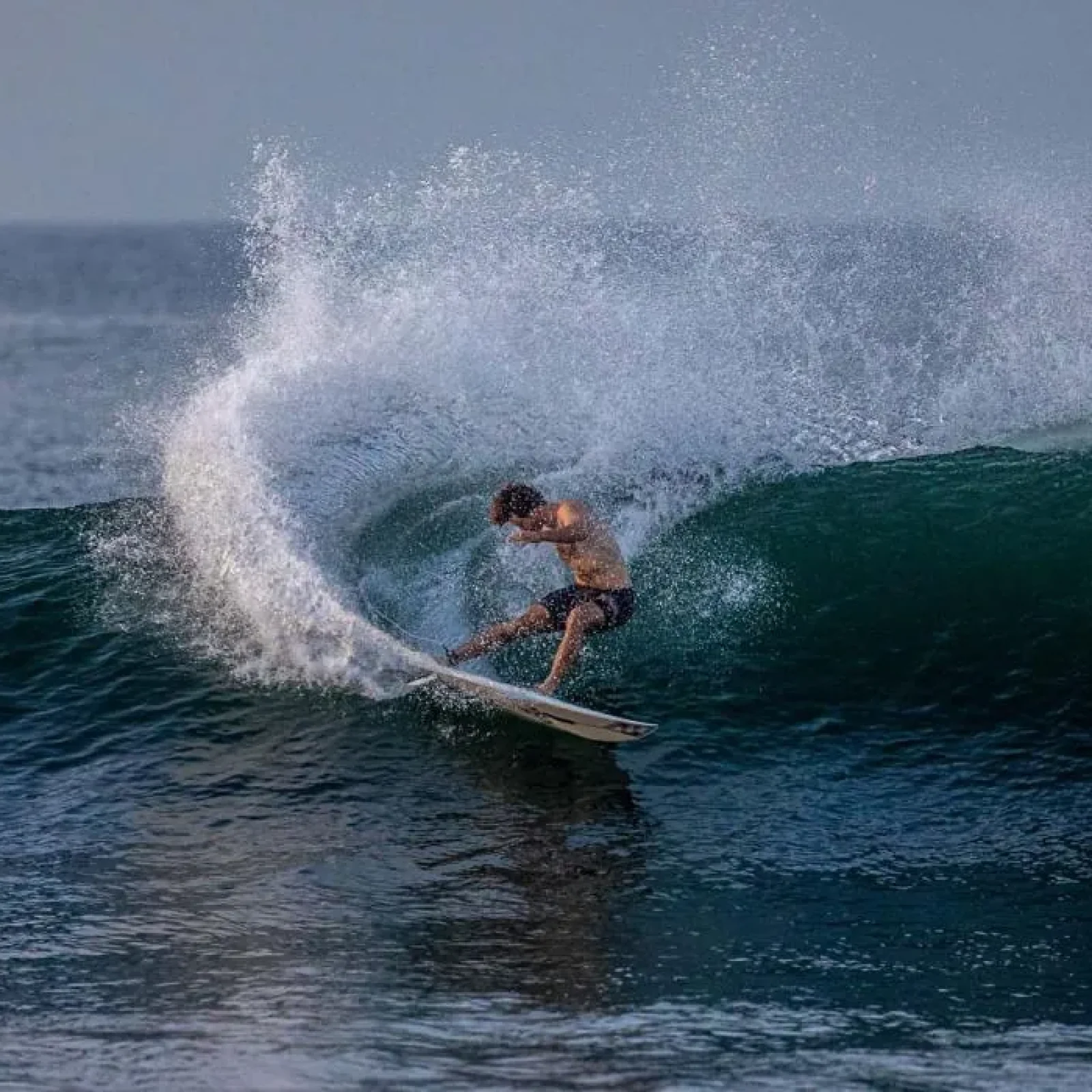
El Salvador's world-class right-hand point. Wave, skill bar, and where to base.
Read guide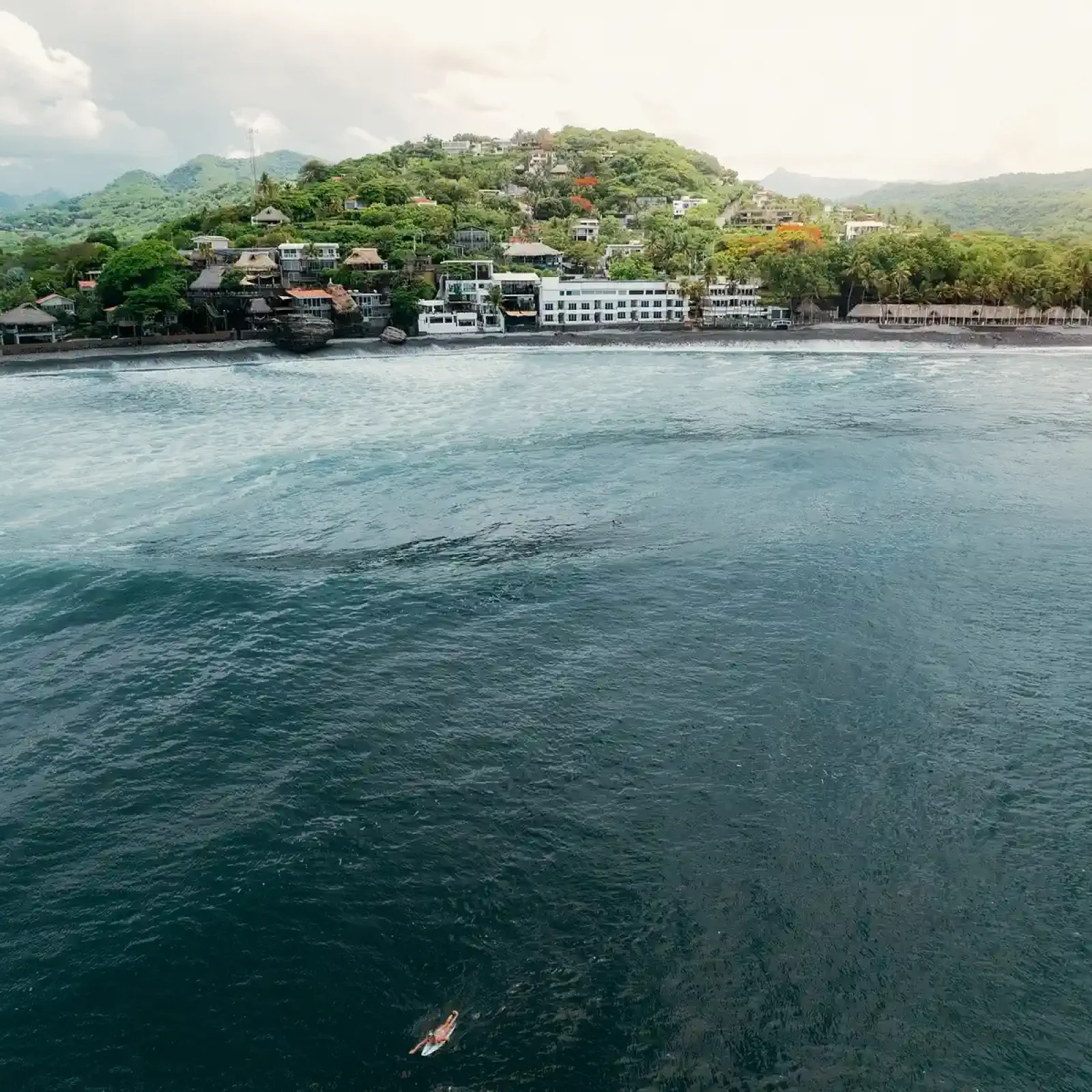
Where to learn, lesson prices, safety, and seven beginner-friendly waves.
Read guide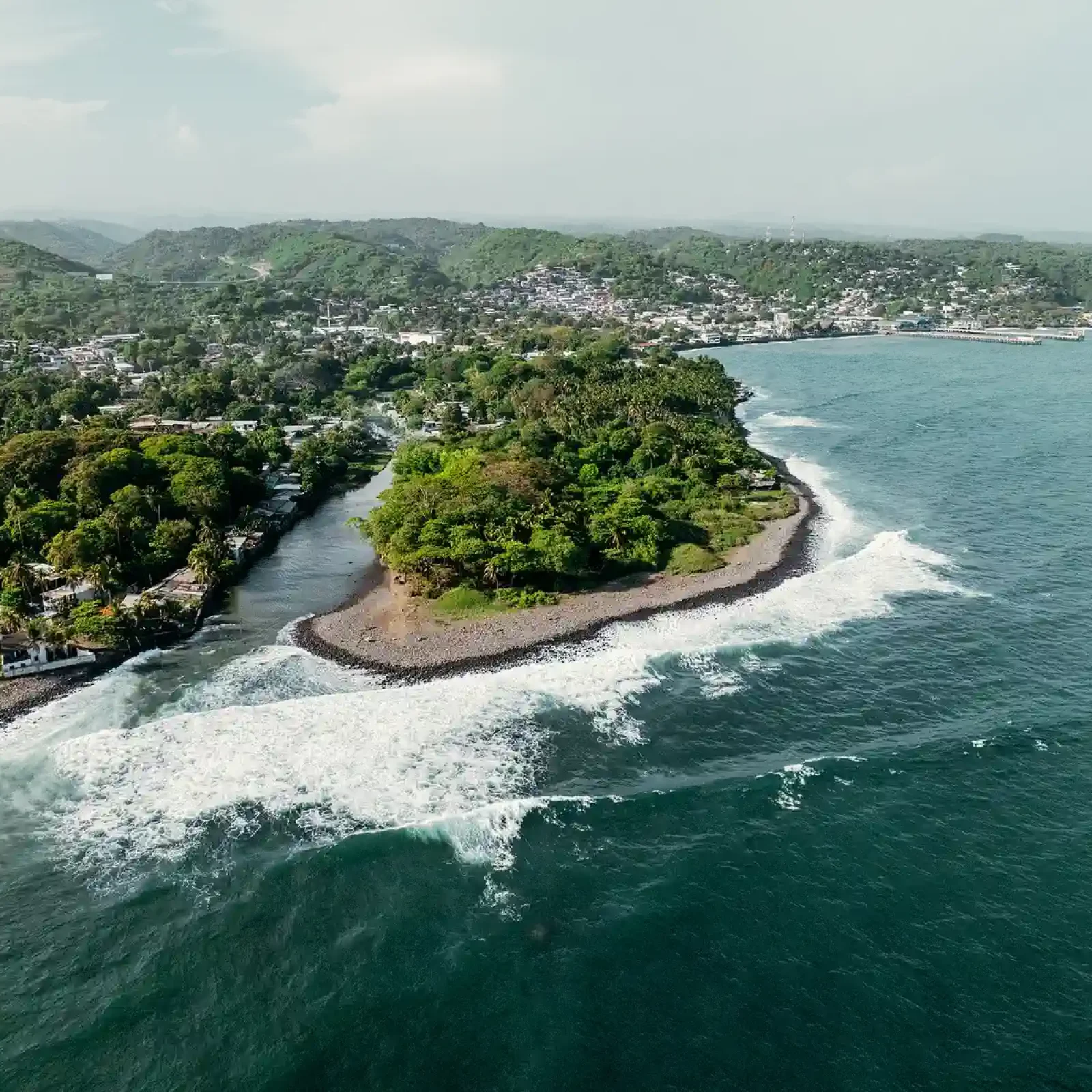
Month-by-month read of swells, wind and crowd. The sweet-spot months most guides miss.
Read guideApril to October is the peak south-swell window. June and July typically produce the most consistent overhead-plus surf. The wave works year-round, but November to March is smaller and the take-off zone less defined.
Fly into San Salvador (SAL). Puerto de la Libertad is a 30-minute drive south on the CA-2 coastal highway. The wave is at the malecón (the seafront promenade) at the end of the main road. Taxis from SAL run around €40; public bus is €1.50.
From €980 / 7 nights at Laola Surf Camp El Sunzal, 20 minutes west on the same coast. Pilsener at the malecón bars: €1.50.
The malecón is walkable end to end (10 minutes). Tuk-tuks for short trips, around €1. Public bus 187 runs west to El Tunco / El Sunzal every 30 minutes, €0.50. Car rental from €35 per day.
Seafood at the malecón stalls (whole grilled fish around €7, ceviche around €6). Pupusas at the comedores in town (€2 each). Pilsener and Suprema are the local beers, around €1.50 a bottle.
Most nationalities get a 90-day tourist stamp on arrival (no visa needed for EU, US, UK, Canada, Australia). Cash on the ground is mostly USD (the country's official currency); Waverick shows prices in EUR at par.
Closest Waverick camps sit 20 minutes west in El Sunzal and El Tunco, with daily transfers and lesson options for the gentler waves first.
See Punta Roca Surf CampsPunta Roca sits at the western end of Puerto de la Libertad's malecón (seafront promenade), in La Libertad department. The town is 30 minutes by car south of San Salvador (SAL airport). The wave breaks just off the headland that forms the western boundary of the port.
A handful of guesthouses and surf hotels operate along the La Libertad malecón. For full-package surf-camp setups, most travellers base 20 minutes west in El Sunzal or El Tunco and drive over for the dawn sessions at Punta Roca. The bus runs every 30 minutes.
No, definitely not. The wave is fast, breaks over rock and cobblestone, and has a tight take-off zone with a strong local crew. Beginners should start at El Sunzal next door (long, soft right point) and only consider Punta Roca after a season or two of progression.
A long right-hand point that breaks fast and tight off the headland. Take-off is steep, the wall runs 150 to 200 metres on a clean day, and the inside section is hollow and rock-bottomed. Holds size cleanly to triple overhead. Mid tides usually work best.
Surf City is the El Salvador government's tourism branding for the western La Libertad coast (Punta Roca, El Tunco, El Sunzal, El Zonte). The label launched in 2019 around a series of WSL and ISA events held at Punta Roca and Sunzal. Locals use the term loosely; surf travellers know Punta Roca as the wave itself.
April to October for the south-swell window, with June and July typically the most consistent overhead-plus period. Dawn sessions (5:30 to 8 am) usually have the cleanest offshore wind. Onshore wind tends to build by 11 am during the dry season.
Busier than Las Flores or Punta Mango but smaller than El Tunco's La Bocana. On a good swell you'll typically share the wave with 15 to 30 surfers, with a strong local crew taking the better waves. The peak narrows fast as the swell picks up, so the wave-count per surfer drops.
The wave itself is heavy (fast take-off, rock bottom) and demands real ocean experience. The town has been safe since the 2023 security policy reset, with consistent police presence around the malecón. Most surf-related injuries are reef cuts and dings, not theft.
El Sunzal (20 minutes west, long soft right) is the next major break. El Tunco's La Bocana is 25 minutes west. El Zonte is a further 15 minutes west. La Paz, a less-known right reef, sits a short boat ride east of the port and works on bigger south swells.
About 30 minutes by car (40 km on the CA-2 highway). Private taxi from SAL is around €40. Shared shuttles run for €15 to €20 per person. Public bus 102 from San Salvador goes to Puerto de la Libertad every 30 minutes for €1.50, takes about 90 minutes.
