 By Steeve
The Algarve is the southernmost region of Portugal, but for surfers the interesting coast faces west, not south. Two coasts, two seasons. The west coast catches the same Atlantic swell that feeds Ericeira and Peniche, only in winter when the rest of southern Europe is grey. The south coast is more sheltered, warmer, and works as a summer beginner zone. Knowing which side is on for your trip is the difference between a great week and a frustrating one.
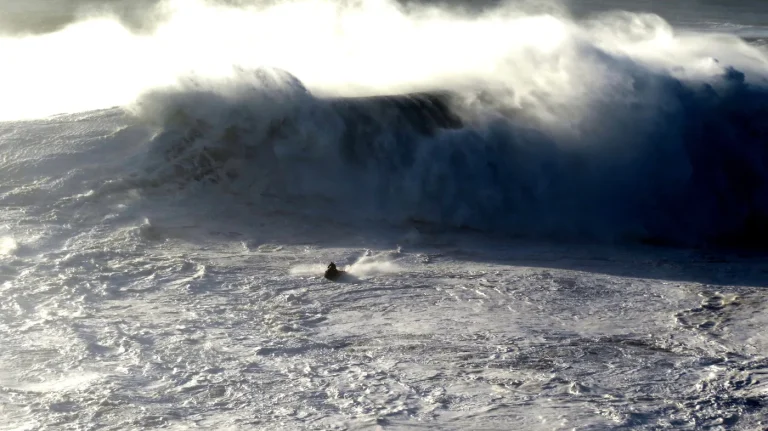
The west coast (called the Costa Vicentina) runs north-south from Aljezur down to Cape Saint Vincent. It is fully exposed to North Atlantic swell, which means powerful waves all winter. Beaches like Arrifana, Praia do Amado and Carrapateira hold size from October through April and can be unrideable on big storm swells. This is the coast for intermediate and advanced surfers chasing the Algarve’s winter season.
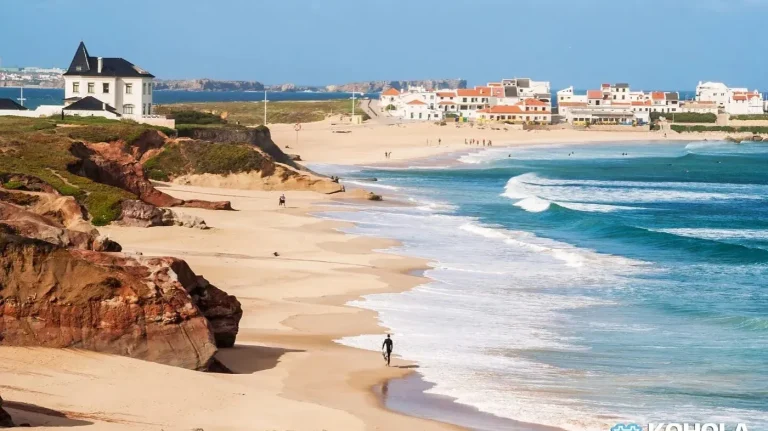
The south coast runs east-west from Lagos around to Faro and is sheltered from the worst Atlantic energy by Cape Saint Vincent. This makes it warmer, gentler and more reliable for beginners, especially in summer when the west coast goes flat. Beaches like Praia da Luz, Meia Praia and Sagres pick up the cleaner south swells from June through September.
The smart Algarve trip plans for both. Many local schools and camps run a “wave hunter” routine: check the west forecast first, drive to the south side if it is too big or too windy, and vice versa.
A wide, north-facing bay with a long peeling left at the south end and a powerful right at the north. Holds size from chest-high to overhead. Best on small to medium days from October through May. The cliff path down is steep; park at the lower lot if you can.
Probably the most popular west coast beach. Wide sand-bottom with multiple peaks. Surf schools cluster on the south end. Works in a wider range of conditions than Arrifana; the north end gets quieter as the schools move south. October to April is prime.
Two beaches separated by a headland: Praia da Bordeira (the long sandy beach) and Praia do Amado (small beach to the south). Bordeira holds excellent peaks across its three-kilometre length and rarely feels crowded. Strong rip current, surf with a friend.
The town of Sagres sits at the southwestern corner of Portugal. From here you can drive 10 minutes north to the west coast (Tonel, Beliche) or 10 minutes east to the south coast (Cordoama, Castelejo, Praia da Mareta). This makes Sagres the best base for “wave hunter” trips.
The south coast main beach: long, sandy, and friendly. The waves rarely get big enough to be interesting for experienced surfers, but for beginners it is excellent: warm water, gentle whitewater, low crowds outside the peak July-August window.
The Algarve has two clear windows. Late September through early April delivers the west coast: groundswell, powerful waves, water at 16 to 18 °C, lighter crowds. May through September is the south coast season: gentler waves, warmer water (up to 22 °C in August), and full summer beach-town atmosphere. April and October are the crossover months where both sides can work depending on the day. If you go in June or July chasing the west coast, expect to spend most days at small clean beach breaks; the big swell does not show up.
The Algarve is the warmest surf region of mainland Portugal. A 3/2 mm full suit covers October through May on the west coast. A spring suit or shorty from June through September on either coast. The south coast in August can be surfed in boardshorts when the water hits 22 °C. The west coast never gets quite that warm because of the Atlantic upwelling along the Costa Vicentina.
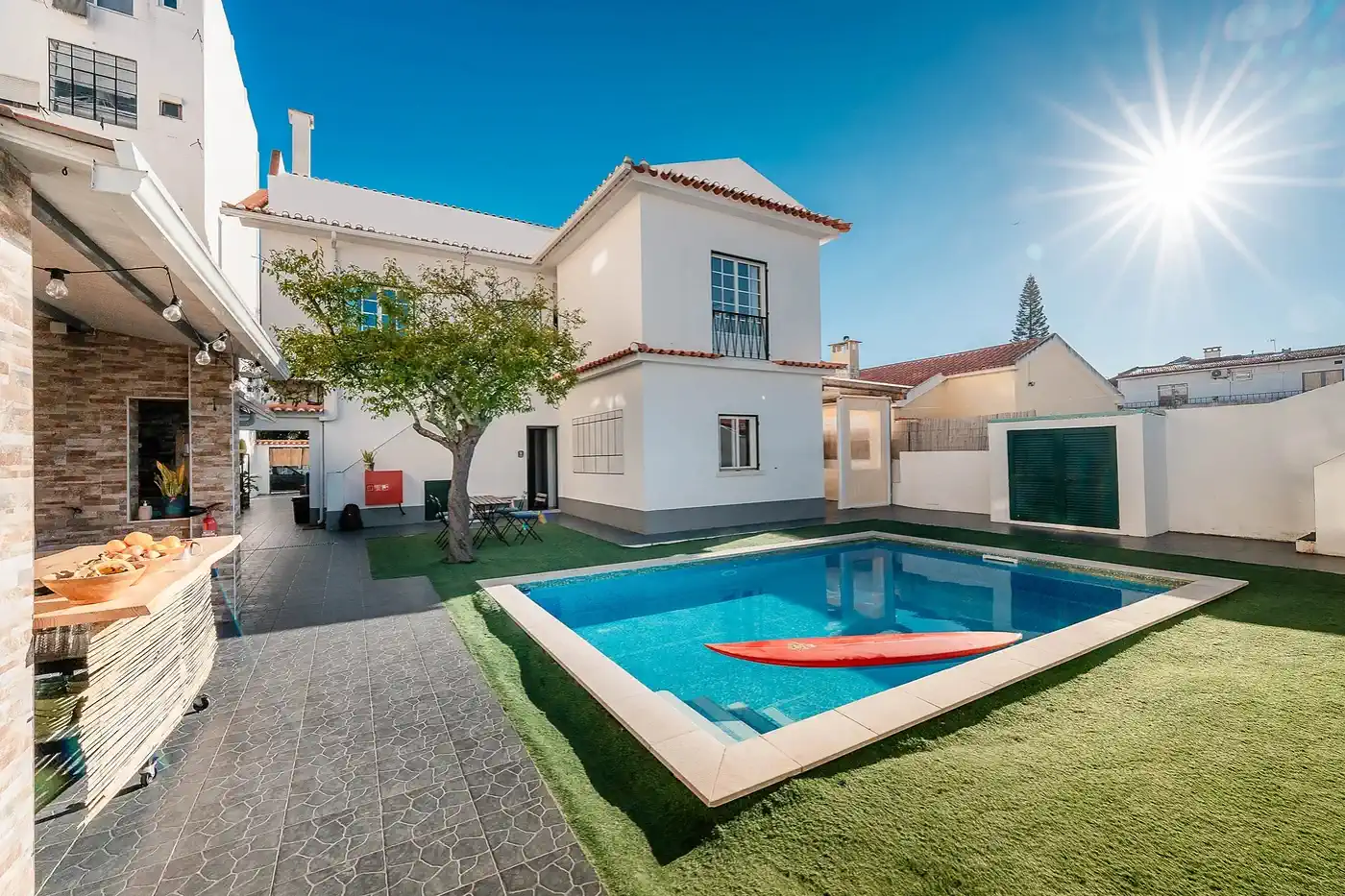
Our Algarve partner is SURFinn Algarve, near the surf zone with easy access to both the west and south coast spots. The camp follows the SURFinn approach used at their Lisbon and Figueira da Foz locations: villa-style buildings, comfortable dorm and private room options, a pool, and surf lessons + transfer to the right beach for the day’s conditions. From €105 for three nights in a shared dorm.
Two airport options. Faro (FAO) sits on the south coast and is one hour from the SURFinn camp; direct flights from most European hubs. Lisbon (LIS) is three hours by car or four to five hours by train. Faro is the right airport for an Algarve-only trip; Lisbon makes sense if you are combining the Algarve with Costa da Caparica or Ericeira. A rental car is strongly recommended for the Algarve so you can move between the west and south coasts as the wind dictates.
Each camp page on Waverick shows the real, live price for your dates: SURFinn Algarve starts at €105 for three nights in a shared dorm. Add a rental car (€20 to €35 a day in shoulder season, more in July-August), fuel for the wave-hunting drives, and meals out in Sagres or Lagos. Flights from European hubs into Faro run €40 to €120 return outside summer peak. The Algarve sits at the value end of European surf destinations.
Yes, especially in summer on the south coast. Meia Praia in Lagos, Praia da Mareta in Sagres and the sheltered south-facing beaches hold small, friendly waves from June through September with warm water and forgiving conditions. The west coast in winter is too powerful for first-week surfers, but the same west coast beaches work for absolute beginners on small summer days.
Yes. The wave-hunting model that works in the Algarve assumes you can drive from one coast to the other in 30 to 45 minutes when the wind shifts. Without a car you are locked into whichever single beach your camp shuttles to that day. Rental cars run €20 to €35 a day in shoulder seasons, more in July-August.
Faro for an Algarve-only trip; one hour from the SURFinn camp and far cheaper transfers. Lisbon if you are combining the Algarve with Lisbon or Ericeira; the three-hour drive each way is the trade-off for hitting two surf zones on one flight. Many Europeans choose Faro for the direct routing from London, Manchester, Dublin and the Nordic capitals.
No, it is the warmest mainland Portugal surf coast. Water sits at 16 to 18 °C December through February (the same as Costa Vicentina year-round) and a standard 3/2 wetsuit handles it fine. Air temperatures stay between 12 and 17 °C in winter, making it the European surf zone with the kindest winter weather.
Yes, and it works well if you have two weeks. A week in Lisbon (Costa da Caparica beach breaks, urban evenings) plus a week in the Algarve (west coast power, south coast warmth) covers the two strongest Portuguese surf cultures. The three-hour drive between them is the cost. If you only have one week, pick one; the Algarve in October is hard to beat, while Lisbon in September is the safest bet.

 English
 Français
  Deutsch
  Español
  Italiano