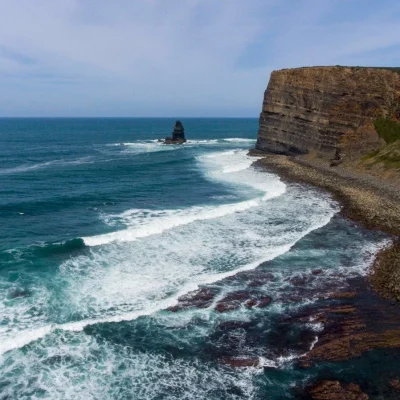
 By Steeve
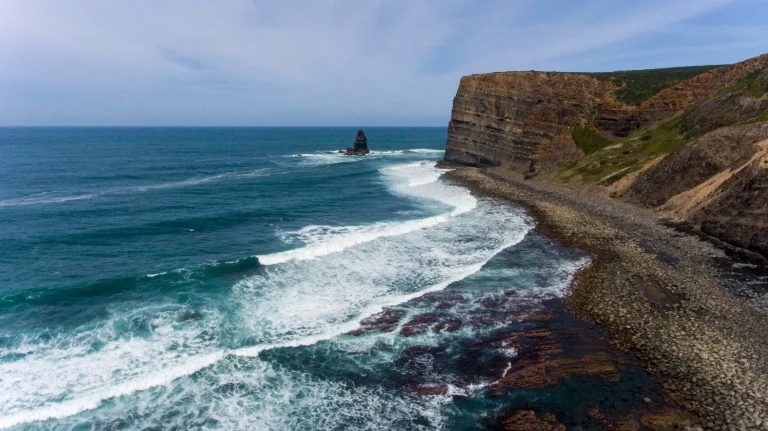
Ericeira is one of twelve places on Earth officially recognised by Save The Waves as a UNESCO World Surfing Reserve. Four reef-and-point breaks within walking distance of each other, four kilometres of cliff coast, and a small Portuguese fishing town that decided to put the waves on the map and keep them protected. If Portugal has a surf capital, this is it.
The World Surfing Reserve programme protects the entire coastal ecosystem around a surfing zone, not just one wave. Ericeira earned its place in 2011 thanks to four reef-and-point breaks that line up between the town and Praia de Ribeira d’Ilhas: Ribeira d’Ilhas itself (a long peeling right that hosts WSL Qualifying Series events), Coxos (the heaviest, a right point that breaks on shallow reef), Pedra Branca (a shorter, faster right) and São Lourenço (a big-wave outer reef for the bold). Add Praia do Norte, Praia de São Sebastião and the beginner bay of Foz do Lizandro just south, and you have one of the densest concentrations of quality waves in Atlantic Europe.
The reserve status matters in practice: it limits construction on the cliffs, restricts industrial runoff into the water and gives the local community a voice in how the surf zone is developed. The waves are part of the protected landscape, not the other way round.
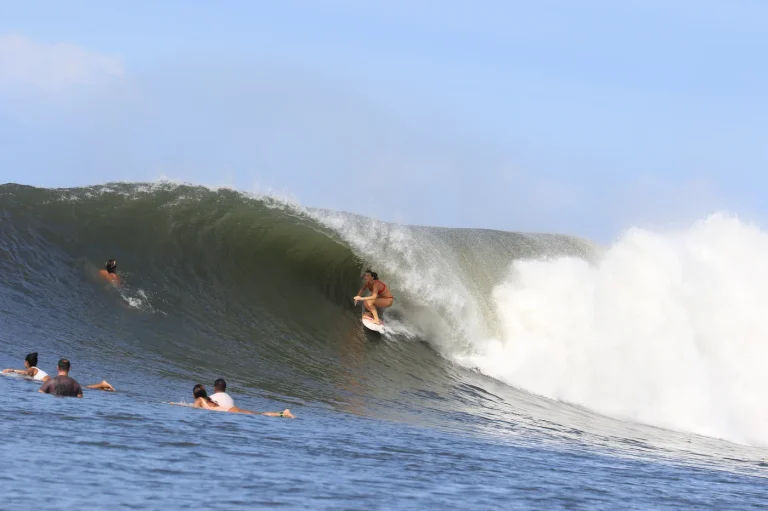
The flagship wave. A long, peeling right that breaks on a sand-and-reef bottom about a kilometre north of the town centre. Mid-tide on a clean north or northwest swell produces shoulder-high to overhead walls that run for fifty to a hundred metres. The WSL has run a Qualifying Series event here for years, which tells you the wave is consistent and quality-controlled by the crew. Intermediate-plus level required to paddle out on a good day; small days are friendlier.
Just north of Ribeira d’Ilhas, accessed by a steep path down the cliff. A right-hand point break over a shallow urchin-and-volcanic reef. The wave is faster, hollower and shorter than Ribeira d’Ilhas. Local-heavy lineup with an unwritten protocol; respect it. Coxos is for surfers with solid tube experience and an honest assessment of their own ability. On the wrong day or with the wrong attitude, this is the wave that injures travellers.
A shorter reef just south of Ribeira d’Ilhas, named for the white rock at the take-off zone. Faster than Ribeira d’Ilhas, often with a more competitive lineup. Works in a wider swell window. A great wave for an experienced traveller who finds Ribeira d’Ilhas crowded.
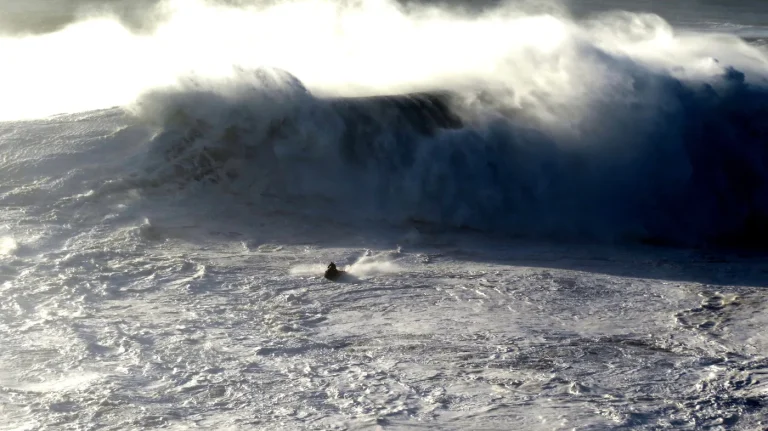
The outer reef. Only breaks on bigger swells, holds size that the other three cannot. When it works, it produces serious overhead surf with a long paddle and serious consequences. This is not a tourist wave. If you are paddling out at São Lourenço, you know why you are there.
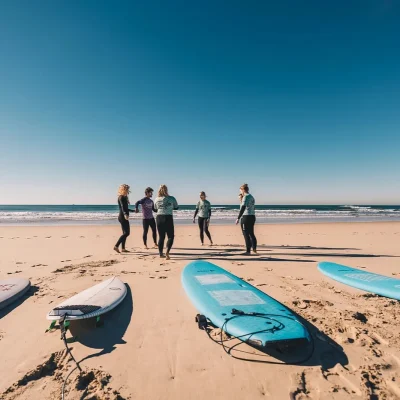
If you are in your first month of surfing, ignore the reefs above. Drive five minutes south of Ericeira to Foz do Lizandro: a wide sandy beach at the mouth of the Lizandro river, with whitewater rolling for the whole length on small to medium days. Surf schools cluster here, the bottom is forgiving, and the wave shapes itself for slow paddling and easy take-offs. Praia do Norte (just north of town, not the Nazaré one) and Praia de São Sebastião are similar sand-bottom alternatives. You can graduate to the smaller days at Ribeira d’Ilhas after a couple of weeks if you progress quickly.
September and October are the most consistent for quality. Water still at 19 to 20 degrees, swell back after the summer lull, and the WSL QS event around mid-October brings the international scene to town. November is a hidden sweet spot: clean groundswell, lighter winds than December, and accommodation drops out of summer prices. December through February gives the biggest swell but also the coldest water (15 °C) and the most onshore wind. June and July stay small and warm; great for first-timers, less interesting for anyone wanting a wave with size.
3/2 mm full suit from October through May, with a hood and boots in January and February when water drops to 15 °C. Boardshorts and a 2 mm shorty only in July and August (water hits 20 to 21 °C). The wind off the cliffs can make 18 °C water feel colder than it reads, so most travellers pack a 3/2 even for September stays.
We do not currently have a Waverick partner inside Ericeira itself. What we do have is two partners on the same Silver Coast: one forty-five minutes south, one ninety minutes north. Both work well as a base for an Ericeira surf trip, with the trade-off being a shorter or longer drive to the reefs. Many travellers stay at one of these and combine the trip with the local breaks.
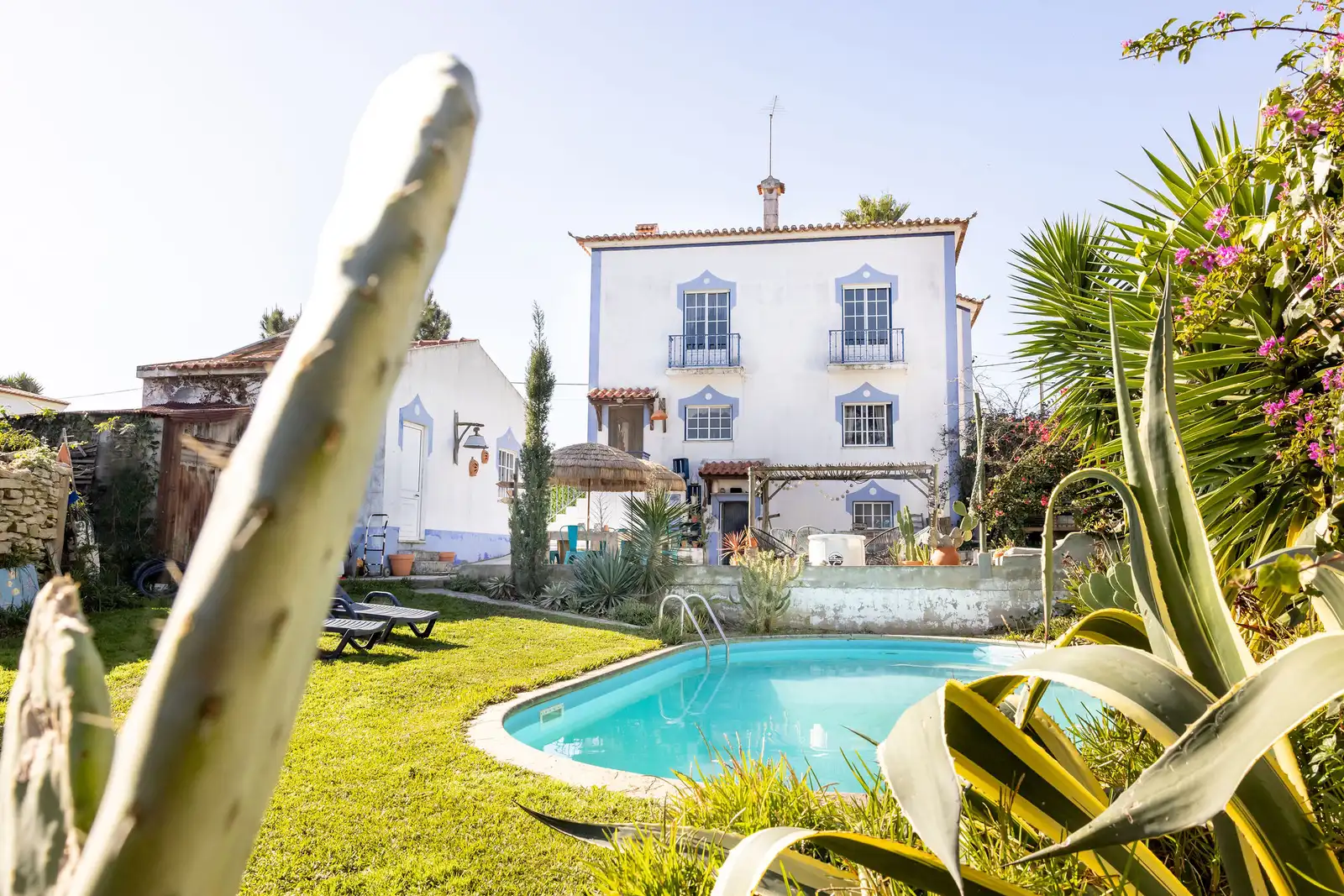
Santa Cruz is a quieter Silver Coast town with its own surf scene and a forty-five minute drive to Ericeira via the A8 motorway. Stoke is a small, friendly surf house with a pool, simple bunk dorms and a private double room option, plus a strong local surf school for those building skills before tackling the Ericeira reefs. From €128 for two nights in a shared dorm. Best for travellers who want to base in a quieter town, do day trips to Ericeira when the swell hits, and surf Santa Cruz the rest of the time.

Figueira da Foz is a beach city about 90 minutes north of Ericeira. SURFinn is a multi-building camp with a pool, ocean-view rooms and a strong surf school. The wave at Figueira is a long, gentle right-hand point break (Cabedelo) that holds size and works in winds that close out Ericeira. Many advanced travellers combine the two: SURFinn as the home base, day trips down to Ericeira when the WSL or a clean north swell lands. From €120 for four nights in a shared dorm.
Fly into Lisbon Humberto Delgado (LIS). Ericeira is fifty minutes by car or shuttle from the airport, taking the A8 motorway north. Buses run from Campo Grande in central Lisbon hourly during the day. Most surf camps include a transfer option. From Santa Cruz (Stoke) the drive south to Ericeira is 45 minutes via the A8. From Figueira da Foz (SURFinn) the drive south is 90 minutes via the A1 then A8.
Each camp page on Waverick shows the live price for your dates: Stoke Surf House from €128 for two nights, SURFinn Figueira from €120 for four nights. Add the cost of a rental car if you want flexible day trips to the Ericeira reefs (around €25 to €40 a day in October). Flights from European hubs into Lisbon run €50 to €150 return outside summer peak.
Only at the beginner beaches (Foz do Lizandro, Praia do Norte), not at the reef breaks. If you are in your first weeks of surfing, you will spend the trip on the sand-bottom beaches and watch the reefs from the cliff. That is fine and the right way to learn, but if your goal is “I want to surf big reefs,” Ericeira is the wrong trip for you right now. Come back next year.
Helpful but not strictly required. The four main reefs are all within a short drive or a long walk of the town centre, and Foz do Lizandro is a five-minute drive south. A car gives you the option to chase the right wind or check Coxos versus Ribeira d’Ilhas in the morning. If you stay at Stoke Santa Cruz or SURFinn Figueira, a rental car makes the day-trip strategy much easier.
Ribeira d’Ilhas in October can have 60 surfers in the water on a good day, especially around WSL event weeks. Coxos is more local-heavy and rarely has casual crowds because the entry path is intimidating and the wave punishes mistakes. The beginner beaches at Foz do Lizandro stay manageable even in peak season. The best crowd strategy is to be in the water at first light, before the school groups arrive.
It is a legal and community framework that protects the cliffs from new development, restricts industrial activity that could impact water quality, and gives local surfers a formal seat at planning meetings. In a real sense it means that the Ericeira coast looks the same in 2030 as in 2010, while many other European surf zones have been built over.
Yes, and Ericeira plus Lisbon is the most popular combo. A week in Lisbon (Costa da Caparica beach breaks, urban evenings) plus a week in or near Ericeira (reef-and-point breaks) is a strong two-camp Portuguese surf trip. The Algarve is six hours south by car and feels culturally distinct; better as a separate three-week trip or a winter add-on when the Silver Coast is over-sized.

 English
 Français
  Deutsch
  Español
  Italiano