 By Steeve
Lisbon is the rare city where you can finish a meeting at the office in Saldanha and be in your wetsuit at Costa da Caparica forty minutes later. The Atlantic sits on its doorstep, the water is warmer than France or northern Spain, and a wide sandbank south of the river produces some of the most forgiving beginner waves in Europe. This is the city to fly into if you want a real surf trip without leaving urban life behind.
Three things make Lisbon different from the dedicated surf villages of Ericeira or Peniche. First, the variety: the Caparica sandbank produces gentle whitewater for beginners, while Praia Grande and Guincho up the coast catch the same Atlantic groundswell that pumps Ericeira, only with fewer crowds. Second, the airport: Humberto Delgado is forty minutes from the cheapest dorm bed and twenty minutes from the city centre, which means you can fly in Friday night and surf Saturday morning. Third, what happens after the surf: pastéis de nata in Belém, a tram up to Bairro Alto, a tuna steak at a tasca in Alfama. You came to surf, but the city is still the city.
The trade-off is wind. Caparica gets onshore by mid-morning in summer, so dawn patrol is the rule from May through September. Bring the dawn discipline and you have one of the best urban surf trips in Atlantic Europe.
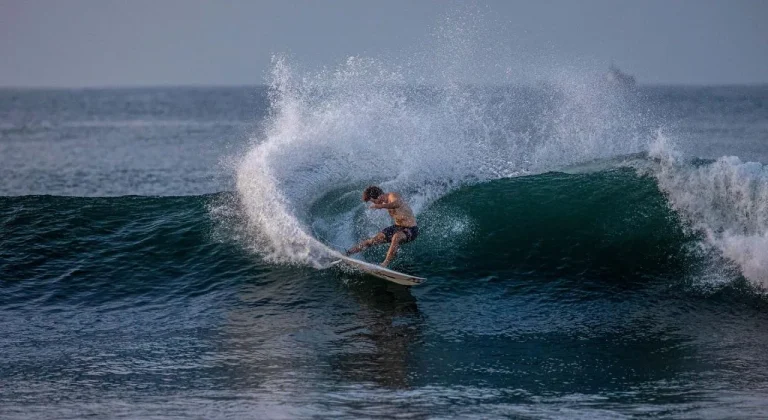
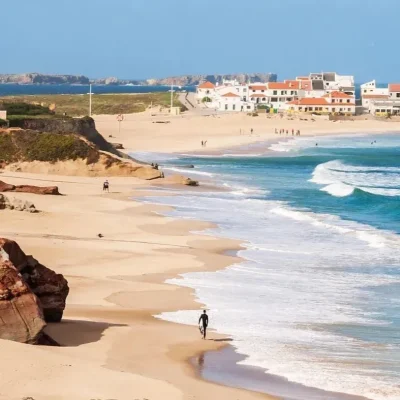
The main surf zone for Lisbon: fifteen kilometres of sand-bottom beach breaks accessed by the Caparica narrow-gauge train that runs from a single station in summer. Numbered praias (1, 2, 3 right up to 19 fonte da telha) each have a slightly different orientation. The early numbers near São João sit closer to the river mouth and pick up smaller, gentler waves perfect for first weeks. As you head south past Praia do Castelo and toward Fonte da Telha, the swell exposure grows and so do the peaks. Surf schools line every car park; the local crew is patient with beginners as long as you mind paddle priority.
Thirty minutes by car or a slow train + bus combo from central Lisbon. A wide, exposed beach that holds bigger swell than Caparica, with a left-hand reef break at the southern end (Praia Pequena) for intermediates and up. The wind can be a wildcard here, but on a clean autumn morning Praia Grande catches groundswell from Atlantic lows for half a day before going onshore. Best paired with a Sintra day trip: the moorish castle, the Quinta da Regaleira, and dinner in the old town.
The famous Hossegor-style beach break of Portugal, fifteen kilometres west of Cascais. Powerful, often crowded with experienced surfers, and almost always windy by 11 am. Best in mornings from October through April when the prevailing northerly drops. Not a first-week beach. If you have a few years of surf under your belt and the swell is small, Guincho can be a magic dawn session followed by a cheeseburger at the iconic surf bar.
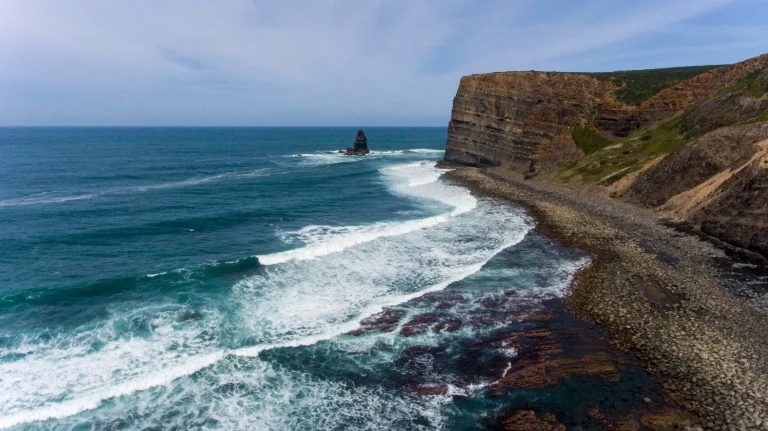
Ericeira is Portugal’s other main surf town and a UNESCO World Surfing Reserve, an hour north of Lisbon by car. We treat it as a separate trip rather than a day-trip from Lisbon: the camps in Ericeira run a different rhythm, and the four reef-and-point breaks along the cliff (Ribeira d’Ilhas, Coxos, Pedra Branca, São Lourenço) reward people who stay multiple days. If you have the time, a week in Lisbon + a week in Ericeira is a strong Portuguese surf trip combo.
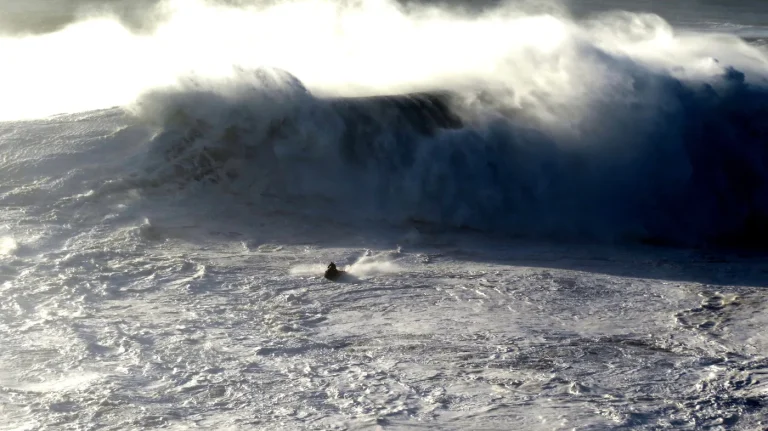
October through April delivers the most consistent swell, with September often the sweet spot: water still at 19 to 21 degrees, swell coming back after the August lull, and the school holidays over. November is the most underrated month: groundswell, light winds, warm sun and empty restaurants. July and August stay small and crowded; good for first-time surfers, less good for anyone chasing waves. December and January get cold and stormy but produce the cleanest big-wave days at Praia Grande and Guincho.
Boardshorts and a 2 mm shorty in July and August (water hits 21 °C in mid-summer). A 3/2 mm full suit from October through May, with a hood and boots in January and February when the water drops to 15 °C. Most camps include wetsuit rental in their package; few rentals are included by surf schools, so check before showing up with just boardshorts.
We have four partners across the Lisbon surf zone, each with a different angle. All four publish live, real prices on their camp pages; what you see is what you pay.
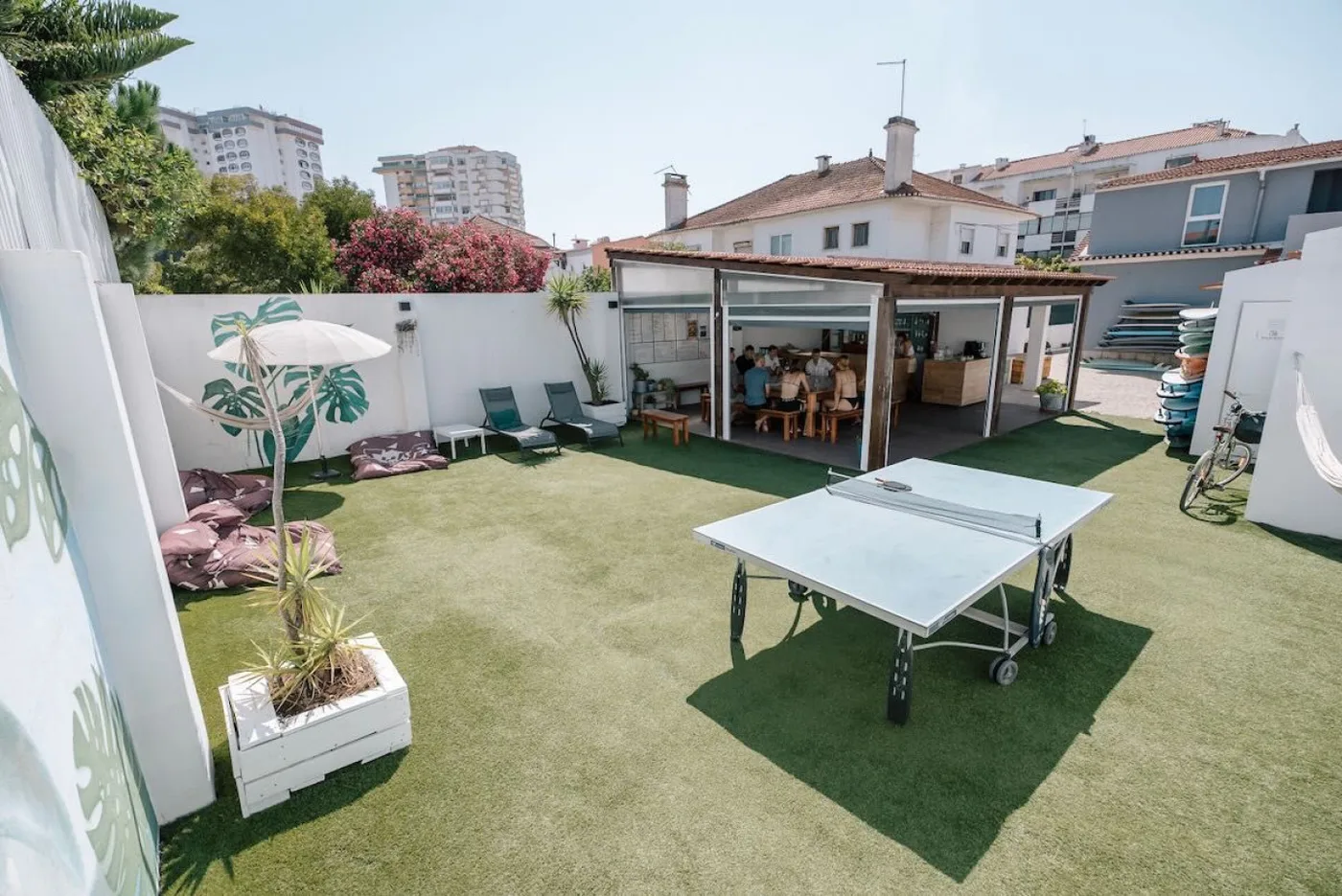
The most affordable bed in our Portugal roster: from €39 for one night in a shared dorm. Surfbase sits in central Lisbon (Avenidas Novas area), a fifteen-minute Uber from the Caparica beaches via the 25 de Abril bridge. They run a daily shuttle to the surf and back, so you do not need a car. The rooftop is the social heart of the camp; the dorms are functional rather than fancy. Best for solo travellers who want city life in the evening and surf in the morning, without a camp-style group atmosphere.
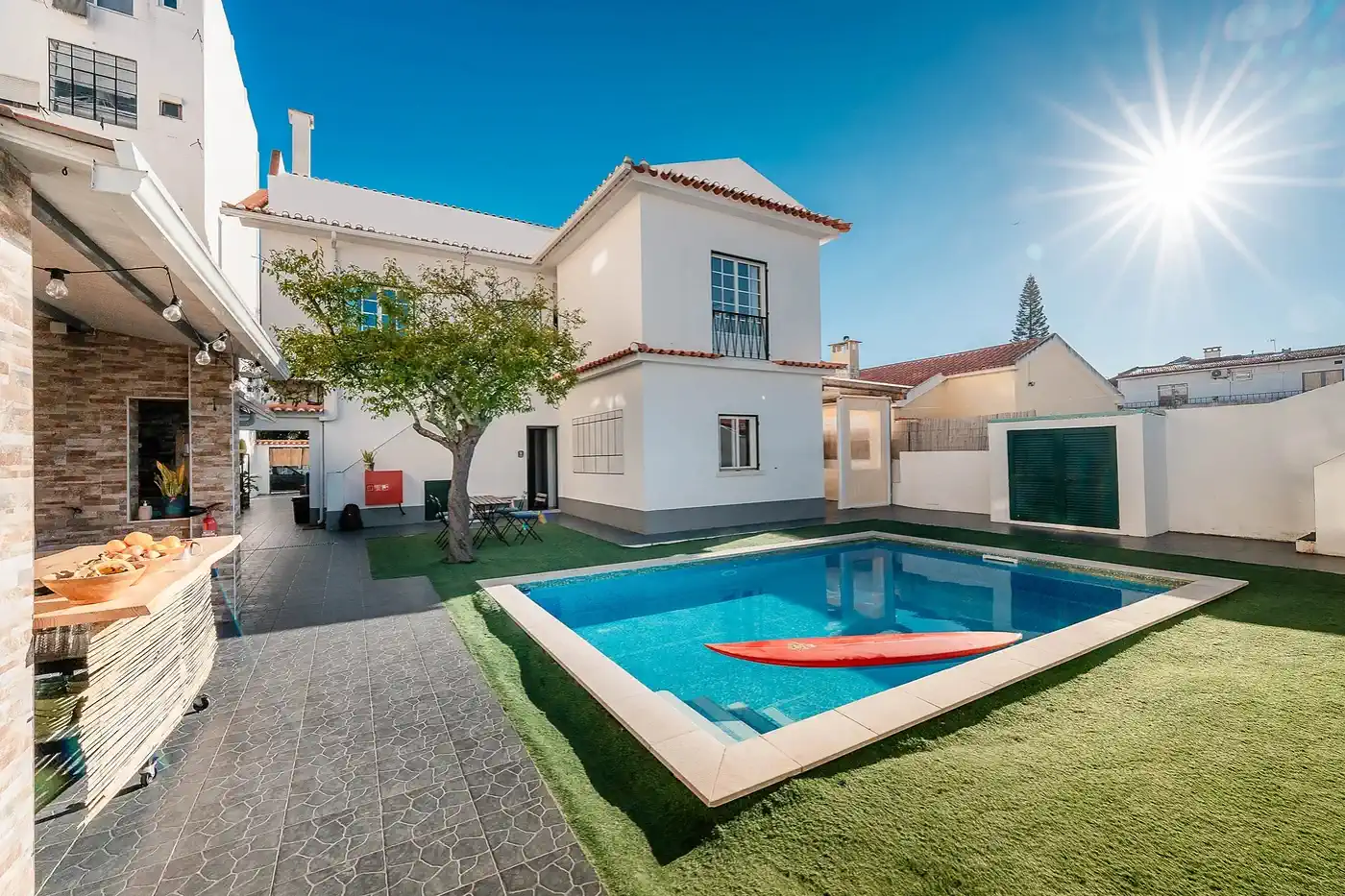
A larger camp with multiple villa-style buildings around a central pool, fifteen minutes from the beach and forty minutes from central Lisbon. The Royal Five and Six Deluxe rooms work well for couples and small groups; the multi-bed dorms suit solo travellers who want camp social life rather than city anonymity. Surf lessons, video review and the camp shuttle are included on most packages.
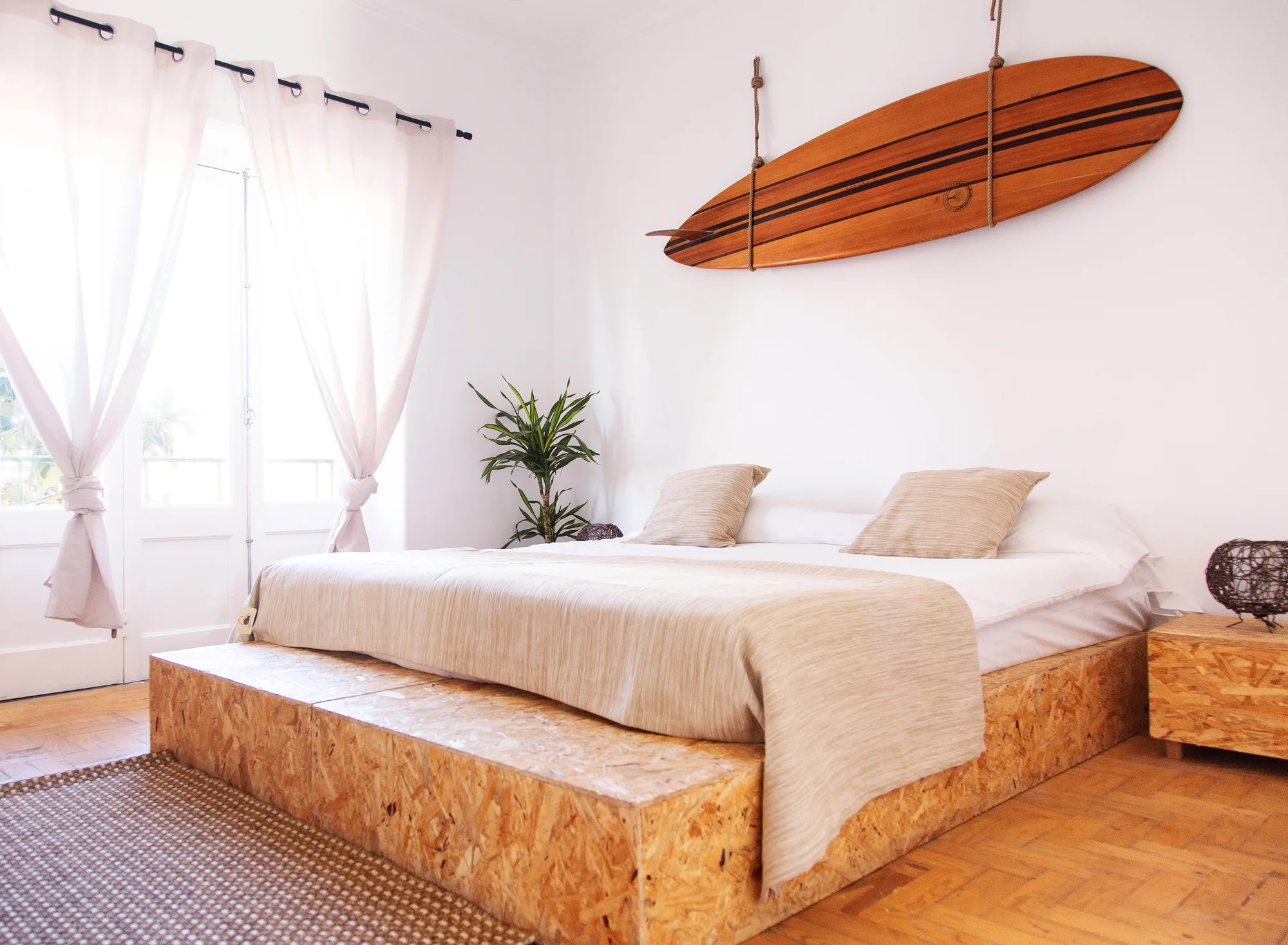
The full surf-camp experience: dawn patrol with the in-house surf school, breakfast back at the camp, free surf in the afternoon, video review at sunset. The Caparica beaches are a five-minute walk through the dunes. Cork bed frames, terraces overlooking the coast, and a steady lineup of surfers from across Europe make this the most “real surf camp” of the Lisbon options.
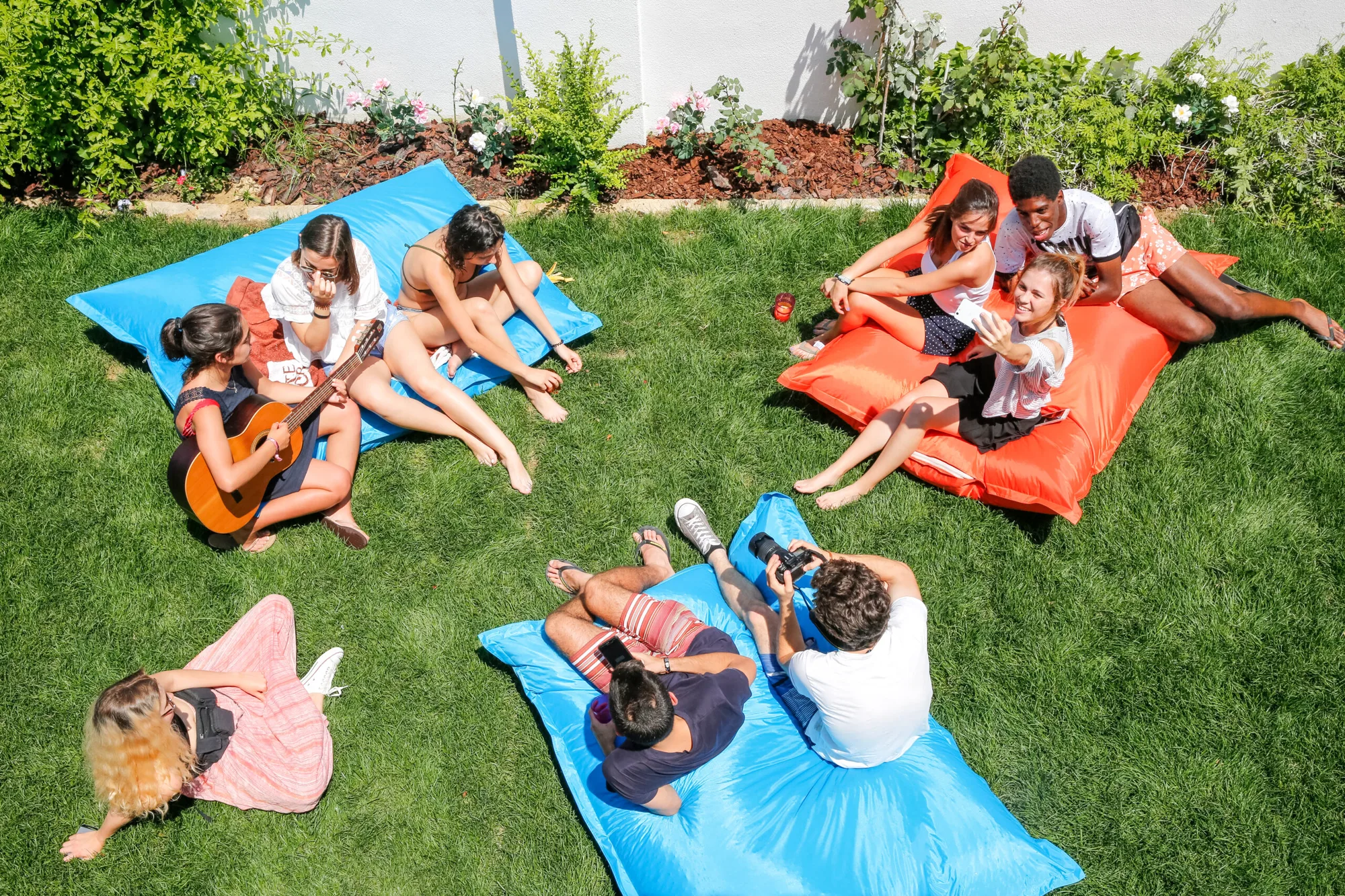
Same beach, same coaching team, dedicated camp for travellers aged 18 to 25 who want a fuller social schedule (group dinners, weekly barbecue, day trips into Lisbon). Seven-night packages with all meals included, surf lessons twice a day, and a hostel atmosphere with a coaching backbone.
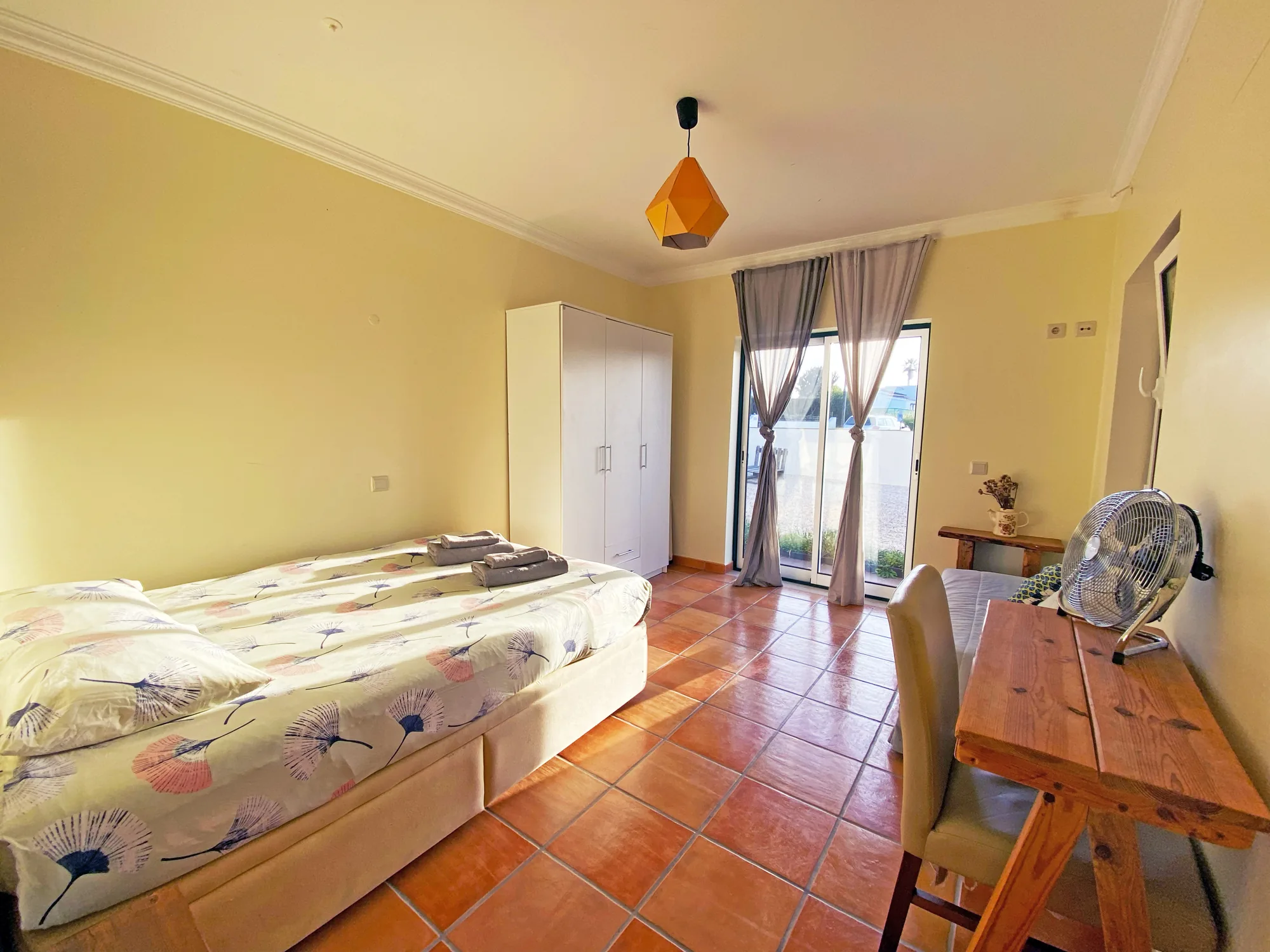
A smaller, more design-led house with terracotta tiles, wooden beams and terraces facing the ocean. Mayla is further south of the city; a stay here feels closer to a coastal Portuguese village than a Lisbon camp. Good for couples or pairs of friends who want a quieter base with a stronger food-and-design ethos.
Fly into Humberto Delgado (LIS): direct flights from every major European hub and many North American cities. The Aerobus is €4 to Praça do Comércio; an Uber to the city is around €15 and to Caparica around €25 to €35 depending on the camp. Trains run from Cais do Sodré to Cascais in 40 minutes for the Sintra coast. Caparica beaches are reached by a regular bus from Praça de Espanha or a summer-only narrow-gauge train.
Each camp page on Waverick shows the real, live price for your dates: Surfbase Lisbon starts at €39 for one night, Gota Dagua Surf Camp from €184 for three nights, SURFinn Lisbon from €148 for four nights, Mayla Surf House from €144 for four nights. The week-long all-inclusive packages with daily coaching and meals sit higher. Flights from European hubs run €50 to €150 return outside summer peak.
Yes, Costa da Caparica is one of the best beginner zones in Europe. Wide sand-bottom beaches with shallow inside whitewater, surf schools every few hundred metres, water that stays above 17 °C from May through November, and a forgiving learning environment.
Caparica is fifteen to twenty kilometres south of central Lisbon, twenty to thirty minutes by car via the 25 de Abril bridge. Most surf camps run a daily shuttle to the beach, so a car is not required. The Sintra coast (Praia Grande, Guincho) is forty to fifty minutes by car or train + bus.
September is the consensus sweet spot: water still at 19 °C, swell returning after the summer lull, school holidays over and lineups back to normal. November is the most underrated month: clean groundswell, light winds, warm sun, and easier accommodation rates. June and July are best for absolute beginners but stay small and crowded.
It depends on what you want after surfing. Stay in Lisbon (Surfbase Lisbon or downtown hostels) if you want city life: restaurants, bars, museums, fado. Stay in Caparica (Gota Dagua) if you want to be steps from the sand and live a full surf-camp rhythm. Both work; the Caparica camps run shuttles into Lisbon for evenings out, and the Lisbon camps run shuttles to Caparica for dawn patrol.
Yes, and it is one of the smartest Portuguese surf trips. A week in Lisbon (city + Caparica) plus a week in Ericeira (reef-and-point breaks plus a UNESCO World Surfing Reserve) is a classic two-camp combo. Algarve is further south and feels different culturally; better as a separate three-week trip or a winter add-on when Lisbon swell is too big.

 English
 Français
  Deutsch
  Español
  Italiano