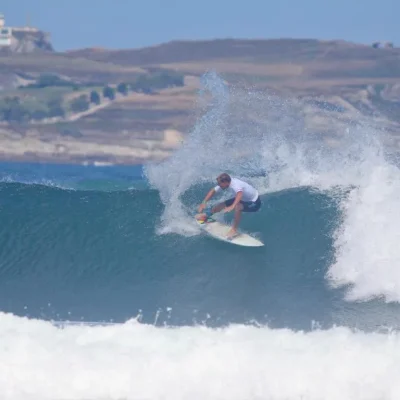
 By Steeve
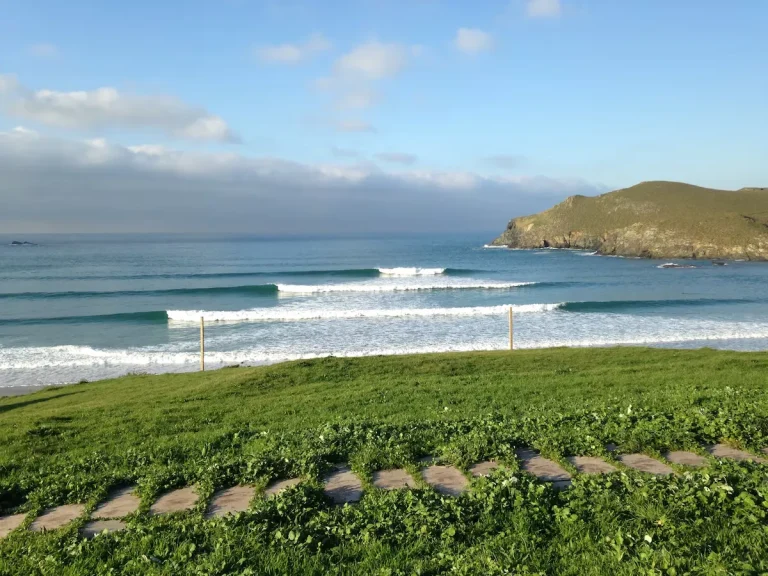
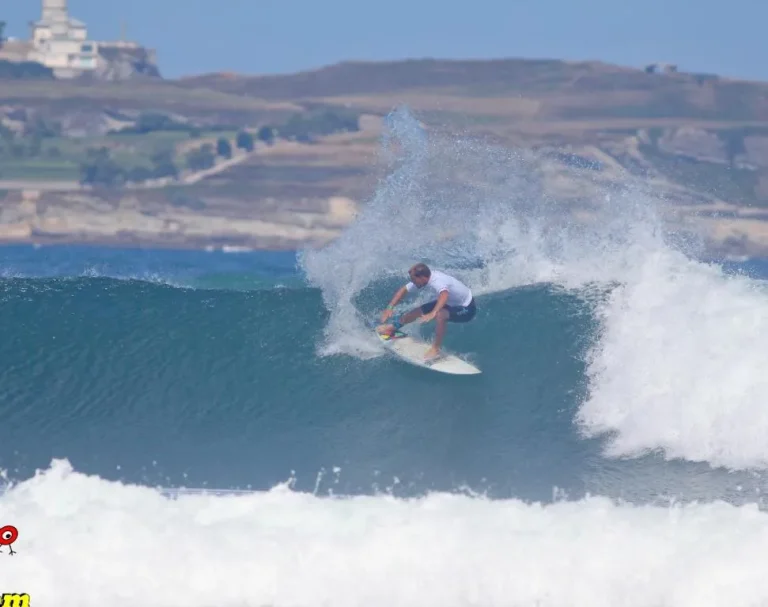
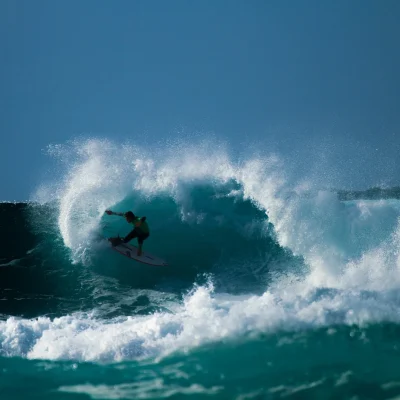
The Basque coast runs from Bilbao to the French border, about 130 kilometres of cliffs, sand-bottom beaches and sheltered river bays that catch every Atlantic swell coming out of the Bay of Biscay. It is the most surf-developed stretch of Spain, with a daily local crew at Mundaka and Sopelana in winter and a tightly contested summer scene at Zarautz and Zurriola.
San Sebastián (Donostia in Basque) is the cultural anchor: a curved bay city with two beaches, more Michelin stars per square kilometre than anywhere else in the world, and a tapas-bar street (the Parte Vieja) that gets cited as a destination in itself. Surf travellers come for Zurriola Beach in the city, day-trip to Mundaka and Zarautz, and stay for the food.
This guide covers the lot: what each spot actually surfs like, when to come, where to base yourself, and how a Basque trip compares to Hossegor in France or Cantabria further west. If you only have a week, read straight through. If you already know the spot you want, jump to the section.
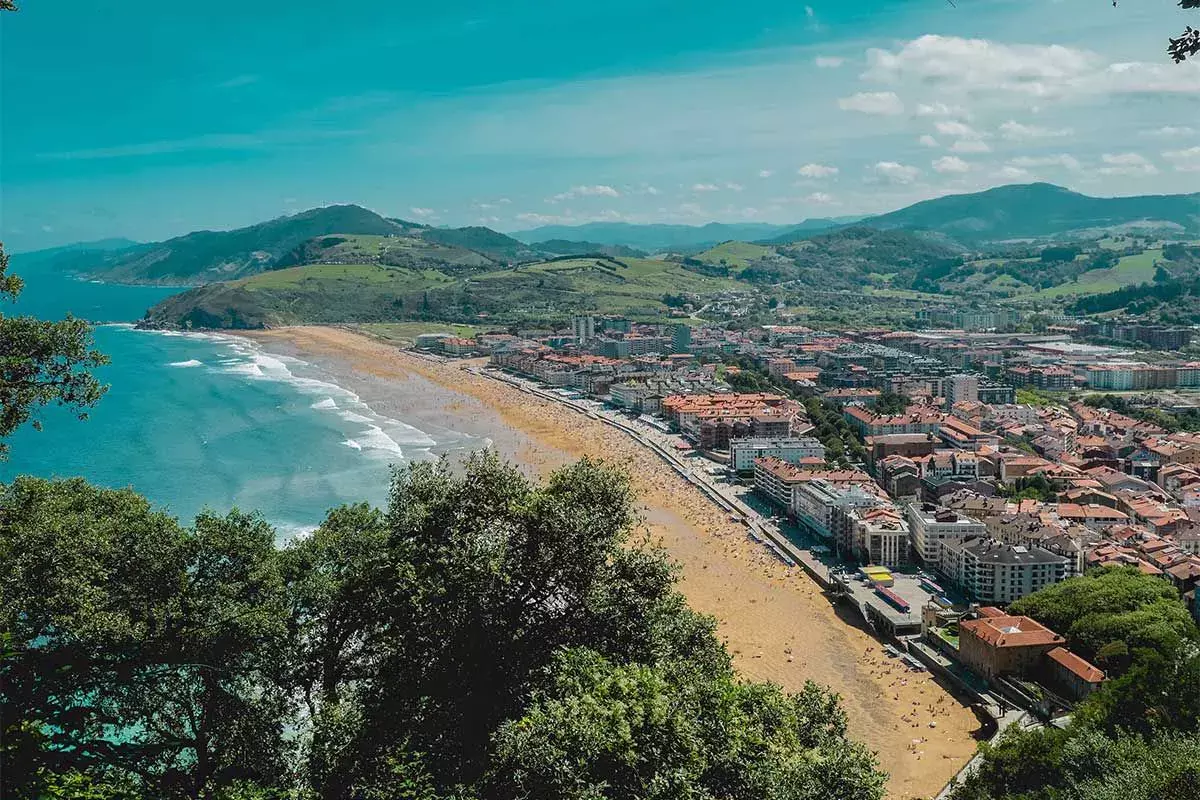
Three places sit close together on the Atlantic coast and feel different in the water. Hossegor and Capbreton in southwest France are big, heavy, beach-break dominant and famously crowded in summer. Cantabria, an hour west of Bilbao, is softer and more beginner-friendly, with long sand-bottom beaches and a slower town pace. The Basque Country sits in the middle: more variety than either neighbour, with city-beach surf in San Sebastián, top-class points (Mundaka), and quiet beach breaks like Sopelana and Backdoor.
The Basque advantage is variety in a small geography. Within an hour’s drive you can surf a city beach in the morning, a long open-coast beach in the afternoon, and a legendary point break the next day if the swell lines up. Plus the food culture: pintxos in San Sebastián, cider houses inland in Astigarraga, fresh seafood in every village.
Zurriola is the Basque Country’s most surfed urban beach: 800 metres of sand at the eastern end of San Sebastián’s bay, fronting the Gros neighbourhood. The wave is consistent, sand-bottom, and works year-round at a wide range of swell sizes. The right-hander at the east end (Plaza del Sagrado Corazón side) is the most contested peak. The left at the river mouth gets bigger and faster on the same swell.
Zurriola is the daily wave for most San Sebastián surfers and the busiest beach in the city for shortboarding. It works on most directions and most tides. Crowds are a real factor: local etiquette is strict and the lineup gets full fast on a clean morning. Surf schools cluster at the west end where the inside whitewater is gentler.
Best for: intermediate surfers, beginners on small days at the west end. Avoid: peak July and August weekends if you want space.
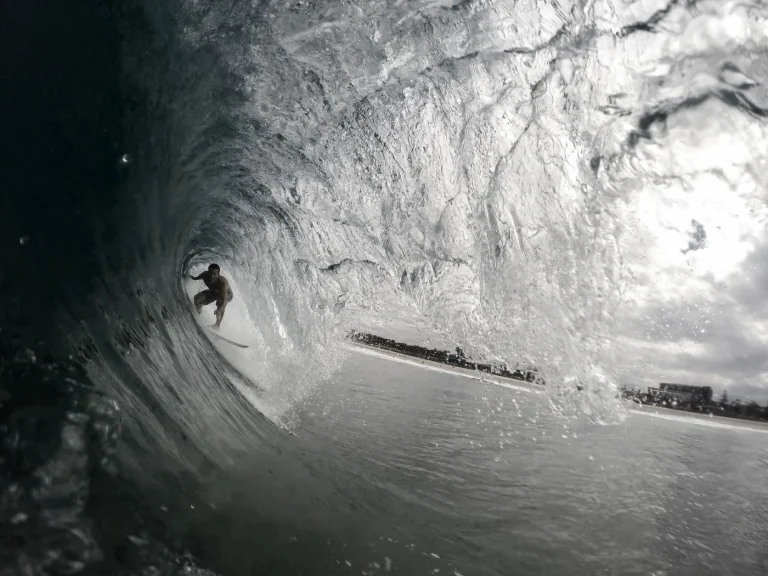
Mundaka is the marquee Basque wave: a long, hollow, sand-and-pebble rivermouth left in the village of the same name, an hour east of Bilbao. From 2003 to 2009 it hosted the WSL Championship Tour. When it works (winter swell, mid to high tide, southwest wind), it is among the longest, hollowest left-hand waves in Europe.
Two hard truths. First, Mundaka is fickle: the bar shape changes year to year and some seasons the wave barely fires. Second, the local crew is serious. Visiting surfers should treat priority strictly and not paddle into the lineup expecting set waves on the first session. Most travelling surfers visit on a guided session from a Basque-based camp rather than going solo.
Best for: confident intermediates with tube experience and a respectful approach. Avoid: if you are still learning to take off late.
Zarautz is a 2.5-kilometre sand-bottom beach 25 minutes west of San Sebastián. The longest beach on the Basque coast, it is the country’s main surf-school zone and the second-most-surfed wave after Zurriola. The east end (towards Getaria headland) holds bigger swell with more shape; the centre and west are softer and where most learners sit.
Zarautz works year-round and is the workhorse Basque break. Daily local crew at the east end through winter; tourist heavy in July and August. The town itself is low-key beach-resort, with a long boardwalk, surf shops, restaurants and a strong local longboarding scene.
Best for: all levels. The most versatile single beach on the Basque coast. Avoid: dead high tide on small days at the inside (the inside backs off and rebreaks shorewards).
Sopelana is the Bilbao surf zone: a string of beaches (La Salvaje, Arrietara, Atxabiribil) about 20 minutes from the city, separated by short cliffy headlands. The exposure is more open-Atlantic than Zurriola or Zarautz, so swell hits earlier and harder.
La Salvaje and Arrietara have multiple peaks across a long sand stretch with rights and lefts depending on the bank. They surf year-round but are at their best in autumn groundswell. The local crew is committed and the parking lots get packed on classic days. Backdoor is the harder-paddle right peak at the far end and an intermediate-to-advanced wave when it lines up.
Best for: intermediate to advanced surfers, especially in autumn. Avoid: dead onshore north winds (the open exposure means it gets victory-at-sea weather faster than Zurriola).
Beyond Zurriola, the coast around San Sebastián has several reef and point setups for advanced surfers. Roca Puta, west of the city near Orio, is a steep right-hand point that breaks on solid winter swell with northwest wind. Orrua, further out, is a longer right that holds size. Both need committed paddling and local knowledge to find the takeoff zone, but offer cleaner walls than Zurriola when the city beach is too small or too crowded.
Best for: advanced surfers. Go with a guide on a first visit. Avoid: going alone if you do not know the rocks.
The Basque coast is seasonal. Broad strokes:
September to November is the sweet spot. Atlantic depressions near Iceland generate consistent groundswell, water is still 17 to 19 °C, lineups thin out after the August rush, and the air stays mild. Mundaka’s window is mostly within this period.
December to February is peak size and peak cold. 4/3 wetsuit, sometimes 5/4 with boots in deep January. Mundaka, Roca Puta and the open-coast peaks at Sopelana are at their best, but day-to-day variability is higher and storms can shut things down for stretches. Best for experienced surfers who don’t mind the weather.
March to May is the shoulder season. Smaller, more variable swell, water still cool but warming. Quieter than autumn, with the same wave variety on the right day.
June to August is summer surf: small, warm, busy. Zurriola and Zarautz are wall-to-wall on weekends. Water reaches 22 °C in August. Beginners and learners find this the most accessible window, but anyone after meaningful swell should target shoulder season.
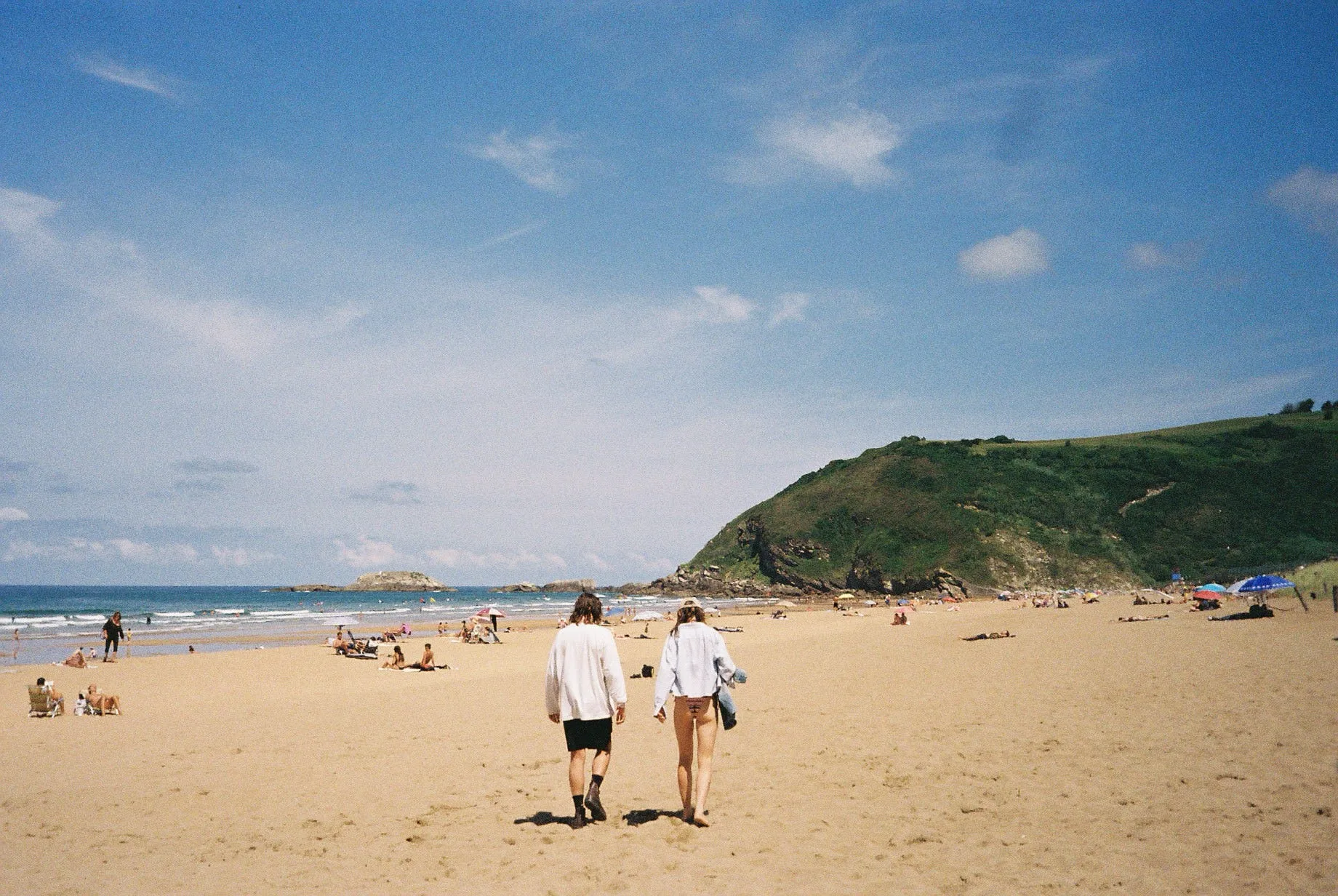
Three camps cover the Basque coast on Waverick. Each has a slightly different format and target audience.
Stoke Surf House sits in Aia, in the hills between Zarautz and San Sebastián, with bus and shuttle access to Zurriola, Zarautz and the points. The format is hostel-style: shared dorms, social vibe, full board meals, daily yoga, and Surf and Yoga packages. It is the youngest-skewing of the three Basque options. Mundaka is reachable on a guided day-trip from here.
Familycamp Zarautz is the family option at Camping Talai Mendi in Zarautz, a long-running campground with safari-tent stays and surf lessons for parents and kids on the same beach. Weekly bookings only, family rates, beach 5 minutes walk away. The most kid-friendly setup on the Basque coast.
Surfcamp Zarautz shares the Talai Mendi campground but runs adult-focused weekly programmes, with B&B and Surf Coaching options, twin and shared accommodation. The format suits surfers who want a Zarautz base and a more independent rhythm than the social hostel pace at Stoke.
For a Mundaka-focused trip, the village itself has small guesthouses but no Waverick camp partner. Most Mundaka-curious surfers base in Zarautz or Bilbao and drive 60 to 90 minutes when the swell lines up.
Cooler than central Portugal, warmer than central France. By season:
Summer (June to September): 3/2. Water 18 to 22 °C. Some surfers in deep August get away with shorty or springsuit.
Shoulder (October to mid-December, March to May): 4/3. Water 14 to 18 °C. A 4/3 with detachable hood covers most of the season.
Winter (mid-December to February): 4/3 with boots if you feel the cold, 5/4 for serious sessions in deep January. Water 13 to 15 °C.
All three Basque camps include wetsuit rental in their packages.
Two airports serve the Basque coast.
Bilbao (BIO) is the main hub. Direct flights from most European capitals, a 30-minute drive to San Sebastián or Zarautz. The airport-to-Bilbao bus (Bizkaibus A3247) runs every 30 minutes and connects to Renfe trains east. For Sopelana, BIO is the closest at 25 minutes by car.
San Sebastián (EAS) is the smaller, regional airport, with limited routes (mainly Madrid and Barcelona). 20 minutes from central San Sebastián. Useful only if you are already domestic in Spain.
Within the region: Renfe runs the Bilbao to San Sebastián line several times a day with stops at Zarautz. The drive between Bilbao and San Sebastián is about 90 minutes on the AP-8 motorway. Mundaka is 50 minutes east of Bilbao on smaller country roads. Most Waverick camps offer airport transfers as part of the package.
Basque surf camps fit three brackets:
Budget: €25 to €50 per night. Shared dorms with surf lessons, breakfast and dinner. Stoke Surf House sits in this band for shared accommodation. Best for solo travellers comfortable in a 6 to 12-bed dorm.
Mid-range: €60 to €100 per night. Private double or twin rooms, daily coaching, video review. Surfcamp Zarautz fits comfortably here, as do private rooms at Stoke.
Family weekly: from €1,200 per week per safari tent. Familycamp Zarautz prices weekly for whole-family stays. Per person it works out cheaper than mid-range adult camps when you split across 4 people.
Flights from European capitals usually run €60 to €150 return on Vueling, Ryanair or EasyJet. Add €15 to €25 per day for food outside the camp if you eat in San Sebastián (more if you do a full pintxos crawl). Surf gear rental is included in the camp packages.
The Basque Country works for first-timers in summer at the west end of Zarautz beach and the inside of Zurriola. Both have surf schools on the sand, gentle whitewater on small days, and water warm enough for a 3/2 or even shorty.
Zarautz is the better learner zone of the two: longer beach, more space, less crowded inside, and the camps at Camping Talai Mendi (Familycamp Zarautz, Surfcamp Zarautz) walk straight to the beach. Zurriola has stronger summer crowds but the surf-city atmosphere is unmatched and the after-surf pintxos make it a cultural trip as well as a learning one.
For a first-time surf trip, target June through September, book a 7-night package, and pick the camp that matches your travel style: family with kids → Familycamp Zarautz, social solo or couple → Stoke, more independent adult → Surfcamp Zarautz.
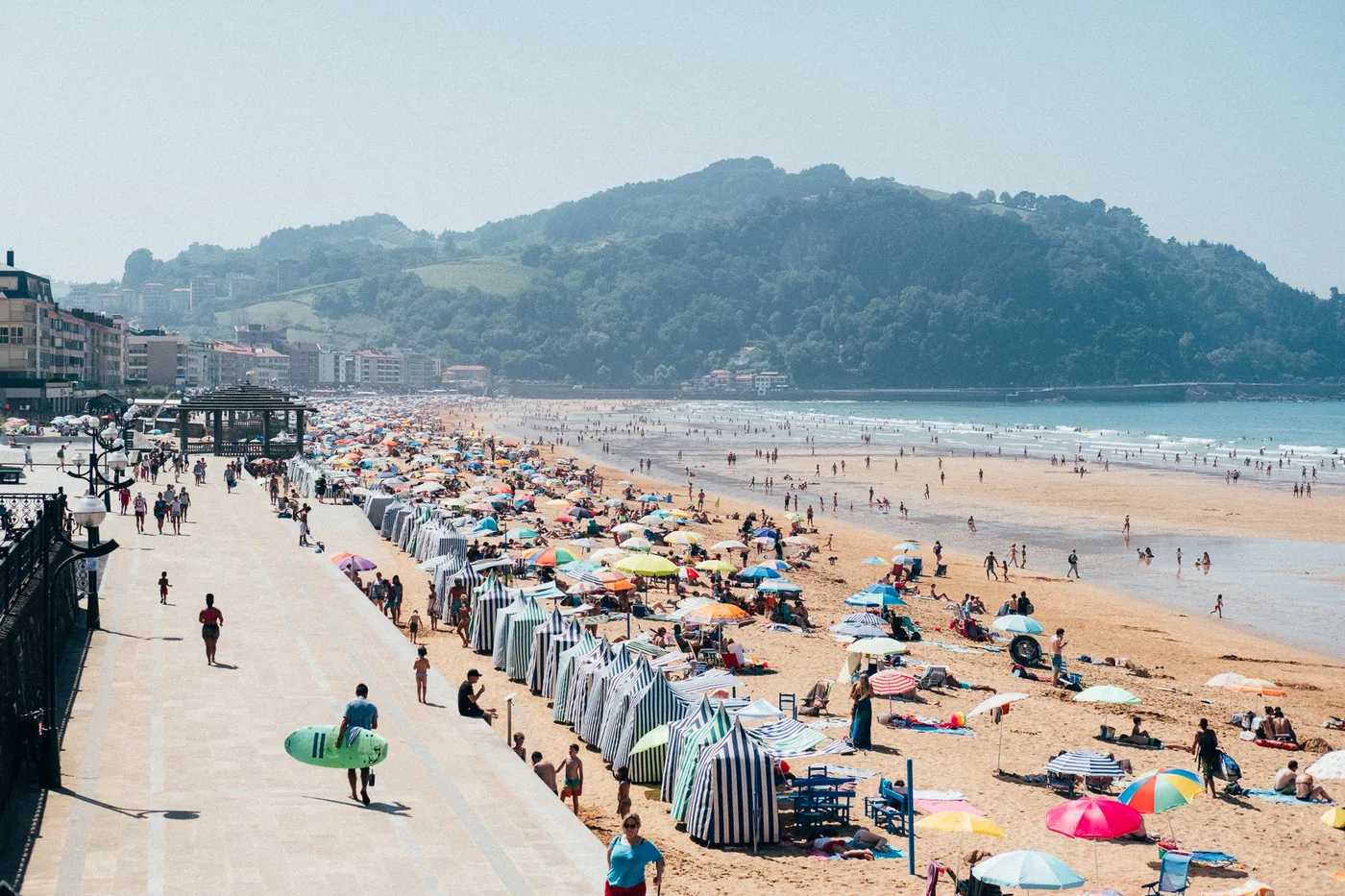
Confident intermediates have a wide menu in the Basque Country.
Mundaka is the trip headline when it works. Zurriola and Sopelana hold daily workouts year-round. The points around San Sebastián (Roca Puta, Orrua) come alive on solid winter groundswell with offshore winds. Zarautz east end gets shape and size on the same swell that makes Hossegor unmanageable.
Camps with a Surf Coaching package format suit this level: Stoke (Surf and Yoga), Surfcamp Zarautz. Most include daily guided sessions, video review and a session-planning briefing each morning. Mundaka day-trips are typically guided extras outside the standard daily session.
San Sebastián has more Michelin stars per square kilometre than any other city in the world. The pintxos crawl through the Parte Vieja (old town) is a cultural attraction in its own right: small bites at the bar, stand at the counter, order one or two, move to the next bar. Bar Néstor for the tortilla, Borda Berri for the brisket, La Cuchara de San Telmo for the foie. Three or four bars makes a meal, six or seven makes a long evening.
Inland from San Sebastián, the village of Astigarraga is the Basque cider capital. Sagardotegis (cider houses) run a fixed-menu format: cod omelette, cod with peppers, grilled steak, cheese with quince and walnuts, and unlimited cider straight from the barrel. The format is communal and loud. Most run from January to May for the season but a handful are open year-round.
Bilbao is 90 minutes from San Sebastián for the Guggenheim and the Casco Viejo. Hondarribia and the French border are 20 minutes east of San Sebastián. The Cantabrian coast and the Picos de Europa mountains are 90 minutes to 2 hours west.
September to November is the sweet spot: head-high swell at the points, water still 17 to 19 °C, lighter winds than midwinter, and lineups thinning after the August rush. Mundaka’s window mostly falls in this period. Summer (June to August) is small but warm and works for beginners. Winter (December to February) is bigger and colder, for experienced surfers.
Yes, on small days at the west end where surf schools sit. The whitewater is forgiving when the swell is small and the inside is shallow sand. Avoid weekends in July and August when the beach is wall-to-wall. Zarautz beach 25 minutes west is a better learner zone overall: longer, less crowded, gentler inside.
Long, hollow, sand-and-pebble rivermouth left. Among the best waves in Europe when it works, which is mostly mid-tide in winter swell with southwest wind. Local priority is enforced strictly. Not a wave to learn on or paddle into casually. Most travelling surfers visit on a guided session from a Basque-based camp rather than going alone.
Stoke Surf House in Aia for a social hostel format with daily yoga and Surf and Yoga packages. Familycamp Zarautz for family stays in safari tents with weekly bookings. Surfcamp Zarautz for adult-focused weekly programmes with B&B and Surf Coaching. All three have shuttle or walking access to a beach and to most spots within an hour. For a Mundaka-only trip, base in Zarautz and drive day-trips.
Yes, year-round in the Basque Country. 3/2 in summer (June to September), 4/3 in shoulder season, 4/3 with boots or 5/4 in deep winter. Water sits 13 to 22 °C across the year. Most camps include wetsuit rental in their packages.
Hossegor is bigger, heavier, more beach-break dominant and notoriously crowded. The Basque coast is slightly cooler in winter, has more wave variety (city beach, river mouth point, open-coast beach breaks), and noticeably less crowded outside Mundaka. Food culture is stronger in San Sebastián. If you want big-wave beach breaks, France wins; for variety and culture, the Basque Country wins.
Yes, but treat the priority order seriously: established locals first, regulars second, you third. Sit on the shoulder for the first session, watch the rotation, take what comes to you rather than paddling for set waves. Going with a local guide from a Basque camp is the cleanest entry. Surfing Mundaka without that context is possible but the lineup is unforgiving of disrespect.
Budget: €250 to €450 weekly for a shared dorm with daily lessons. Mid-range: €500 to €800 weekly for a private room with coaching and video. Family safari-tent stays at Familycamp Zarautz price from €1,200 weekly per tent (4 people). Add flights at €60 to €150 return and €100 to €200 for food and incidentals.
For broader regional context covering Cantabria and Galicia alongside the Basque Country, see our Northern Spain surf guide. To compare camp prices, packages and live availability across the country, visit the Spain surf camps directory or the Spain destination guide.

 English
 Français
  Deutsch
  Español
  Italiano