 By Steeve
Northern Spain runs from the French border at Hondarribia to the Galician headlands above Portugal: roughly 800 kilometres of cliffs, rivermouths and sand-bottom beaches. The Bay of Biscay catches the same Atlantic groundswell that lights up Portugal and France, but the coast is greener, the water cooler, and the food culture is in a category of its own.
Three regions cover the entire surf scene. The Basque Country, around San Sebastián and Zarautz, mixes a serious local surf culture with the world’s most decorated tapas-bar street. Cantabria, centred on Somo and Loredo, is the country’s beginner-friendly base. Galicia, the rugged northwest, has the wildest water and the emptiest lineups. Each region surfs slightly differently, suits a different kind of trip, and bases out of a different airport.
This guide covers the lot: when to come, what to wear, where to base yourself, and how the surf compares to Portugal and France for a European trip planner. If you already know the region you want, jump to the section. If you’re starting from scratch, read straight through.
The three Atlantic surf countries of southwest Europe sit close together but feel different in the water. France is bigger and more aggressive on the swell, with heavier beach breaks at Hossegor, Capbreton and Seignosse, and crowded summer lineups. Portugal is warmer, drier inland, and has the marquee waves at Nazaré, Peniche and Ericeira plus year-round surf in the Algarve.
Spain sits in the middle. Water in the Basque Country runs about 2 °C cooler than central Portugal in winter but several degrees warmer than central France. The lineups are noticeably less crowded than Peniche or Hossegor outside of one famous wave (Mundaka). The food culture, especially in San Sebastián, is the strongest of the three: pintxos in the old town, cider houses inland in Astigarraga, fresh seafood lunches all along the coast. If you want surf with a real cultural travel layer, Spain has the strongest hand.
The geography helps too. Three different coastal orientations across the regions mean someone in the country usually has surf. Galicia faces north and northwest, Cantabria faces north, the Basque Country faces northwest with a slight east-tilt around San Sebastián. When one swell window flattens out, another region usually picks up.
The Basque coast runs from Bilbao to the French border. It is the most surf-developed stretch of Spain, with daily lineups at Mundaka and Sopelana in winter and a tightly contested local circuit at Zarautz and Zurriola in summer. The Basque language (Euskara) is everywhere, road signs are bilingual, and the food is the regional headline as much as the surf.
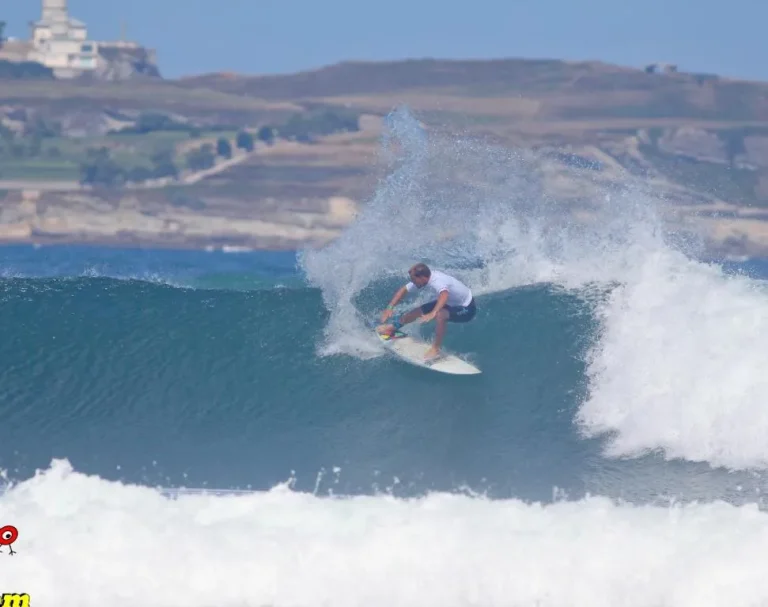
The waves. Mundaka is the single most famous wave in Northern Spain: a long, hollow, sand-and-pebble rivermouth left that hosted the WSL Championship Tour from 2003 to 2009. It needs solid winter swell to come alive and a confident barrel paddle to take advantage of it. Sopelana, near Bilbao, is the year-round Basque workhorse with multiple peaks at La Salvaje and Arrietara. Zarautz beach is a long sand-bottom strip with surf schools on the dunes and a famously crowded inside section. Zurriola in San Sebastián is a city beach with a fast right and a long sand-bottom left at the right end of the bay. The points around San Sebastián (Roca Puta, Orrua) hold solid groundswell for advanced surfers.
Where to base. Three camps cover the Basque coast on Waverick. Stoke Surf House sits in Aia, between Zarautz and San Sebastián, and runs a hostel-style operation with Surf and Yoga packages and full board. Familycamp Zarautz is the family-focused option at Camping Talai Mendi, with safari-tent stays and surf lessons by the week. Surfcamp Zarautz shares the same campground but runs adult-focused weekly programmes with B&B and Surf Coaching options.
When to go. September to November is peak: head-high swell at the points, water still around 18 °C, lighter winds than midwinter. June through August is small and crowded but warm. December and January get serious size for advanced surfers willing to wear a 5/4 with boots.
Cantabria is the country’s beginner zone. The coast is one long arc of north-facing sand-bottom beaches, fronted by the Picos de Europa mountains an hour inland. Santander is the nearest city, but most surf travel is centred on Somo, a low-key surf town across the bay reached by a 15-minute ferry, and Loredo, its quieter neighbour to the east.
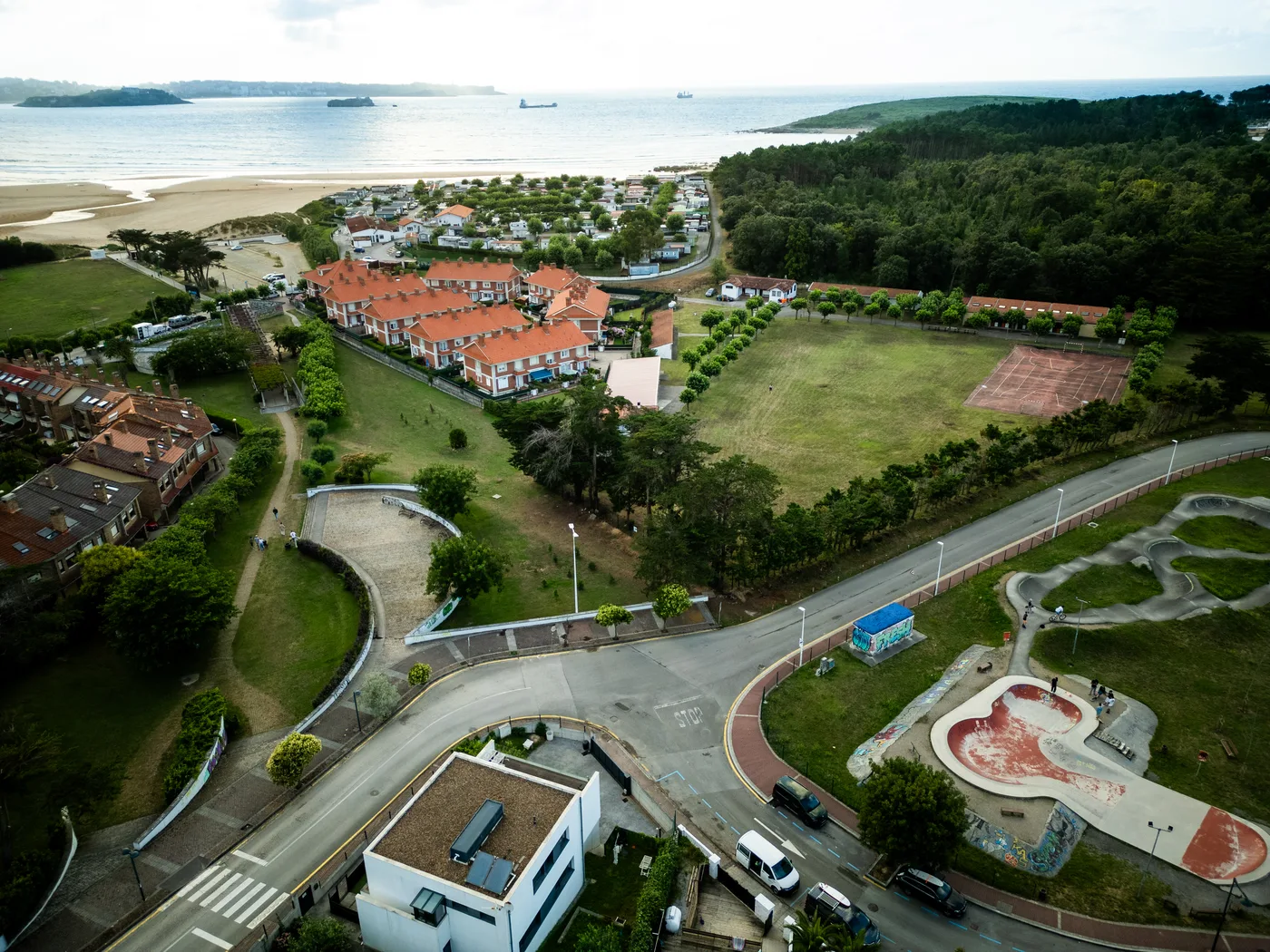
The waves. Somo Beach is the Cantabrian classic: 2 kilometres of sand-bottom waves with a soft, forgiving inside that has produced more first-day Spanish surfers than any other beach. Loredo, around the headland, is shorter and slightly more powerful with a small reef section at El Brusco for intermediate surfers. Suances, half an hour west, gets bigger and more open-ocean. La Maruca, near Santander itself, is a more advanced reef break for solid winter swell.
Where to base. Two camps anchor the Cantabrian coast on Waverick. Surf To Live sits in central Somo, walking distance to the beach, with shared dorm options, Free Surf and Surf Coaching packages, and airport transfers. Surfbase Loredo is in Loredo proper, with a wider room mix (private, double, triple, shared) and Coaching, B&B and Free Surf packages.
When to go. June to September for warm water and dependable small waves: ideal for learning. October and November pick up serious size for intermediates. The Picos de Europa add a rare mix on flat days: an hour’s drive inland and you are at altitude in beech forests with via ferratas and trail runs.
Galicia is the wild one. The northwest tip of the Iberian Peninsula faces straight at the open Atlantic with no Bay of Biscay buffer, so swell hits harder and earlier than further east. The water runs a degree or two cooler than the Basque Country year-round. Lineups are the emptiest in Spain, the cliffs are bigger, and the village rhythm is slower.
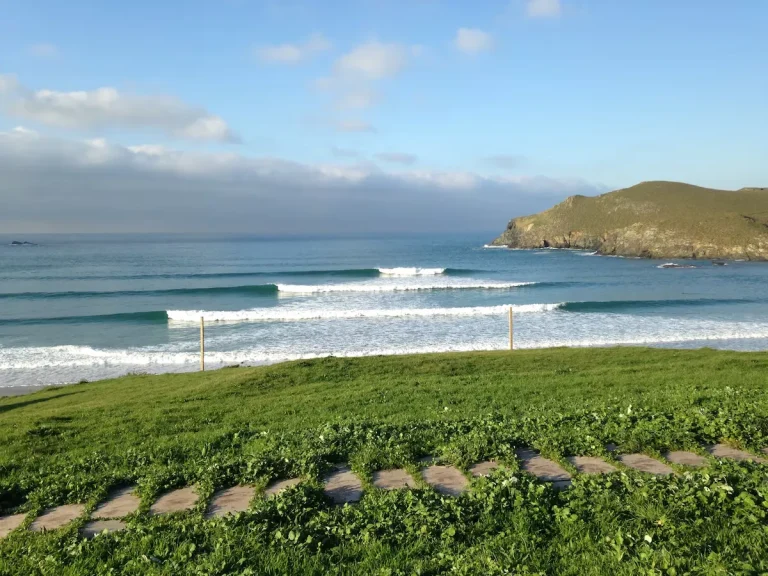
The waves. Pantín, on the north Galician coast above Ferrol, is the headline wave: a long curved beach that hosts the Pantín Classic, a WSL QS junior event each September with strong groundswell and clean lines. Razo, further south, is a long sandbar with rights and lefts depending on the bank. Doniños and Frouxeira hold powerful peaks for advanced surfers. The Costa da Morte (Coast of Death), south of A Coruña, is wilder still: rugged cliffs, fewer people, exposed beaches that grade up fast on a swell.
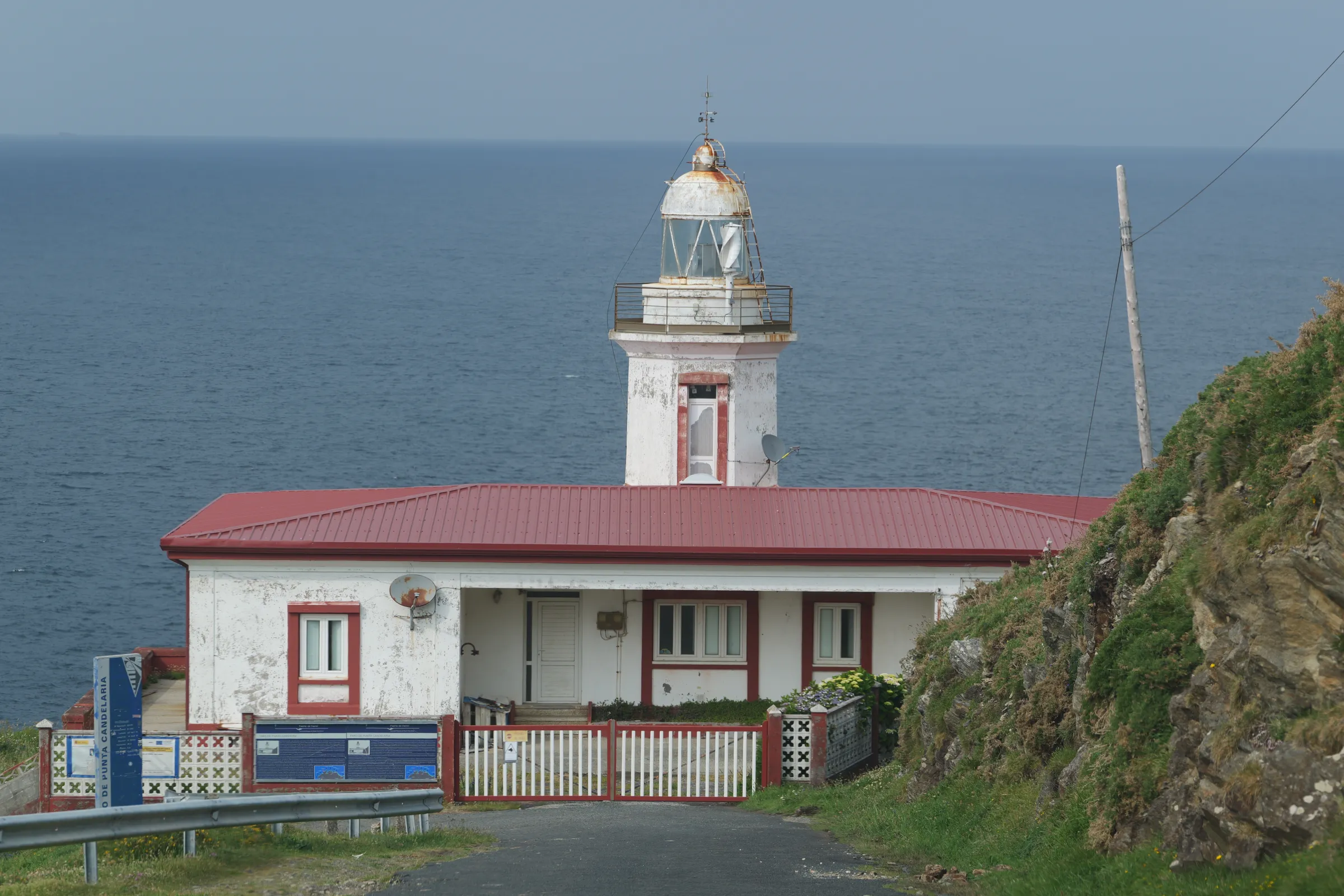
Where to base. Two camps cover Galicia. Alawa Pantín is on Pantín Beach itself, the closest you can get to the wave, and runs both adult and minors surf camps with double and shared rooms, video analysis and yoga. Laola Galicia is in Valdoviño, just north of Pantín, with a guesthouse vibe, queen rooms, private coaching and massage.
When to go. September to April for size, with the Pantín Classic week (early September) being the busiest single fortnight of the year. June and July are calmer but still good for learning. December through February is wild: 5/4 territory, frequent storms, but the smallest crowds in the country.
The Basque Country and Cantabria are very seasonal. Galicia surfs year-round but most consistently in autumn and spring. Here is the broad strokes calendar:
September to November. The sweet spot for most travellers. Autumn low-pressure systems near Iceland start firing groundswell, water is still 16 to 18 °C, lineups thin out after the August holiday rush, and the air stays mild. Pantín Classic kicks off the season in early September.
December to February. Peak size, peak cold. Wetsuit thickness goes up to 4/3 in the Basque Country and 5/4 with boots in Galicia. The advanced waves (Mundaka, Frouxeira, Roca Puta) are at their best, but day-to-day variability is higher and storms can shut things down for stretches. Best for experienced surfers.
March to May. The shoulder. Smaller, more variable swell, water still cool but warming. Quieter than autumn, with the same wave variety on the right day.
June to August. Summer surf: small, warm, busy. Cantabria becomes the beginner capital of the country with daily small clean waves on Somo and Loredo. The Basque Country gets crowded at Zarautz and Zurriola. Galicia stays the most relaxed.
Cooler than Portugal, warmer than central France. By region, by season:
Basque Country. 3/2 from June through September. 4/3 from October to May with hood optional in deep winter. Water sits between 14 °C in February and 22 °C in August.
Cantabria. Same as Basque Country, give or take a degree. Galician influence makes it a touch cooler than San Sebastián.
Galicia. 3/2 in July and August only. 4/3 from September through May. 5/4 with 5mm boots and gloves in January and February for serious sessions. The water never quite warms up the way it does in San Sebastián.
Most camps include wetsuit rental in their packages. If you bring your own, a 4/3 with detachable hood covers most of the year across all three regions.
Northern Spain has four main airports, each serving a different region.
Bilbao (BIO) is the Basque hub. Direct flights from most European capitals, a 30-minute drive to San Sebastián or Zarautz, and a frequent train link from the airport to Bilbao Abando station. Best for the Basque coast and the eastern Cantabria fringe.
Santander (SDR) is the Cantabria gateway. Smaller airport, fewer routes, but a 20-minute drive to Somo and Loredo. Ryanair runs a strong UK and Ireland set of flights here in summer.
A Coruña (LCG) is the western Galicia airport. Closest to Pantín and Valdoviño (about 90 minutes north). Limited routes, but well-connected to Madrid and London.
Santiago de Compostela (SCQ) is the southern Galicia airport, with more routes than A Coruña. Two hours by car or rail to the north Galician coast, but the better choice if you want to combine surfing with the end of the Camino de Santiago.
Trains and buses link the surf towns within a region. Renfe runs the Bilbao to San Sebastián line several times a day. Buses cover Santander to Somo (via the ferry) and the Galician coast. Many camps offer airport transfers, which is usually the simplest option for a first trip.
Surf camp pricing in Northern Spain runs across three brackets:
Budget: €25 to €50 a night. Shared dorms with daily surf lessons, half board or B&B, in Cantabria and Galicia. Stoke Surf House in the Basque Country also lands here for shared accommodation. The lower end works well for solo travellers comfortable in a 6 to 12-bed dorm.
Mid-range: €60 to €100 a night. Private double or twin rooms, half board, daily coaching, video analysis. Surfbase Loredo and Laola Galicia sit comfortably in this band, as do private rooms at Stoke and Surf To Live.
Premium and family: €120 plus a night, or weekly bundles. Boutique camps with smaller groups, full board, yoga and wellness add-ons. Familycamp Zarautz prices weekly safari-tent stays for whole families and lands in this bracket on a per-tent basis.
Flights from European capitals usually run €60 to €150 return on Ryanair, EasyJet or Vueling. Add €15 to €25 a day for food outside the camp if you eat out (less in Galicia, more in San Sebastián). Surf gear rental is usually included in the camp package.
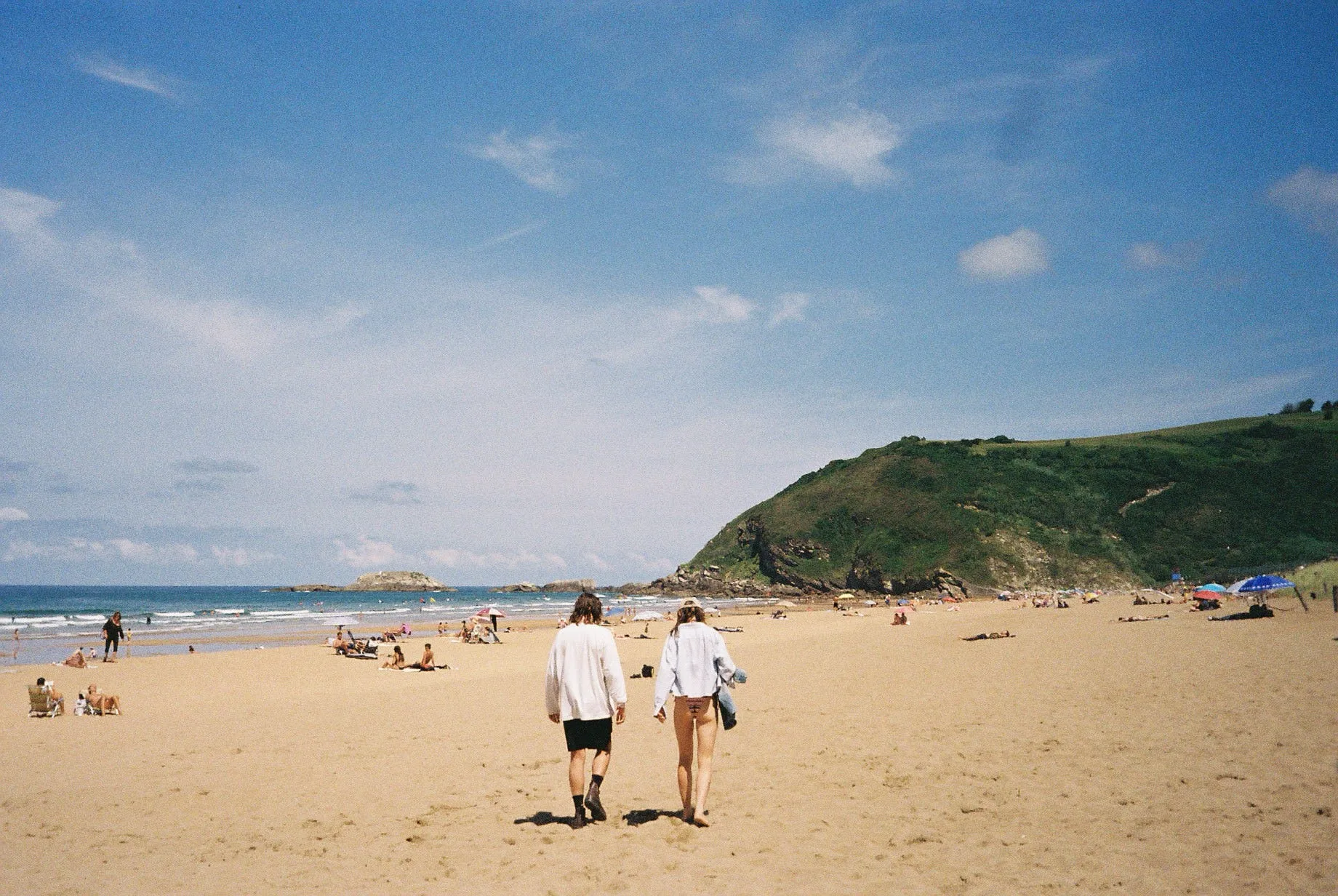
Cantabria and the Basque Country in summer are the friendliest beginner zones in Atlantic Europe. Somo beach has a soft inside whitewater section that runs for a couple of hundred metres at low tide, with surf schools on the dunes and warm water from late June through September. Loredo is similar but quieter. Zarautz beach in the Basque Country works the same way: long sand-bottom shape, schools on the sand, consistent small clean waves through summer.
Most beginner-friendly camps run morning lessons (90 to 120 minutes in the water) plus afternoon free surfs with coach video review. Surf To Live and Surfbase Loredo in Cantabria, plus Stoke Surf House in the Basque Country, all run this format. Galicia works for beginners too, but only on the smaller days: when the swell is up, even the inside is more powerful than Somo.
Practical: book a camp that includes wetsuit and board in the package (every camp on Waverick does), arrive on a Sunday or Monday for the standard weekly programme, and budget at least 7 nights for the difference between a holiday and an actual learning trip.
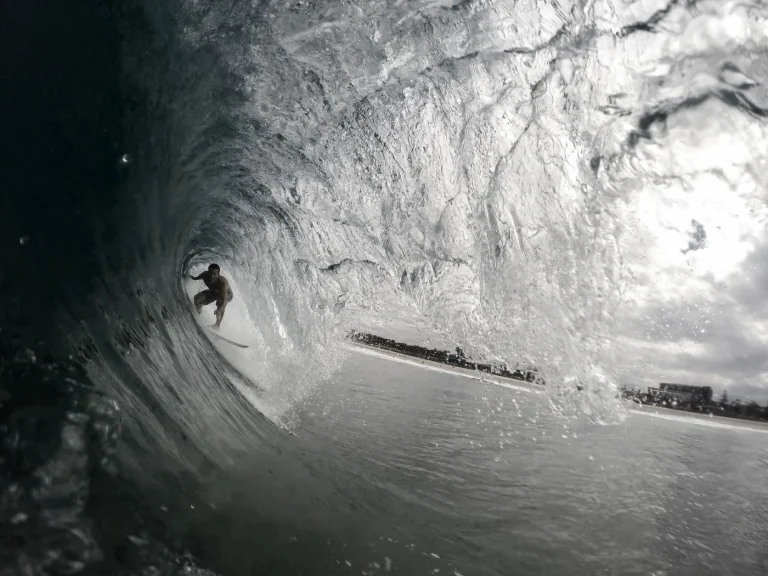
The marquee wave is Mundaka. When it works (winter swell, mid to high tide, southwest wind), it is among the longest, hollowest left-hand waves in Europe, and the local crew is serious. Treat it with respect: paddle out with a guide if you have one, sit on the shoulder for the first session, and accept that the priority order is established locals first, regular visitors second, you third.
Beyond Mundaka, the points around San Sebastián (Roca Puta, Orrua) hold winter groundswell with cleaner walls than Mundaka but smaller crowds. Sopelana and the rest of the Basque coast have year-round options for confident intermediates. In Galicia, Doniños and Frouxeira are powerful peaks for advanced surfers; the Costa da Morte holds surf when even Galicia’s main breaks are too big.
Camps that offer Surf Coaching as a package (rather than just lessons) are the ones to book at this level: Stoke Surf House (Surf and Yoga), Surfcamp Zarautz, Surfbase Loredo, Surf To Live, Alawa Pantín, Laola Galicia. Most include daily guided sessions, video review and a session-planning briefing each morning.
Two of the seven Waverick camps in Northern Spain run programmes geared at families and kids specifically.
Alawa Pantín in Galicia operates a dedicated minors surf camp alongside its adult coaching: separate group for the kids, supervised programme, double and shared rooms. It is the most kid-focused operation in the country.
Familycamp Zarautz in the Basque Country takes families together. Safari tents at Camping Talai Mendi, surf lessons for parents and kids on the same beach, weekly bookings only. Different format from Alawa: families stay together rather than dropping kids off at a junior programme.
If the kids are confident swimmers and the trip is during the school holidays, summer in Cantabria works too even though the camps there are not specifically family-oriented: Somo beach is shallow, the surf schools are used to teaching kids, and the apartments around the village suit a family stay.
Northern Spain has the strongest non-surf travel offer of the three Atlantic surf countries. San Sebastián has more Michelin stars per square kilometre than anywhere else in the world; the pintxos crawl through the old town is a cultural attraction in its own right. Bilbao is 90 minutes from San Sebastián for the Guggenheim and the Casco Viejo. The Picos de Europa mountains sit an hour inland from Cantabria, with via ferratas, trail running and a rugged cable car at Fuente Dé.
Galicia ends the Camino de Santiago at the cathedral in Santiago de Compostela: walkable from the airport in a few hours if you want to do a token last stretch. The Galician coast is also the strongest seafood region in Spain, with octopus (pulpo a feira), goose barnacles (percebes) and razor clams everywhere. Cider houses (sagardotegi in Basque, sidrería in Spanish) cluster around Astigarraga inland from San Sebastián and run an all-you-can-drink-and-eat format with grilled steak.
For the day-trip planner: rent a car for at least 2 of your 7 days. The coast roads are scenic, the mountain interior is close, and the surf rotation works better with mobility.
September to April for size. October and November are the sweet spot: head-high swell at the points, water still in the high teens, lighter winds than midwinter, and lineups thinned out after the summer rush. July and August stay small but warm, ideal for first-time surfers but crowded at the popular beaches.
Cantabria in summer. Somo beach has a soft inside section with surf schools on the dunes and consistent small whitewater from late June through September. Surf To Live and Surfbase Loredo run beginner-friendly programmes. The Basque Country (Zarautz beach) is the second option. Galicia works on smaller days but the swell can pick up fast.
Long, hollow, sand-and-pebble rivermouth left. Among the best waves in Europe when it works, which is mostly mid-tide in winter swell with southwest wind. Local priority is enforced strictly. It is not a wave to learn on or paddle into casually. Most travelling surfers visit on a guided session from a Basque-based camp rather than going alone.
No. Surf-camp staff in all three regions speak English. Spanish helps in restaurants and shops, especially in smaller villages, but it is not necessary. In the Basque Country, road signs and menus are bilingual (Basque and Spanish). In Galicia, the local language (Galego) is closely related to Portuguese and Spanish.
Portugal is warmer, drier, and has more big-wave options (Nazaré, Peniche). Spain is greener, has stronger food culture, and is less crowded outside Mundaka. Both work for beginners. If the trip is October to April, the wave count is similar; if it is June to September, Portugal stays warm-water surf-able more reliably while Spain works as much for the cultural side as the surf.
France (Hossegor area) gets bigger, heavier beach breaks and more crowds. Spain is softer overall, with more variety across the three regions, and notably better food. The Basque coast on the Spanish side feels like a continuation of the French Basque coast (Biarritz, Hendaye) but with cooler water and quieter lineups.
Budget weekly: €250 to €450 for a shared dorm with surf lessons in Cantabria or Galicia. Mid-range weekly: €500 to €800 for a private room with daily coaching. Premium weekly: €900 plus for boutique stays with full board and yoga. Add €60 to €150 return for European flights and €100 to €200 for food and incidentals.
Yes. Galicia is the natural option: surf in Pantín or Valdoviño for a few days, then head south to Santiago de Compostela by car or train (about 2 hours) and walk the last stretch of the Camino into the city. Some camps in Galicia know the route well and can advise on logistics.
For wave guides, regional context and what each part of the coast feels like, see our Spain destination guide. To compare the seven camps with real prices, packages and live availability, jump to the Spain surf camps directory.

 English
 Français
  Deutsch
  Español
  Italiano