 By Steeve
Quick read: Uluwatu and the Bukit Peninsula are reef breaks only. Dry season (May to October) fires, wet season blows out. Six named spots, all skewed intermediate to advanced. Sunday afternoon at Single Fin is the social ritual nobody skips. The only Waverick partner here is CARI Surf Camp. Bring booties: the karang reef cuts feet on every paddle out.
The Bukit Peninsula is the limestone headland off the south of Bali, a 200 metre clifftop plateau that drops straight into reef passes. Every wave on the Bukit, without exception, breaks over coral. That single fact shapes everything: skill expectation, scarred feet, bootie sales at every warung, locals who’ve earned their priority and aren’t shy about it.
The Bukit is a dry-season magnet. From May to October, south-easterly trade winds groom the cliff-front lefts at Uluwatu, Padang Padang, Bingin and Impossibles. November to April, the wind flips westerly and the whole west-facing peninsula gets blown out: that’s when you drive 90 minutes east to Keramas instead. If Uluwatu is on the list, the calendar matters more than almost anywhere else in Indonesia.
Wave type: long left-hand reef with four distinct peaks. Level: intermediate to advanced. Best swell: SW groundswell, mid to high tide on the inner peaks, low for Outside Corner.
The headline wave of Indonesia. Uluwatu is actually four waves stacked along the same reef. Outside Corner is the heaviest, breaking on the deepest part of the reef and only switching on when the swell gets serious (8 ft and up). Main Peak (or just “The Peak”) is the postcard wave, the one in every Bali surf film since 1972. Racetracks is the faster section south of the peak, where the wave hollows out and demands speed. Temples sits closer to the cliff, the inside section that picks up smaller swells. Paddle-out is through the cave at the base of the cliff, walkable at low to mid tide. Crowded by 8am in dry season, packed by 9, and locals don’t tolerate snakers.
Wave type: heavy reef-bottom hollow left. Level: advanced only. Best swell: SW, low to mid tide.
The Bali Pipeline. A short, square, mechanical left that breaks in front of a tiny cove where everyone watches. When it’s on, it’s the most photographed wave in Indonesia. Very shallow over the inside reef, quick to close out, no margin for error: this is not a wave to learn on. The Rip Curl Cup runs here when the swell cooperates. Just to the right of the main peak, on the same beach, is Padang Padang Right (also called Beach Break Padang Padang): a friendlier sand-bottom-front wall that picks up overspill from the same swell. That’s the underrated intermediate option in walking distance of the main spectacle.
Wave type: short, hollow, mechanical left. Level: advanced. Best swell: SW, low tide.
The tube machine. Bingin breaks faster than it looks from the cliff: a 50 metre wall that throws over a very shallow inside reef, ideal for one or two clean barrels per ride. Walk the steep stone stairs from the warungs at the top of the cliff to the sand cove at the base, then paddle 50 metres to the line-up. Low tide is when it works, which also means the reef is at its sharpest. Booties non-negotiable.
Wave type: long, sectiony left-hand reef. Level: intermediate to advanced. Best swell: SW, mid to high tide.
The connector. Impossibles sits on the reef between Padang Padang and Bingin and on overhead days links up with Bingin into one long ride. Three or four sections, faster than Uluwatu, less crowded than either of its neighbours because most surfers don’t bother with the longer paddle. When everywhere else is heaving, this is where regulars go.
Wave type: long left-hand reef. Level: intermediate to advanced. Best swell: SW, mid tide.
The west-side option. Balangan sits on the opposite side of the peninsula from Uluwatu, which means the wind orientation is slightly different and the crowd density is consistently lower. Holds bigger swells well. The wave is a long, fast left-hander that can offer 100 metre rides on a clean day. A 15-minute scooter from CARI gets you here, and on weekdays you might share the line-up with 20 people instead of 80.
Wave type: beach break with reef sections. Level: intermediate, with one beginner-friendly inside section. Best swell: SW, mid tide.
The Bukit’s friendliest wave, which is a relative term. Dreamland (also called New Kuta Beach) has more sand than anywhere else on the peninsula, and the inside section is the closest thing to a Bukit beginner option. That said, “beginner-friendly for the Bukit” still means a reef break with current and a coral-edged take-off zone. Suited to surfers who stand on whitewater confidently and want their first crack at a Bukit reef. Often crowded thanks to the resort complex behind the beach.
Local tip: Single Fin Sunday is the social ritual of the Bukit. Live music kicks off mid-afternoon at the cliff-edge bar above Uluwatu, and by sunset half the surfers on the peninsula are there. Don’t book a flight out on a Sunday morning if you want to remember the night before.
May to October (dry season). The window everyone’s chasing. South-westerly trade winds blow offshore on the cliff-front spots from sunrise until late morning, Indian Ocean swell pumps, and Uluwatu gets the clean head-high to overhead days that built its reputation. June through August is peak: line-ups full, accommodation prices climb 30-40%, Single Fin queues by 5pm. June and September are the sweet spot, same swell, slightly fewer humans.
November to April (wet season). Westerly winds blow straight into Uluwatu, Padang and Bingin and turn them into chop. The local pivot is a 90-minute drive east to Keramas, where the east-facing reef picks up swell from a different angle and the wind sits offshore. Most Canggu and Bukit camps run wet-season day trips there. If your dream is Uluwatu specifically, push the dates.
The best value window is late September into October: water at 28°C, swell consistent, peak crowds gone, prices back to normal.
1. Wear booties. The karang reef on the Bukit is famously sharp. Almost every surfer who comes here cuts a foot at some point, usually on the paddle out at low tide. Booties are €15-25 at any surf shop on the peninsula, and they save the back end of your trip.
2. Locals before tourists. Bali surf hierarchy is real and openly enforced. If a local is paddling for the wave, you don’t paddle around to the inside. You don’t drop in. You wait. The line-up at Uluwatu in particular runs on this rule.
3. Don’t snake. Snaking (paddling around someone with priority to claim the inside) gets you yelled at on the Bukit, and rightly so. Earn your wave by sitting in the right spot, not by cheating the system.
The cliff-edge bar at the top of the Uluwatu access stairs is Single Fin, the social anchor of the peninsula. Sunday afternoon is the ritual: live music from 4pm, sunset session, the same crew you’ve been seeing in the water all week. Drinks are €5 to €12, food is decent surf-bar fare, and the view of the line-up below is one of the best spectator seats in surfing. Tuesday and Thursday nights also draw a crowd, but Sunday is the headliner.
Off the board, the Uluwatu Temple (Pura Luhur Uluwatu) on the western tip runs a kecak fire dance at sunset every evening. Touristy, but worth one night: 50 men chanting in a fire-lit amphitheatre on a clifftop with the Indian Ocean behind them is hard to compete with. The small cove of Padang Padang Beach is where you’ll spend rest days, and the warungs along the cliffs above Bingin do the kind of sunset dinners that justify the Bukit room rates.
Denpasar airport (DPS) is 30 minutes by car to most Bukit accommodation. Pre-book a transfer (€10-15) or use Grab. The Bukit’s road network is tight, scooter-dense, and busy in the evening, so a scooter (€5-7 a day) is the standard move once you’re on the peninsula. Walking distance covers Padang Padang, Bingin and Impossibles from the central cluster, but Uluwatu and Balangan need wheels. From Canggu, the drive to Uluwatu is 30 to 45 minutes (longer in evening traffic), which is why most surfers pick one base and day-trip to the other rather than splitting nights.
The Bukit is the most expensive surf zone in Bali. Cliff-edge views, smaller property inventory, and high demand in dry season all push the rates. A rough breakdown:
June through August are peak. Late September into October is the value window. Wet season rates drop 25-35% across the peninsula, but you trade the price for the wind problem.
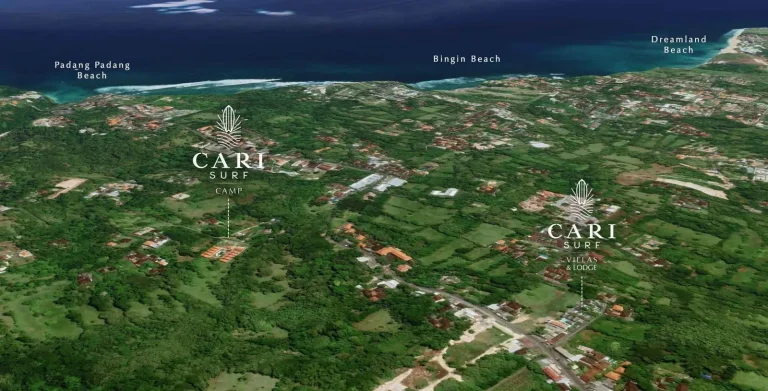
The only Waverick partner on the Bukit is CARI Surf Camp: a small surf-house with mezzanine studios (loft-style rooms with stairs to the bed area) within walking-and-bike distance of Padang Padang and a short scooter to Uluwatu and Bingin. From €95 a night, half-board with surf packages, built for intermediate-and-up surfers who want the Bukit reefs as their morning paddle.
If you’re a beginner, the Bukit is not where to start. Reef-only, sharp coral, heavy line-ups, skill expectation that doesn’t apologise. Our three Canggu partners are the friendlier first-Bali bases: In Da Surf Bali for couples and families, Mondo Surf Village for the social 18-30 vibe, and Soleia Surf Canggu for a quieter mid-range option in Berawa. Once you’ve spent a week at Old Man’s and Batu Bolong, the Bukit is the next chapter.
Plan your trip: Once you know which region fits, browse all Bali surf camps with real prices, packages and verified reviews. CARI Uluwatu, In Da Surf, Mondo and Soleia (Canggu) in one place.
No. Uluwatu’s reef is shallow, the paddle-out goes through a cave, the line-up runs on local priority, and the wave doesn’t forgive a missed take-off. If it’s your first or second time on a board, surf Canggu (Batu Bolong, Old Man’s inside) for a week first. Most Canggu camps run a day trip to the Bukit when you’re ready.
May through October, with June to August as peak. South-westerly trade winds blow offshore, Indian Ocean swell is consistent, and the wave shows up overhead regularly. November to April, westerly winds blow straight into the front of the wave and shut it down. May and October are the best mix of swell, weather and lighter crowds.
It’s the closest thing in Indonesia. Short, square, hollow, mechanical, unforgiving over a very shallow reef. The peak throws like Pipeline, the section runs like Pipeline, and the Rip Curl Cup is held there when the swell cooperates. Not as heavy as the real Pipeline at Ehukai, but it’s the Asian benchmark. Advanced surfers only: watch from the cliff first if you’re unsure.
Canggu, almost always. Sand-bottomed beach breaks, surf-school dense, walkable, softer wave year-round. Uluwatu is reef only with sharp coral and a heavy paddle-out, and the line-up enforces local priority. You can always day-trip 30 minutes south to surf the Bukit once you’ve found your feet. Most repeat Bali trippers eventually migrate to the Bukit, but trip one usually starts in Canggu.
Honest answer: very. Dawn patrol gets a clean 90 minutes, but by 8am Main Peak holds 60-100 surfers across the four sections. The local move is to paddle Outside Corner when it’s on (heavier wave, smaller crowd) or scooter to Balangan or Impossibles. Don’t try Single Fin Sunday for a quiet evening session: that’s the social shift.
Wet season (November to April) is the worst time to be on the Bukit specifically. Westerly winds blow straight into the front of Uluwatu, Padang Padang, Bingin and Impossibles, turning them into chop most days. The local pivot is a 90-minute drive east to Keramas, where the east coast picks up swell from a different direction. If your trip lands in this window, build in flexibility for east-coast day trips, or push the dates.
Yes. The karang reef on the Bukit is famously sharp, and almost every surfer cuts a foot at some point, usually on the paddle out at low tide. Booties are €15-25 at any surf shop on the peninsula. Bring a basic first-aid kit too: tropical reef cuts infect quickly if ignored.
Denpasar (DPS) is the only commercial airport on Bali, 30 minutes by car from most Bukit accommodation. Pre-book a transfer through your camp (€10-15) or use Grab from the arrivals hall: avoid the random taxi tout outside, who’ll typically charge triple.

 English
 Français
  Deutsch
  Español
  Italiano