 By Steeve
Quick read: Bali splits into four surf regions. The Bukit Peninsula fires from May to October on dry-season swells (Uluwatu, Padang Padang, Bingin), Canggu works year-round and absorbs every skill level (Old Man’s, Echo Beach, Batu Bolong), the East Coast lights up November to April when westerly trades shut the Bukit down (Keramas, Sanur), and the West Coast is the longboard escape (Medewi, Balian). First-timers should start in Canggu. Anyone chasing reef barrels heads to the Bukit.
Bali’s surf map is dictated by wind. From May to October, dry-season trades blow offshore on the south-west and south coast, which means the Bukit Peninsula and Canggu are clean and lined up. From November to April, those same trades flip and blow onshore on the south, but they go offshore on the east coast, so Keramas and Sanur take over. Canggu sits in the middle and works most of the year on a mix of swell windows and tucked-in beach breaks.
Skill-wise, the rough split: Canggu is your beginner and intermediate playground (sand-bottom whitewater, gentle reef shoulders, friendly crowds even when packed). The Bukit is reef country, suited to confident intermediates and up. The East Coast is mostly intermediate to advanced. The West Coast is longboard-friendly and quieter than anywhere else on the island. Most surf camps are in Canggu or the Bukit, and the 30-minute drive between them means you can stay in one and dabble in the other.
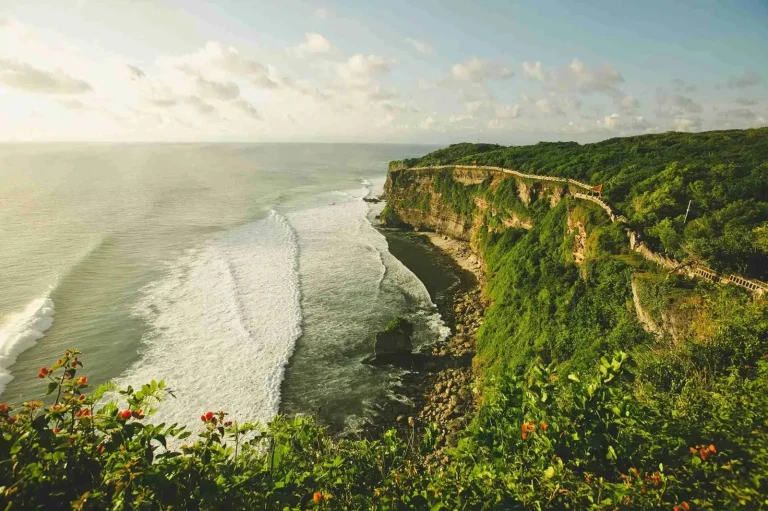
The Bukit is the limestone headland at the bottom of Bali. Reef breaks stack along the cliffs from Uluwatu round to Nusa Dua, and on a clean SW swell with light easterlies, this is the stretch that put Bali on the surfing map. Crowds are real (especially at the headline spots), but the consistency, the wave count, and the cliff scenery still make it the place every visiting surfer wants to tick off. Dry season is prime: May to September delivers the long, lined-up groundswells; October still works, just smaller.
Type: Reef · Level: Intermediate to advanced · Season: May-Oct (dry)
Uluwatu isn’t one wave, it’s four: Outside Corner (the big-day option, holds 12-15ft), Main Peak (the postcard wall, the busiest), Racetracks (faster, hollower, lower tide) and Temples (further down the reef, smaller crowd). Paddle out through the cave at the cliff base. Most sessions sit in the head-high to overhead range, peeling left for 100-200 metres on a good one. End the session at Single Fin on the cliff for a Bintang and the sunset.
Type: Reef · Level: Advanced (main peak) / Beginner-intermediate (right) · Season: May-Oct
Two spots, one beach. Padang Padang main peak is the heavy hollow left often called the Bali Pipeline: shallow reef, fast take-off, square barrels when it’s on. Strictly for surfers who know what they’re doing. Right next door, Padang Padang Right is a friendly beach-break right that handles small to medium swell and works for intermediates. Walk five minutes between them.
Type: Reef · Level: Intermediate to advanced · Season: May-Oct
A short, hollow left that turns into a tube machine on a low tide. The reef is shallow enough that you’ll see it under your fins. Bingin lives up to a 6-8ft swell ceiling before it closes out, and the locals tend to drift here when Uluwatu is heaving. Stay loose in the lineup, take your turn, and you’ll find a window.
Type: Reef · Level: Advanced · Season: May-Oct
The long left between Padang Padang and Bingin. On a big day Impossibles connects all the way through to Bingin, which is one of the longest rides on the Bukit. Walls more than barrels, fast and shifty. Get there on a mid tide with overhead swell and it delivers.
Type: Reef · Level: Intermediate to advanced · Season: May-Oct
A long left-hand reef on the west side of the Bukit, closer to the airport. Slightly less crowded than the Uluwatu strip, holds bigger swells than Bingin, and the wave is more about long walls and section linking than tubes. The cliff path down to the beach takes ten minutes. Worth it.
Type: Beach break with reef · Level: Beginner-friendly to intermediate · Season: May-Oct
Sand-bottom in the middle, reef on the edges. The most beginner-friendly wave on the Bukit, which is exactly why it gets crowded with surf-school groups. Best in the early morning before the buses roll in. A solid step-up spot once you’ve outgrown Canggu mush.
Local tip: Sunday afternoon at Single Fin Uluwatu is the post-surf social magnet of the Bukit. Live music, sundowners, and a cliff view that does the heavy lifting. If you’re staying in the area, plan one Sunday around it.
Canggu is where most first-time Bali surfers end up, and for good reason. The breaks are spread along a couple of kilometres of black-sand coast, the waves run from soft sand-bottom whitewater for absolute beginners to head-high reef rights for intermediates, and the surf schools, board hire, and cafes are everywhere. It works year-round: dry season for clean conditions, wet season smaller but often glassy at dawn before the wind kicks in. The trade-off is the crowds. Old Man’s at 8am on a clean Saturday is a moving festival of foamies, longboards, and shortboards.
Type: Reef + sand · Level: All levels · Season: Year-round
The Canggu classic. A mid-tide right-hander peels off the reef into a long, soft-shouldered wall, and the inside section turns into sand-bottom mush that’s perfect for first-timers. You’ll see longboarders, shortboarders, beginners, and tourists on rented foamies all in the same lineup. Manage your expectations on weekends, get there at 6:30am for the cleanest window.
Type: Reef with sand inside · Level: Intermediate to advanced · Season: Year-round
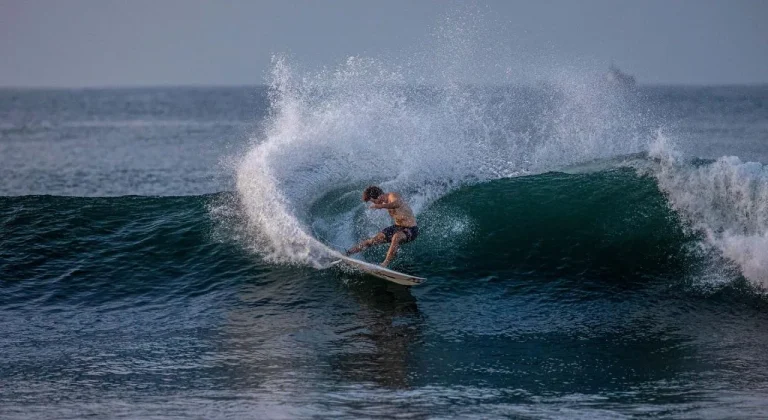
The bigger, punchier neighbour to Old Man’s. Echo’s outside reef holds size and offers fast walls with the occasional barrel section, while the inside section breaks on sand and is more forgiving. Best on a mid tide with a head-high SW swell. The black-sand beach in front is a row of warungs, surf shops, and sunset bars.
Type: Beach break · Level: Beginner to intermediate · Season: Year-round
Smaller and quieter than its famous neighbours. A pure sand-bottom beach break that’s friendly for early-stage surfers and a good escape when Old Man’s is shoulder-to-shoulder. Drifter Surf Shop is two blocks back and is the unofficial Canggu surf-culture HQ if you need a board, a fin set, or a coffee with people who know the lineup.
Type: Reef + sand · Level: Beginner · Season: Year-round
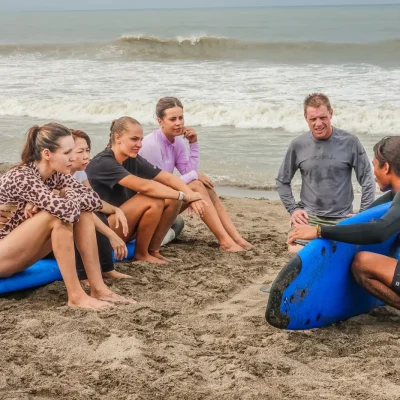
The surf-school epicentre. A long sandy paddle out to a gentle reef peak, and reliable whitewater rolling all the way to the beach. If you’re standing up for the first time, this is where it happens. It’s busy, the lineup is wide, and the locals running surf classes know how to keep it manageable.
Type: Reef · Level: Intermediate · Season: Year-round
Five kilometres north of Canggu and noticeably less crowded. A reef break that delivers cleaner walls than Echo when the swell lines up, and it’s quickly becoming the local intermediate’s pick when central Canggu is overrun. Good cafes nearby, fewer scooters.
Local tip: Saturday at Old Man’s is Canggu’s equivalent ritual. Dawn surf, breakfast at one of the warungs facing the lineup, second session at the back end of the morning. If you’re there a week, work a Saturday morning into the plan.
From November to April, westerly winds blow onshore on the Bukit and turn most of the famous breaks into a mess. Most visiting surfers go home disappointed, not realising that the East Coast is now firing. Those same winds blow offshore at Keramas, Sanur, and Nusa Dua, and the swell wraps around the south of the island to deliver clean, lined-up reef rights. It’s a 45-minute drive from Canggu, but it’s the difference between surfing all winter and not surfing at all. Most camps run day trips when the East Coast is on.
Type: Reef · Level: Advanced · Season: Nov-Apr (wet)
The wet-season heavyweight. A right-hand reef break with a fast, hollow take-off and a wall that runs for 100 metres on its day. WSL Championship Tour events have been held here, which gives you a sense of the level. Best at dawn, mid to high tide, head-high to double-overhead. Take a board you trust.
Type: Reef · Level: Intermediate to advanced · Season: Nov-Apr
Long, easygoing right-hand reefs that work best on a mid tide. The lineup is far enough offshore that you’ll need either a paddle or a quick boat ride, but once you’re there the wave count is solid and the crowd thins fast. Sanur itself is the calm, family-leaning side of Bali, which suits a slower wet-season pace.
Type: Reef · Level: Intermediate to advanced · Season: Nov-Apr
A series of reef peaks tucked into the south-east corner of the island. Lefts and rights, fast and shifty, with enough size on a clean wet-season swell to keep you on your toes. Less crowded than the Bukit and Canggu, and the resort area means easy parking and a beach club for the afternoon.
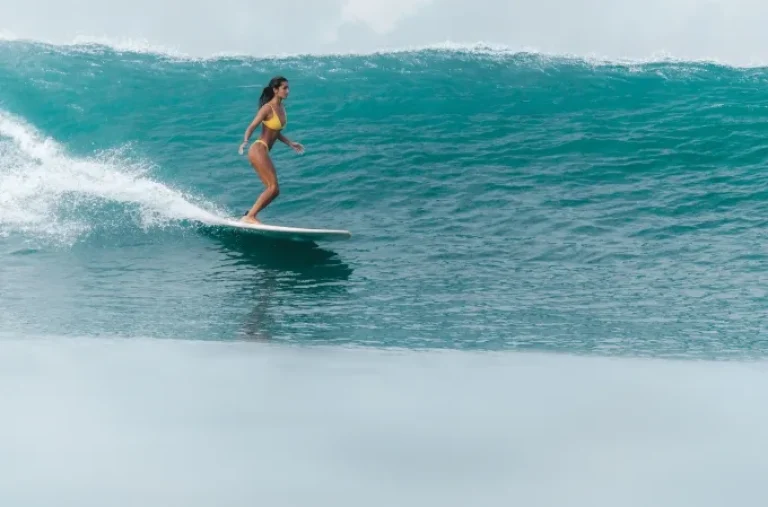
If you want quiet, you drive west. The west coast of Bali is a different country: rice paddies, fishing villages, no scooter chaos, and waves that almost always come in at a friendly size even when South Bali is overhead. It’s a 2.5-hour drive from Canggu, which is why most surfers don’t bother, which is why it stays quiet. Pack a longboard, book a homestay, leave the city behind for a few days.
Type: Point break · Level: All levels (longboard-leaning) · Season: Year-round
One of the longest left-hand point breaks in Bali. Slow, peeling, made for a longboard or a mid-length. Even on a six-foot day in Uluwatu, Medewi will be a clean shoulder-high wall that holds for 200 metres. The town is a working fishing village with a handful of warungs, a single surf shop, and the kind of pace where the day ends at 9pm.
Type: Beach break + reef · Level: Intermediate · Season: Year-round
An hour closer to Canggu than Medewi but still firmly in west-coast territory. River-mouth setup with sand-bottom peaks plus a reef on the south side. Less crowded, more shortboard-friendly than Medewi, and a small surf-village scene that runs on long lunches and after-dinner Bintangs.
Once you’ve worked through Bali’s main breaks, the natural next step is the islands east. Lombok is a four-hour ferry plus drive, and it delivers two waves worth the trip: Desert Point on the south-west tip (a long, mechanical left often rated the best wave in Indonesia, advanced only) and Gerupuk Bay on the south, which has multiple peaks across all levels and a more forgiving learning curve. Sumbawa is a step further again: Lakey Peak, the famous A-frame on the south coast, draws boat trips and surf-camp regulars. And then there’s the Mentawai Islands off Sumatra, which is the open-ocean charter trip every advanced surfer eventually takes on. Bali is the gateway. Most of these can be reached on day-trip charters, multi-day boat trips, or short flights when you’re ready.
Skill-by-spot quick reference:
The four Bali camps in our network are split between the Bukit and Canggu, which covers the two regions most surfers actually travel for. CARI Surf Camp is in Uluwatu on the Bukit, walking distance from Padang Padang and a short scooter ride from Bingin and Uluwatu itself: ideal if you want to surf reef every day and skip the Canggu commute. In Da Surf Bali is in Canggu, set up for sessions at Old Man’s, Echo Beach, and Berawa. Mondo Surf Village Canggu sits in central Canggu with quick access to Old Man’s and Echo. Soleia Surf Canggu is a quieter Canggu base near Berawa and Old Man’s. All four run day trips when conditions push the surf elsewhere on the island, so a Canggu base in October still gets you a Keramas dawn patrol when the wind flips.
Plan your trip: Once you know which region fits, browse all Bali surf camps with real prices, packages and verified reviews. CARI Uluwatu, In Da Surf, Mondo and Soleia (Canggu) in one place.
Old Man’s and Batu Bolong in Canggu are the standard answer. Both are sand-bottom with reef shoulders, both work year-round, and both are surrounded by surf schools, board hire, and lineup-friendly cafes. Berawa is a quieter back-up if Old Man’s is heaving. Outside Canggu, Dreamland on the Bukit is the next step up once you’re past whitewater.
The Bukit Peninsula in dry season (May-Oct): Uluwatu, Padang Padang main peak, Bingin, and Impossibles. In wet season (Nov-Apr), Keramas takes over as the heavyweight, and Sanur Reef offers cleaner waves than anything on the Bukit when the trades blow westerly. Desert Point on Lombok is the next-level mission when you’re ready.
Canggu, almost always. The breaks are friendlier, the surf-school infrastructure is better, the lineup forgives mistakes, and the food and accommodation scene is more spread out. The Bukit is reef country and rewards confidence. If you’re already a solid intermediate, basing on the Bukit and dipping into Canggu on rest days is a strong play. The drive between the two is 30 to 45 minutes depending on traffic.
Dry season is when Uluwatu earns the hype: May to October, with peak swell in July and August. The break needs a SW swell with light easterly or south-easterly winds, and most days within that window deliver something rideable from head-high to double-overhead. October still works on smaller days. November onwards, the wind flips onshore and Ulus is mostly out of the picture until April.
November through April, the inverse of the Bukit season. The same westerly winds that ruin Uluwatu blow offshore at Keramas, and the south swells wrap onto the east coast cleanly. Best at dawn before the wind picks up, mid to high tide, head-high or bigger. Most Bali surf camps run day trips here when the conditions line up.
Yes, on its day. Padang Padang main peak is a fast, shallow, hollow left that throws perfect square barrels when the swell, tide, and wind line up. The reef is genuinely sharp, the take-off is unforgiving, and the local crew is heavy. It’s the most photographed wave in Bali because it really is that good when it’s on. It’s also strictly advanced. The Padang Padang Right next door is what most visitors actually surf.
Three options, in order of priority: the East Coast (Keramas, Sanur reefs, Nusa Dua) when the wind blows offshore there, Canggu when the dawn glass holds before the onshore kicks in, and the West Coast (Medewi, Balian) which is more sheltered and works most of the year. Wet-season Bali still surfs every day if you know where to drive.
Honest answer: very, in peak dry season. A clean morning at Main Peak in July will have 80-plus surfers in the water, and the four peaks shift the load slightly but not dramatically. The fix is timing (dawn, before 7am), location (Outside Corner on big days, Temples on smaller days), or pivoting to Bingin or Balangan within a 15-minute scooter ride.
Old Man’s is softer, smaller, and more longboard-friendly: a mid-tide right that breaks gently and runs into a sand-bottom inside. Echo Beach is bigger and punchier: the outside reef peak holds size, the wave is faster, and there’s more occasional barrel on offer. Old Man’s is the all-levels classic. Echo is the intermediate-and-up option for the same area. They’re a five-minute walk apart.

 English
 Français
  Deutsch
  Español
  Italiano