 By Steeve
Quick read: Bali is the easiest, busiest, and most varied surf destination in Asia, with reef points, beach breaks, and barreling slabs all within a 90-minute drive. Plan May to October for the Bukit (Uluwatu, Padang, Bingin), November to April for the East Coast (Keramas, Sanur). A complete Bali surf trip runs €70 to €110 a night including a bed, breakfast, and lessons, and you can fly into Denpasar (DPS) on a 30-day visa-on-arrival.
Bali packs more rideable variety into a small island than just about anywhere else on the planet. You’ve got cliff-front reef points on the south-west tip, beach-break sandbars on the west coast around Canggu, slabby barrels on the east, and longboard-friendly mush at half a dozen spots in between. The wind flips with the seasons, which means there’s somewhere clean to surf almost every day of the year if you’re willing to drive 30 to 60 minutes.
Dry season runs roughly May through October. Trade winds blow offshore on the Bukit Peninsula (Uluwatu, Padang Padang, Bingin, Impossibles, Balangan), and the south-west swell is at its most consistent. This is when Bali fires the way it does in the magazines, and also when it gets the most crowded. November through April is wet season: showers most afternoons, westerly winds that blow out the Bukit, and the East Coast reefs (Keramas, Sanur, Nusa Dua) lighting up instead. Canggu sits in the middle, working year-round but bigger and cleaner in the dry months.
Bali is also the most beginner-friendly surf destination in Asia, full stop. Old Man’s, Batu Bolong, and Sanur all have soft, slow waves with sandy or forgiving reef bottoms, plus a thick layer of surf schools to plug into. At the other end, Uluwatu’s Outside Corner and Padang Padang’s Racetrack will demand every gram of skill an experienced surfer has. Mentawai-tier waves, no boat trip required.
Bali’s surf coast splits into four useful chunks. Most travelers stay on the south-west (Bukit and Canggu), which is where the wave density is highest and where the surf-camp scene is built. The East Coast is a wet-season pivot, and the West Coast is for slowing down.
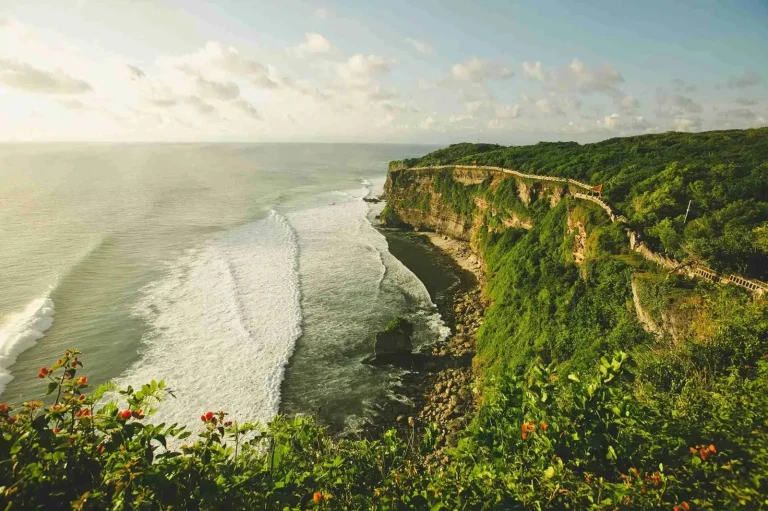
The Bukit is Bali’s high-profile zone. Uluwatu is the headline act: a 200-metre cliff with a temple on top, three reef peaks below (Temples, Outside Corner, Racetrack), and a swell window that picks up everything coming out of the Indian Ocean. South of Ulus you’ll find Padang Padang (the Bali Pipe), Bingin (a hollow right-hand reef that’s a ten-minute scooter from Padang), Impossibles, Balangan, and Dreamland. All of it is reef, almost all of it is left-hand. Bring booties if you’re squeamish about urchins.
Accommodation on the Bukit tends to be quieter and more surf-focused. There’s no real “town” to walk through: it’s villas and surf-houses scattered on cliff roads, and you scooter to the wave. Sundays at Single Fin (the cliff bar above the Uluwatu lineup) is the social magnet of the peninsula. Show up at 4pm with sandy hair and a drink budget.
Canggu is where most first-timers land, and for good reason. Echo Beach, Old Man’s, Berawa, and Batu Bolong are all within a 5-minute scooter of each other, and they cover the full skill ladder: Old Man’s for dawn-patrol longboarding, Batu Bolong for week-one beginners, Berawa for intermediates working on turns, Echo’s reef for the days you want a real wave. Canggu also has the best food and the loudest after-dark scene in surf Bali. Drifter Surf Shop in Berawa, Deus Ex Machina, and Quiksilver Boardriders in Canggu are the cultural HQs of the area.
The trade-off: traffic. Scooter is the only way to move efficiently, and weekend nights around Berawa get clogged. Saturdays at Old Man’s is Canggu’s equivalent of Single Fin Sundays: live band, full deck, surfers and non-surfers in equal mix.
The east is Bali’s wet-season insurance policy. When westerlies blow the Bukit out from November to March, the same wind blows offshore on the east coast. Keramas is the standout: a high-performance right-hand reef that holds size and produces clean barrels, and home to a CT contest in past years. Sanur reefs are softer, longer, and good for cruisier surfers. Nusa Dua and the reefs out front of the big resort hotels also fire on a wet-season swell.
Few tourists know this. If you’re booking a Bali trip in February and someone tells you “the surf is bad”, they’re talking about the Bukit. Drive 45 minutes to Keramas instead.
Two and a half hours up the coast from Canggu, Medewi is a long left-hand point with one of the best longboard waves in Indonesia. Balian, the next stop south, is a beach-and-rivermouth setup that’s quieter and a bit punchier. The west is where you go to get away from the scooter traffic. Few surf camps, fewer cafes, slow days. Worth a 3-night detour if you’re staying two weeks or more.
Single Fin (Uluwatu cliff, Sundays from 4pm), Old Man’s (Canggu, Saturdays from afternoon), Drifter Surf Shop (Berawa), Deus Ex Machina (Canggu), Quiksilver Boardriders (Canggu). These aren’t tourist traps: locals show up, brand staff hang out, and the surf chat is real.
If you want to push further, Lombok is a 30-minute fast-ferry away with Desert Point (one of the longest left-hand barrels on Earth) and Gerupuk’s six-spot bay. Sumbawa adds another six hours but rewards with Lakey Peak. These trips are worth a Bali extension on a longer Asia stint, but for a week in Bali, stay in Bali.
The simple version: dry season for the Bukit, wet season for the East. The slightly-better version: shoulder months. April-May and September-October sit between the two seasons and tend to deliver clean conditions, warm water, and noticeably thinner crowds.
Local tip: If your dates fall in late July or August, skip the Bukit hotels and base yourself in Canggu. Drive to Uluwatu for dawn patrol, beat the crowd, drive back for breakfast. The cliff lineup gets crushed by 10am in peak season.
Honest answer: every level, as long as you pick the right spot. Bali’s reputation as a “beginner destination” is half-true. The beginner waves are genuinely good for week-one surfers, but the advanced waves are some of the heaviest in the world. The trick is knowing which break suits you on which day.
First time on a board: Batu Bolong (Canggu), Old Man’s (Canggu), Sanur reefs at low-mid tide. Soft, slow, schools everywhere.
Intermediate (popping up, doing turns): Berawa, Echo Beach, Padang Padang main peak on small days, Medewi if you longboard.
Advanced (5+ years, comfortable in head-high): Bingin, Impossibles, Padang Padang Racetrack on the right swell, Keramas, Uluwatu Temples and Outside Corner.
One more thing worth saying: Bali’s lineups can be territorial, especially the Bukit on a good swell. Locals get priority. Don’t paddle for the set wave on your first session at Uluwatu, and don’t drop in. The respect goes a long way and you’ll get waves anyway, because there are a lot of them.
Bali is one of the cheapest world-tier surf destinations you can fly to. A solid week of surf, food, accommodation and lessons can come in under €1,000 all-in if you’re sensible.
Avoid the late-July to mid-August window if budget matters: room rates climb 30 to 40%, the Australian school holidays land in there, and the lineups go feral. October and April get you the same waves at off-peak prices.
“For the price of three nights in Biarritz you can get a week in Bali, including the lessons and the airport van.”
The only entry point is Ngurah Rai International (DPS) in Denpasar, on the south side of the island. Flight times depend on where you’re starting:
Most nationalities (EU, UK, US, Canada, Australia, NZ) can get a 30-day visa-on-arrival at DPS for around €35 (500,000 IDR). It’s extendable once, on the island, for another 30 days. Bring a printed return ticket and at least 6 months on your passport.
Currency is Indonesian Rupiah (IDR). Cards work in tourist zones, but you’ll want cash for warungs, scooter rentals, and small taxis. ATMs are everywhere. Buy a Telkomsel SIM card at the airport or any minimart for around 30,000 IDR (under €2) and you’ve got fast 4G across the south. Time zone is GMT+8, no daylight savings. Tap water is not drinkable: drink bottled or refill at the camp’s filtered station.
Four camps cover the styles most travelers are looking for, all in the south:
Quick sort: Bukit + boutique = CARI. Canggu + family or group = In Da Surf. Canggu + social = Mondo. Canggu + small + relaxed = Soleia.
Plan your trip: Once you know which region fits, browse all Bali surf camps with real prices, packages and verified reviews. CARI Uluwatu, In Da Surf, Mondo and Soleia (Canggu) in one place.
May to October for the Bukit (Uluwatu, Padang Padang, Bingin), November to April for the East Coast (Keramas, Sanur, Nusa Dua). The shoulder months of April-May and September-October are the sweet spot: same warm water (27-28°C), consistent swell, and 10-15% fewer surfers than the July-August peak. Canggu works year-round but is bigger and cleaner in the dry season.
Bali is one of the best beginner surf destinations in the world. Old Man’s, Batu Bolong, and Sanur all have soft, slow waves and a deep network of surf schools. Most camps include daily group lessons in the price, and a week is enough to go from zero to standing up on a green wave with confidence. Stick to Canggu beach breaks and Sanur reefs at low-to-mid tide for your first sessions.
A solid week including accommodation, breakfast, daily lessons or guiding, lunches and dinners at warungs, scooter rental, and the visa-on-arrival fee runs €700 to €1,100 for most travelers, not counting flights. Mid-range surf camps charge €75 to €110 a night all-in. Independent surf-houses run €60 to €90 a night without meals. Avoid late July through mid-August if budget matters: rates jump 30 to 40%.
Canggu if it’s your first surf trip ever, or if you want food and nightlife within walking distance of bed. Uluwatu and the wider Bukit if you’ve surfed for a couple of years and want serious reef-pass waves with quieter accommodation. A lot of returning travelers split a 10-day trip: 4 nights in Canggu, 6 nights on the Bukit. Best of both.
Depends on the trip. CARI Surf Camp on the Bukit is small and quiet, good for couples and solo travelers near the reef breaks. In Da Surf Bali in Canggu suits groups and families with its private villa setup. Mondo Surf Village is the social pick for solo travelers in the 18-30 range. Soleia Surf Canggu is the relaxed Canggu option for surfers who want a smaller crew without the party energy.
Yes, and most travelers don’t realise it. November through March, the westerlies blow the Bukit out, but those same winds blow offshore on the East Coast. Keramas (a high-performance right-hand reef), Sanur reefs, and Nusa Dua all fire in this window. Showers are mostly afternoon, water stays at 27-28°C, and accommodation is noticeably cheaper. If you’re flexible on which coast you stay near, Bali surfs 12 months a year.
Ten nights is the standard sweet spot. It accounts for the long flight (you’ll lose a day each way), gives you 7 to 8 actual surf days, and leaves room for a rest day. Two weeks is even better if you can swing it. A week is doable but feels rushed once you account for travel days and a flat-day buffer.
If you’re a beginner or intermediate, rent. Surf-shop rentals in Canggu and the Bukit run €5 to €10 a day for soft-tops, €10 to €15 for hardboards, and the quiver is solid. If you’re advanced and particular about your craft, bring two boards (your daily driver plus a step-up for size). Most airlines charge €50 to €120 each way for a board bag. Budget accordingly.
Yes, both Canggu and the Bukit are well-trodden by solo travelers, including a lot of women. The surf-camp model exists partly to solve the solo-traveler problem: built-in crew, group sessions, shared meals. Standard travel sense applies (watch your scooter, don’t leave valuables on the beach, drink responsibly), but Bali is one of the easier places to land alone. The community here is genuinely welcoming.

 English
 Français
  Deutsch
  Español
  Italiano