 By Steeve
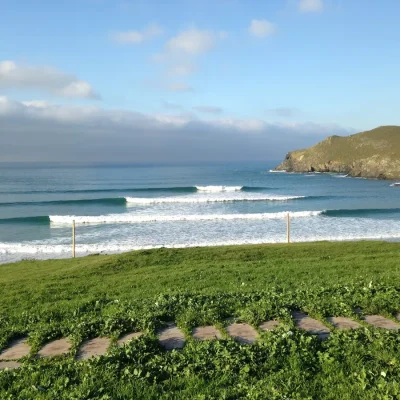
Cantabria is the most beginner-friendly stretch of Spain’s Atlantic coast, an hour west of Bilbao and an hour east of the Picos de Europa mountains. The shoreline runs as a long arc of north-facing sand-bottom beaches, with surf schools clustered on the dunes at Somo and Loredo, and a regional capital (Santander) connected to the surf side of the bay by a 15-minute commuter ferry.
The Cantabrian wave is softer than its Basque neighbour to the east and milder than Galicia to the west. Sunsets here happen over the Bay of Biscay, the cider houses are an hour inland, and a short drive south gets you into the Picos for a flat-day mountain reset. The coast is what most Spanish surfers learn on, and what European travellers come to when they want a calmer alternative to Hossegor or Mundaka.
This guide covers the spots, the camps, when to come, and what a first-timer can realistically expect from a 7-night Cantabrian trip. If you already know the spot you want, jump to the section. If you’re choosing between Cantabria and the Basque Country, read the comparison block below first.
Three things define the region against its neighbours.
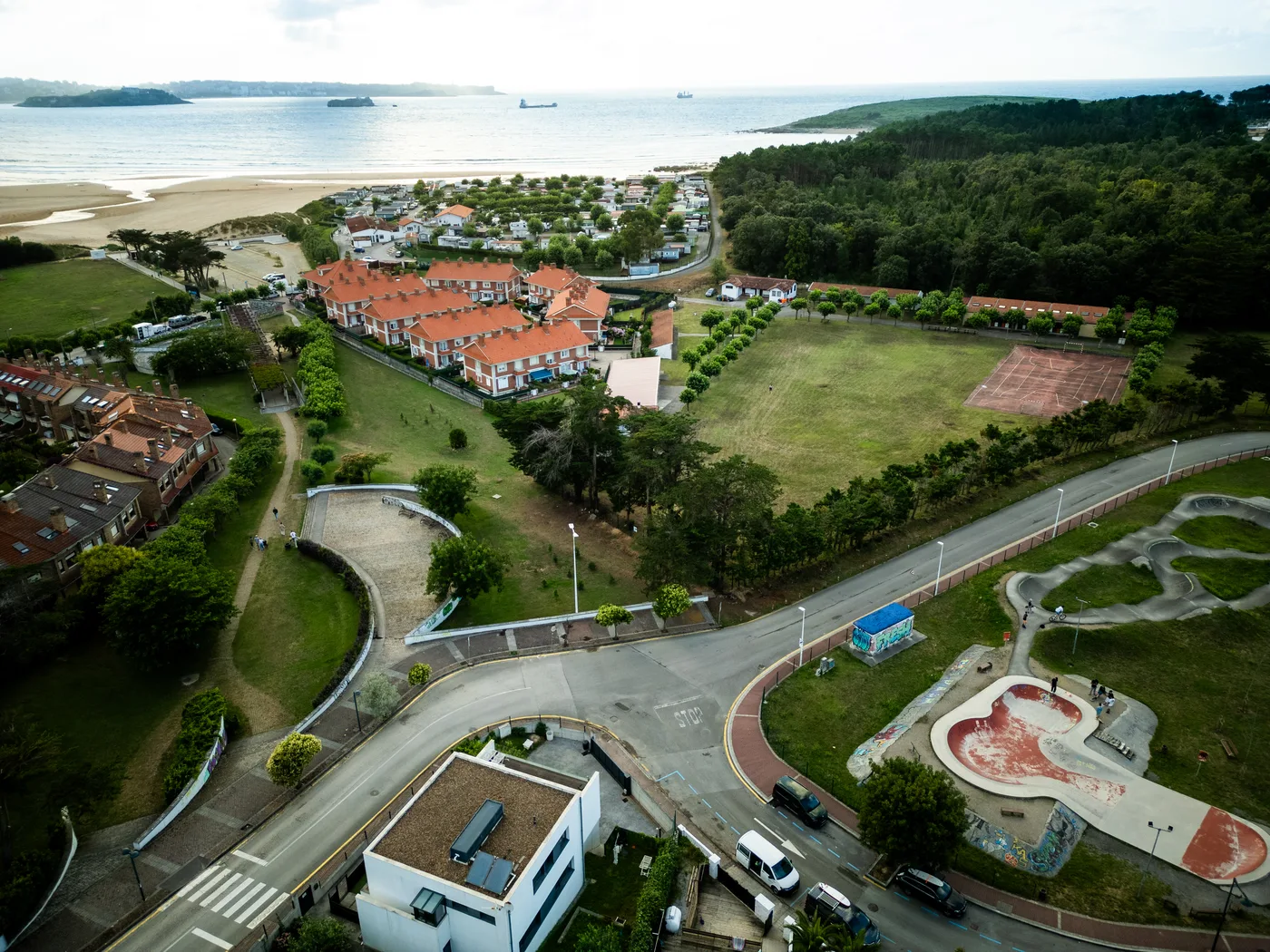
It’s the easiest place in Spain to learn. Somo Beach is a 2-kilometre arc of sand with a soft, forgiving inside section that runs for hundreds of metres at low tide. The whitewater here has been the first wave for thousands of Spanish surfers. Surf schools run on the dune line, the water hits 22 °C in August, and the camps in town walk straight to the beach.
The mountains are an hour away. The Picos de Europa starts a 60-minute drive south and offers proper alpine terrain: 2,500-metre peaks, beech forests, a cable car at Fuente Dé, via ferratas and trail running. On flat days or rest days, surfers go inland. No other Spanish surf region has this proximity to mountains.
The food is Atlantic-Spanish, less hyped than Basque. Cantabria has its own seafood culture: anchovies (anchoa) from Santoña are the regional pride, the cocido montañés is a hearty mountain stew, and the cheese (Quesucos de Liébana, Picón Bejes-Tresviso) is among the country’s best. Less Michelin-stars-per-block than San Sebastián, more local-tavern depth.
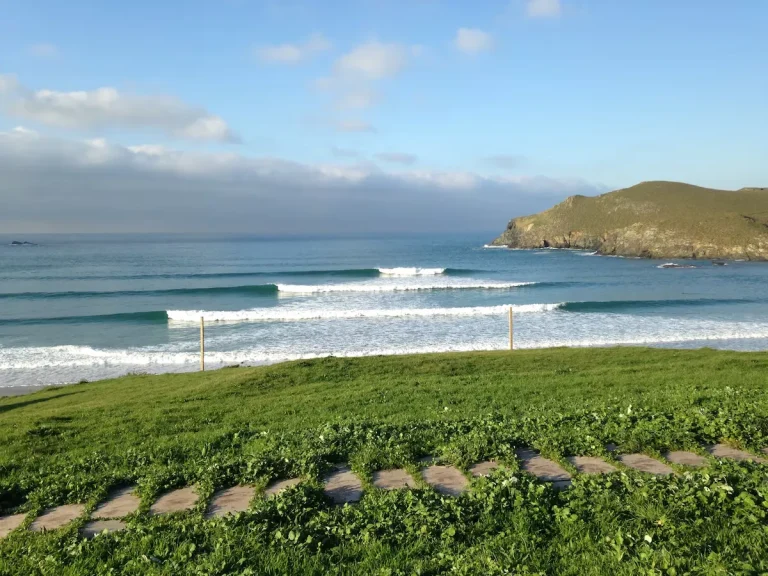
Somo is the headline beach. Two kilometres of sand on the south side of Santander Bay, facing north. The wave is mostly a beach break with multiple peaks across the length of the beach: more shape and size at the east end (towards Loredo), softer at the west end (towards the rivermouth and the ferry).
The inside section is Cantabria’s first-day-classroom: shoulder-high whitewater that breaks for 50 to 100 metres on a small day, with shallow sand bottom and a gentle taper. Most surf schools in town use the inside as their primary teaching zone. The outside, particularly at the east end, holds bigger swell with cleaner walls.
Best for: beginners year-round, intermediates on bigger swells. Avoid: dead high tide on small days at the inside (the inside backs off); deep August weekends if you want any space.
Loredo is Somo’s quieter eastern neighbour, separated by a small headland (Cabo del Cuerno). The beach is shorter than Somo but tends to be slightly more powerful, with a small reef section called El Brusco at the eastern end that picks up swell when Somo flattens. Loredo gets less weekend traffic than Somo because it’s a 5-minute drive past the busier town.
For a learner, Somo and Loredo are functionally similar: both are beach breaks with surf schools, both walking distance to camps. Intermediates lean towards Loredo for its slightly more shape-defined waves and the El Brusco reef on the right swell.
Best for: beginners and intermediates. The “Somo without the Sunday tourists” version. Avoid: the El Brusco reef at low tide if you don’t know the rocks.
Suances is half an hour west of Somo, a more open-ocean exposure. The headline wave is Playa de los Locos, a left-hander with more power and shape than Somo. Suances also has Tagle Beach which holds size in winter swell.
Suances is the intermediate’s break in Cantabria when conditions are good. It is harder to learn here than Somo because the waves are stronger and the beach is shorter. The drive from Somo is 30 to 40 minutes; most surfers visit on a day trip rather than basing here.
Best for: confident intermediates. Avoid: as a first-trip beginner base.
West of Santander on the way to Suances, the Costa Quebrada (Broken Coast) is a stretch of cliff-fronted bays and headlands. Playa de Valdearenas (also called Liencres) is the main surf beach here: an open-ocean sand stretch backed by pine forest dunes, more committing than Somo and prone to victory-at-sea conditions in onshore winds.
Local Cantabrian surfers use Valdearenas as their alternative to Somo when Somo is too small or too crowded. For visitors, it’s a worthwhile day-trip from Somo, especially if you want a beach with no town infrastructure on it.
Best for: intermediates wanting space. Avoid: as a learner spot.
La Maruca is a small reef break right under Santander city’s western cliffs. Advanced surfers only, with sharp rocks, fast take-offs, demanding paddle. It works on solid winter swell with offshore wind. Worth knowing about but not a beginner option and not where you spend your week.
Best for: experienced surfers who like reef. Avoid: everyone else.
The Cantabrian coast surfs year-round but the experience changes a lot by season.
June to September is the Cantabrian beginner window. Water 18 to 22 °C, daily small clean waves at Somo, surf schools at full operation, town buzzing with summer crowds. This is when most learners come and when the camps fill.
September to November is the sweet spot for intermediates. Bigger autumn groundswell at Loredo and the east end of Somo, water still 17 to 19 °C, weekends quieter than summer. Suances and Valdearenas come into their own.
December to February is wild and committed. 4/3 wetsuit, sometimes 5/4 in deep January, cold mornings, stormy days. La Maruca and the Costa Quebrada peaks come alive. Most camps run reduced winter operations or close. Beginners look elsewhere this season.
March to May is the shoulder. Variable swell, water still cool but warming, lineups at their quietest. Decent for intermediates with flexibility on dates.
Two camps cover the Cantabrian surf coast on Waverick. Different formats, both walking distance to the beach.
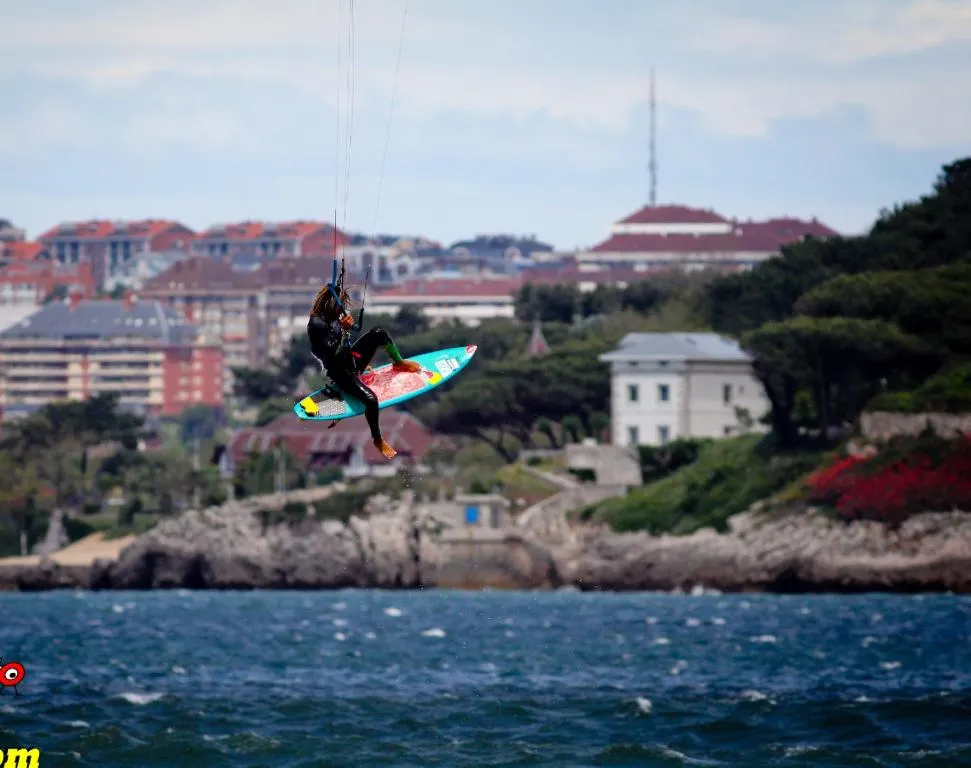
Surf To Live sits in central Somo, walkable to the beach in 5 minutes. Format: shared dorm or private rooms, weekly programmes built around Free Surf or Surf Coaching, daily lessons with video review, three meals, airport transfer from Santander Airport (SDR). The camp also offers extras like kitesurf lessons. The vibe is social, mid-twenties to mid-thirties dominant, English and Spanish spoken in the house.
Surfbase Loredo is in Loredo proper, with a wider room mix: private double, twin, triple, and shared. Programmes include Coaching, B&B, and Free Surf, with surf lessons and equipment rental on every package. The format suits visitors who want a Loredo base and slightly more independent rhythm than the social hostel pace at Surf To Live.
Both camps are easy starts for someone who has never surfed. Surf To Live skews younger and more social. Surfbase Loredo gives you more privacy and slightly more flexible meal arrangements. For a family or a group of friends wanting separate rooms, Surfbase Loredo is the better fit.
Slightly cooler than the Basque Country, slightly warmer than Galicia.
Summer (June to September): 3/2 covers the season. Some surfers in deep August get away with a shorty.
Shoulder (October to mid-December, March to May): 4/3. A 4/3 with detachable hood covers the season.
Winter (mid-December to February): 4/3 with boots if you feel the cold; 5/4 for serious sessions in deep January. Water can drop to 12 to 13 °C in the coldest weeks.
Both Cantabrian camps include wetsuit and board rental in their packages.
Cantabria has its own airport plus easy reach from Bilbao.
Santander (SDR) is the regional airport, 20 minutes from Somo by car or via the ferry. Ryanair and EasyJet run UK and Ireland routes here in summer. The airport is the simplest option if there’s a direct flight from your origin.
Bilbao (BIO) is the bigger hub if Santander doesn’t have a direct flight. 90 minutes by car to Somo, with motorway most of the way. Most camps offer transfers from either airport in their package.
The Somo-Santander commuter ferry (Los Reginas) crosses the bay every 30 to 60 minutes and takes 15 minutes. It is how most surfers get into Santander city for an evening or a supermarket run. The fare is around €3 each way and the ferry is a small local feature in itself.
Budget: €25 to €50 per night. Shared dorm with surf lessons, three meals, transfer included. Both camps fit this band on shared accommodation. Best for solo travellers comfortable in a 6 to 12-bed dorm.
Mid-range: €60 to €100 per night. Private double or twin room with daily coaching, video review, board rental. Surfbase Loredo’s private rooms sit comfortably here.
Flights: €60 to €150 return on Ryanair, EasyJet or Vueling. Add €10 to €20 per day for food outside the camp if you eat in Santander or Somo town. Surf gear is included.
A typical first-time week (7 nights, shared dorm, full board, daily lessons, transfer) lands at €350 to €500 plus flights.
Cantabria is where most Spanish surfers learn to surf. Three reasons it works for first-timers better than its neighbours.
The wave shape. Somo’s inside section is a soft sand-bottom whitewater zone, knee-to-shoulder height most days, that runs for 50 to 100 metres with a gentle taper. There’s no shallow shorebreak surprise, no sudden boil over a reef, no current pulling sideways. You stand up, you ride to the beach, you walk back out. It is the most learner-honest beach in Spain.
The water temperature in summer. 18 to 22 °C from late June to mid-September means you can wear a 3/2 or even springsuit. Shorter sessions don’t require shivering recovery in winter wetsuits. Beginners need long water time and Cantabrian summer water gives it without the cold burnout.
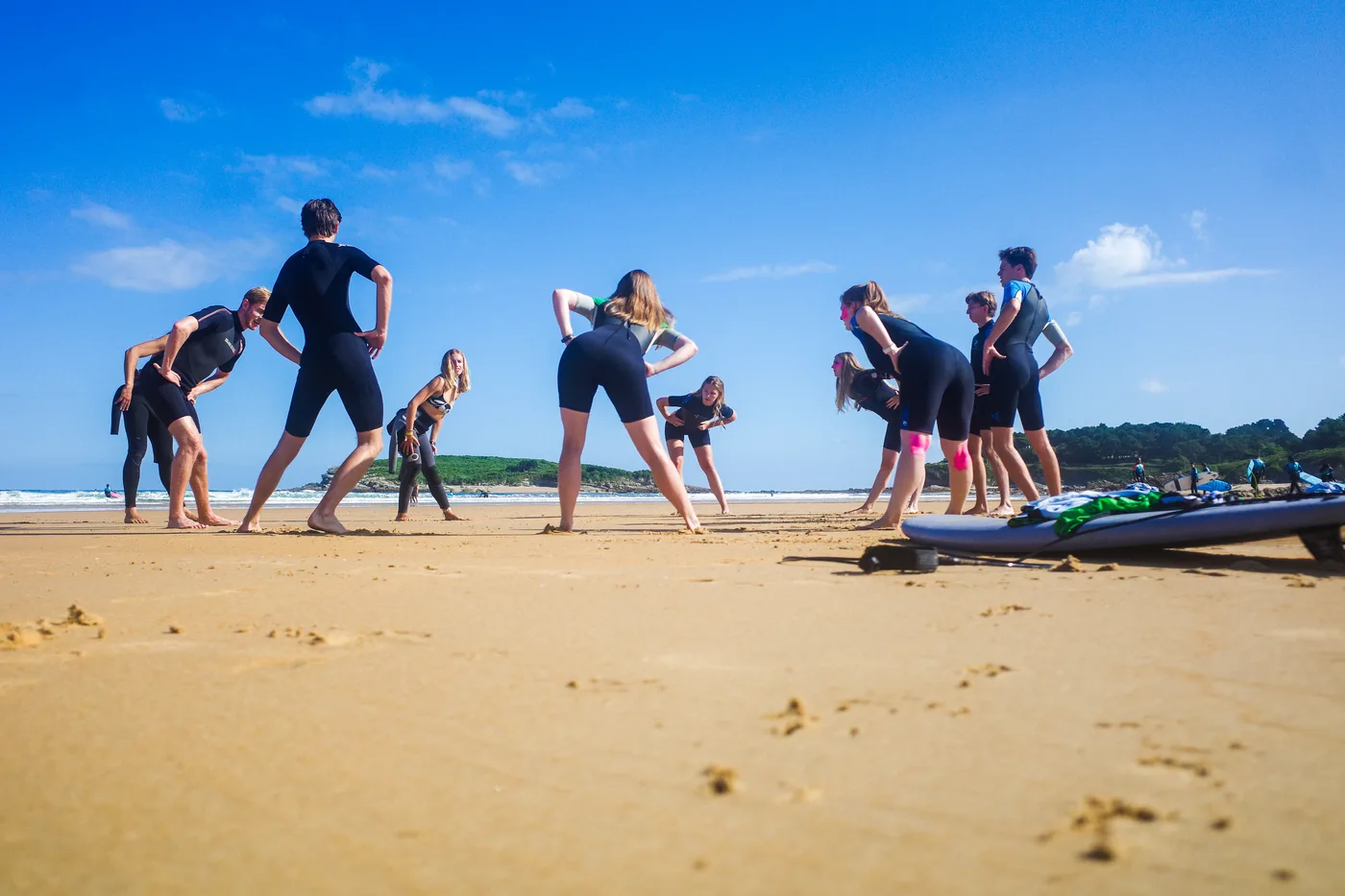
The camp + school coverage. Surf schools work the dune line all summer. The Waverick camps run lessons every morning, free surf in the afternoon, video review the same evening. Boards and wetsuits are included, so a first-time surfer arrives with luggage and is in the water by 11 the next morning.
What a first week looks like. Day 1: arrival, beach orientation, equipment fitting. Day 2: first lesson at the inside, mostly whitewater push-ups and pop-up practice on the sand. Day 3: first standing rides, often eight or nine in the session. Day 4: rest day or short session, video review, maybe a Picos de Europa drive or a Santander day. Day 5-6: outside small days, building up. Day 7: free surf at the inside, the moment when the trip clicks. Most learners go home with maybe 12 to 20 standing rides over the week and the muscle memory to come back for round two.
Common first-timer mistakes. Trying to surf the outside too soon (stay inside for at least 3 sessions). Not stretching after sessions (paddling muscles are not gym muscles). Skipping the video review (you correct ten times faster when you see your own pop-up). Going alone instead of staying with the school group (the coach gives you the right wave to take).
Cantabria is not just a beginner zone. Intermediates have plenty.
The east end of Somo and the El Brusco reef at Loredo handle bigger autumn swell with cleaner walls than the inside. Suances has the most defined left-hander in the region for someone who wants to work on rail surfing. Valdearenas (Liencres) is a long open beach for free surf. La Maruca for advanced reef. Plus Mundaka is a 90-minute drive east when the rivermouth is firing, a guided day-trip option from either Cantabrian camp.
Camps suit this level too. Surfbase Loredo’s Surf Coaching package and Surf To Live’s Surf Coaching are the right pick: daily guided sessions, video review, session-planning briefings. Both camps’ coaches know which spot will work that day.
Cantabria’s non-surf travel layer is one of its strongest cards.
Picos de Europa. An hour south by car. The cable car at Fuente Dé takes you to 1,800 metres in 4 minutes for an alpine panorama. The villages of Potes, Cosgaya, and Espinama are good lunch stops with mountain food. For trail walks, the Cares Gorge and the Naranjo de Bulnes circuit are in the bigger time category. A flat-day rest day in the Picos is one of Spain’s best surf-trip resets.
Santander city. 15 minutes by ferry from Somo. The Magdalena Peninsula has a beach and a former royal palace. El Sardinero (the city’s eastern beach) is a shopping and dining strip. The Botín museum is a Renzo Piano riverfront. For an evening or a wet-day half-day, Santander is a quick, reliable break.
Santoña and Cantabrian food. Anchovies from Santoña (45 minutes east of Somo) are the regional speciality, sold by tin from local producers like Don Bocarte and Conservas Codesa. Cocido montañés is a hearty bean-and-pork stew served in mountain villages. Quesucos de Liébana and Picón Bejes-Tresviso cheeses come from the Picos. A Cantabrian food tour fills a day, and most camps’ meal plans cover at least one regional speciality through the week.
For most first-time surfers, yes. Somo and Loredo have soft sand-bottom inside sections, surf schools on the dune line, and water that hits 22 °C in August. The wave is more forgiving than the Basque Country (Zurriola gets crowded and the local etiquette is stricter) or Galicia (cooler water and more powerful swell). The two Waverick Cantabria camps walk straight to the beach and run weekly programmes built around morning lesson plus afternoon free surf.
For beginners: late June through mid-September for the warmest water (18 to 22 °C) and the most consistent small clean days. For intermediates: September to November for autumn groundswell with cleaner shape at the east end of Somo and at Loredo. Winter (December to February) is cold and stormy, suited only to confident surfers in 4/3 or 5/4 wetsuits. March to May is variable but quiet.
Surf To Live in Somo for a social hostel format with weekly programmes, shared dorms or private rooms, and the daily town buzz. Surfbase Loredo for a slightly quieter base with a wider mix of room types (private, twin, triple, shared) and a more independent rhythm. The two beaches are 5 minutes apart by car and most coaches will move the group between them based on conditions. For a family or a group wanting separate rooms, Surfbase Loredo is the better fit.
Budget: €350 to €500 for a 7-night shared-dorm package with three meals, daily lessons, surf gear and airport transfer. Mid-range: €500 to €800 for the same week in a private room. Add €60 to €150 for European return flights and €70 to €140 for incidentals (eating out, ferry to Santander, day trips). Most travellers land at €600 to €900 all-in for a first-time Cantabrian week.
Reasonably. Surfing uses paddling muscles most people don’t train for, so the first 3 days are usually the hardest physically. If you swim regularly or do upper-body workouts, you’ll find it easier. If you don’t, expect sore shoulders and arms for the first few days. Cantabrian beginner waves are gentle enough that you don’t need swim-school confidence: the inside is shoulder-deep and the whitewater pushes you forward, not under. Most first-timers manage 60 to 90-minute lessons by day 3.
Yes. Cantabria’s beginner-friendly inside works for kids 8 and up with adult supervision. Both Waverick camps will accommodate children in lessons, though neither runs a dedicated junior programme like Alawa Pantín in Galicia does. For a kids-focused trip, Galicia (Alawa) or the Familycamp Zarautz family-tent setup in the Basque Country are better-suited. For a family where parents want to learn alongside teenagers, Cantabria works fine.
Cantabria is the gentlest of the three for beginners and the easiest to access from a single airport. The Basque Country has more wave variety (city beach, river-mouth point, beach breaks) plus the strongest food culture in Spain (San Sebastián). Galicia has the emptiest lineups and the wildest water but is the least beginner-suited. For a first surf trip, Cantabria. For variety and pintxos, the Basque Country. For empty waves and Atlantic raw, Galicia.
An hour south of Somo by car. The Fuente Dé cable car takes you to 1,800 metres in 4 minutes for a high-mountain panorama and an easy 30-minute walk to a viewpoint. Half-day trips work well: Potes for lunch, Fuente Dé in the afternoon, back to Somo for sunset. For longer hikes, the Cares Gorge or the Naranjo de Bulnes need a full day. Most rental cars at Santander airport are €30 to €50 per day. Bring layers: the mountains are 10 °C cooler than the coast.
For broader regional context covering the Basque Country and Galicia alongside Cantabria, see our Northern Spain surf guide. To compare the seven Spain surf camps with prices and live availability, visit the Spain surf camps directory or the Spain destination guide.

 English
 Français
  Deutsch
  Español
  Italiano