 By Steeve
Rabat is north Morocco’s surf and cultural capital rolled into one. Fifty kilometres of Atlantic coast holds six named breaks between Plage des Nations and Bouznika, with a UNESCO medina and 12th-century kasbah sitting right at the surf doorstep. It’s the smart pick for travellers who want waves plus culture, friendlier crowds, and a clean, walkable city base. Currents run stronger and water sits a few degrees cooler than Taghazout. Fly into Rabat-Salé (RBA) for a 20-minute taxi to the beach, or Casablanca (CMN) for a one-hour drive up the coast.
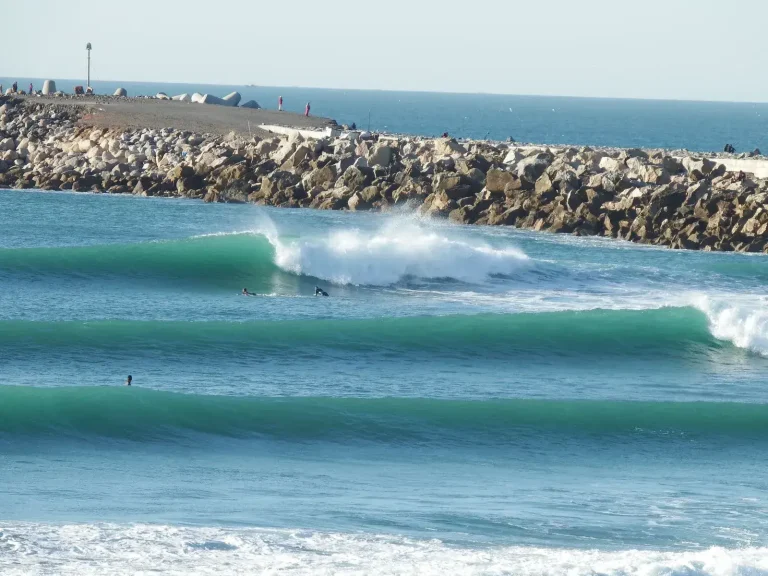
Taghazout owns the postcard right-handers, but Rabat plays a different game. The coastline faces northwest, which means it picks up Atlantic swell when the southwest-facing points down south go flat. You get a mix of beach breaks (Oudayas, Plage des Nations, Skhirat, Temara), jetty-influenced peaks (Oudayas, Medhiya), and a couple of reefs (Contrebandiers, Doura). Flat days are rare.
Summer (June to August) brings smaller, friendlier waves and water up to 25 degrees, board shorts territory and ideal for first lessons. Winter (October to March) lights up with stronger groundswells, sharper points and water around 16-17 degrees, so pack a 3/2mm or 4/3mm wetsuit. Spring and autumn sit in the sweet spot for intermediates.
The lineup runs more local than touristy. Oudayas can get busy with city locals and schools, but Plage des Nations and the breaks around Harhoura stay quiet on most days. You also get a cleaner, calmer city than Marrakech or Casablanca, plus Harhoura just south, a leafy beach suburb with cafes, forest, and short drives to every spot in the region. For a wider sense of how Morocco’s regions compare, the best surf spot in Morocco guide stacks Rabat against Taghazout, Imsouane and Essaouira.
| Spot | Type | Best tide | Level | From medina | Best for |
|---|---|---|---|---|---|
| Oudayas Plage | Beach + jetty | Mid | All levels | 5 min walk | Lessons, city sessions |
| Harhoura / Temara | Beach + reef | Low to mid | Beginner to intermediate | 15 min drive | Quieter beach sessions |
| Plage des Nations | Beach break | Mid | Intermediate to advanced | 25 min drive north | Bigger days, empty peaks |
| Skhirat Plage | Beach break | Mid to high | Beginner to intermediate | 30 min drive south | Summer surf, easy parking |
| Bouznika | Beach breaks | Low | Beginner to intermediate | 40 min drive south | Progression, surf schools |
| Medhiya | Jetty / rivermouth | Mid | Intermediate to advanced | 45 min drive north | Winter shelter, bigger swells |
Want to book a stay close to the action? Browse verified options on the Rabat destination hub for camps, lessons and the full city overview.
The most accessible spot in the region, right by the Kasbah and the Bouregreg rivermouth. It’s a beach break with multiple peaks, and the left near the jetty often picks up the cleanest line. Friendly for all abilities on small days, but expect company: locals, schools and weekend warriors all funnel here. Water quality dips after rain thanks to river runoff. Best in autumn and winter on N, NW or W swells.
Harhoura sits inside the Temara prefecture, a coastal stretch south of Rabat with a relaxed beach-town feel. It’s an easy 15-minute drive from the centre and a smart base if you want quieter sessions plus solid food options.
Plage de Temara: Exposed beach break with right-hand waves over a coral reef shelf. Quality varies, sometimes clean, sometimes sloppy. Works best on low to mid tides, NW swell with ESE offshore wind. Generally uncrowded.
Plage Les Princesses: Another beach break option in the Skhirate-Temara stretch, good when the bigger spots get busy.
Contrebandiers: A reef break that fires fairly consistently. A nice right that suits progression, especially at low tide. Worth checking when Oudayas gets crowded.
Oued Cherrat: A local favourite beach break close to Harhoura. If you don’t want to drive far, this is the easy call, normally quieter than the headline beaches.
Exposed, consistent beach break that favours rights. It picks up more swell than the city spots and can throw strong rips, so it leans intermediate to advanced. Crowds are light most days. Works year-round, but the cleanest combos are NW swells with E winds. Winter delivers the most consistent quality waves, summer mellows out for cleaner small-day sessions.
Beach break near the Royal Palace, often the pick for summer’s smaller swells. Suits beginners and intermediates, and the parking is easy. Water temps swing from 16-17 degrees in March up to 22-25 degrees in August. Summer brings beach tourism crowds, but the surf zone stays manageable. Bonus: head into Bouznika afterwards for grilled fish at the seafront restaurants, a properly good post-session reward.
A run of beach breaks 40 minutes south of central Rabat, often the warm-up choice in summer when the swell goes small. Home to La Crique Surf School, so it’s a steady pick for beginners and intermediates. The right-hander at La Crique works well on low tide and rewards patience. Great if you’re building from foam-board to fibreglass.
Long rivermouth jetties shelter the lineup from wind and oversized swell, which makes Medhiya a smart winter call when everywhere else is closing out. Waves can still pack punch, so check the size before paddling. Suitable for various levels depending on the day. Charatan, just inside Mehdiya, throws the best tubes in the region, but only attempt it if you’re comfortable in powerful water. Can get crowded in summer when the city escapes to the coast.
| Month | Weather | Swell | Water | Crowd | Best for |
|---|---|---|---|---|---|
| January | 15-18C, occasional rain | Big, consistent NW | 16-17C | Low | Advanced, Medhiya shelter |
| February | 15-18C, cool | Powerful winter swell | 16-17C | Low | Intermediate to advanced |
| March | 17-21C, breezy | Solid, cleaner days | 16-18C | Low | Intermediate, progression |
| April | 18-22C, fresh | Mid-size, dropping | 17-19C | Low to medium | All levels, fewer crowds |
| May | 20-24C, warming up | Smaller, friendly | 18-20C | Medium | Beginners, intermediates |
| June | 22-26C, sunny | Small, mellow | 20-22C | Medium | Beginner lessons, families |
| July | 24-29C, hot | Smallest of year | 22-24C | High | First-timers, board shorts |
| August | 25-30C, hot | Small, occasional pulse | 22-25C | High | Beginners, holiday surf |
| September | 22-27C, cooling | Building again | 21-23C | Medium | All levels, sweet spot |
| October | 20-24C, mild | Cleaner groundswells | 19-21C | Low to medium | Intermediate, uncrowded |
| November | 17-21C, fresh | Consistent NW | 18-20C | Low | Intermediate to advanced |
| December | 15-19C, rainy spells | Big winter pulses | 17-18C | Low | Advanced, Plage des Nations |
Oudayas Plage is the obvious classroom, a friendly beach break with city access and a row of schools running daily lessons. Group lessons typically run 25-35 euros for two hours, including board and wetsuit, with certified instructors. Smaller spots like Skhirat and Bouznika run quieter classes if you want fewer bodies in the water.
Schools listed on Waverick include Rabat Surf Club and Rabat Surf School at Oudayas, La Crique Surf School in Bouznika, and Skhirat Surfschool further south. Each one provides boards, wetsuits and instructors certified by the Moroccan surf federation (FRMS) or ISA. For full pricing, instructor profiles and live booking, head to the Rabat destination hub, the booking-side counterpart to this guide.
If you’re planning a longer trip and want to combine Rabat with the south, check the Taghazout to Marrakech transport guide for the drive down, and the 13 Morocco adventures piece for ideas beyond the lineup.
Rabat and its coast cover more accommodation styles than your average surf town, from medina riads to beach villas in Harhoura.
Rabat Surf Camp sits in the medina, a short walk from Oudaya beach, from 55 euros a night. Further south, an uncrowded camp in Bouznika runs from 130 euros a night and ferries guests to the quieter waves of northern Morocco. Browse current availability and prices on the Rabat destination hub or filter the wider Morocco surf camps list.
Budget picks like Riad a la Belle Etoile and Dar El Mouhit start around 43 euros a night. Mid-range and upper-end choices include Riad Najiba, Riad Almazhar, Riad El Maati, Dar El Kebira and Riad Kalaa, with more amenities, atmosphere and breakfast usually included.
Budget to moderate: Hotel Velleda, Hotel Oscar, Hotel Mercure Sheherazade, Atlantic de l’Agdal Hotel. Mid-range to superior: ONOMO Hotel Rabat Terminus, NJ Hotel Rabat, Rihab Hotel, Majliss Hotel Downtown, with prices usually 80-120 euros plus. Luxury: Hotel La Tour Hassan Palace, Sofitel Rabat Jardin des Roses, Rabat Marriott Hotel, The Ritz-Carlton Rabat, and Conrad Rabat Arzana in Harhoura.
Self-catering wins for groups and longer stays. Harhoura is the prime zone for beachfront rentals, apartments and villas, with a quieter feel than central Rabat and quick access both north and south. Airbnb and Booking.com both list dozens of options. Locals often base themselves here for the balance: morning surf, afternoon medina, sunset drinks with sea view.
Focus: Rabat’s core culture plus the city break. Good fit for shorter stays or a stop on a longer northern Morocco trip.
Stay: A riad in the medina for walkability (budget: Riad a la Belle Etoile; mid: Riad El Maati).
Transport: Walk the medina and kasbah, Petit Taxis (blue, metered) or the tram for longer hops. Airport transfer by taxi (around 150 MAD) or airport bus (25 MAD).
Surfing: Walk or short taxi to Oudayas Plage. Book lessons with Rabat Surf Club or Rabat Surf School via Waverick. Aim for morning sessions in summer for cleaner conditions.
Culture: Day 1, Kasbah des Udayas (blue streets, Andalusian Gardens, Oudayas Museum, Cafe Maure views), then the medina, Grand Mosque exterior, Souk Sebbat and Rue des Consuls for rugs, leather, ceramics and metalwork. Day 2, Hassan Tower and the Mausoleum of Mohammed V, then a taxi or tram to Chellah Necropolis (Roman and Islamic ruins, plus storks). Day 3 (optional), Mohammed VI Museum of Modern and Contemporary Art or the Rabat Archaeological Museum, plus a short boat across the Bouregreg to explore Sale’s medina.
Food (budget focus): Dar Naji at the medina entrance for traditional Moroccan, Al Shami for Syrian falafel, Chez Hajja for affordable local plates. Street food the rest of the time: sfnj donuts, maakouda sandwiches, rziza bread, raib yogurt. One mid-range splurge at Dar Rbatia or Dinarjat works nicely.
Focus: a wider sweep of surf spots north and south of Rabat, plus city highlights. Car rental required.
Stay: Apartment or villa in Harhoura for coastal access in both directions, or a hotel in Agdal with easier parking (Smarts Hotel Agdal, Soundouss Hotel).
Surfing: Day 1, Oudayas Plage or the breaks around Harhoura and Temara. Day 2, drive south 15-30 minutes to Skhirat and Bouznika, smart in summer or for less experienced surfers. Day 3, drive north 30-45 minutes to Plage des Nations (bigger, more exposed) and Medhiya (jetty protection, winter winner).
Dar Naji: multiple locations including near the medina’s Bab El Had gate. Traditional Moroccan, tagines, couscous and the famous tea pour, excellent value. Al Shami: medina favourite for Syrian food, the falafel is the move. Chez Hajja: medina spot known for authentic dishes at low prices.
Street food: hunt the medina for sfnj (donuts), maakouda (potato fritter) sandwiches, sardine sandwiches, rziza (stringy bread), habricha sandwiches, raib (yogurt) and pastries. In Agdal: the Red Awning Place on Avenue Michlifen for cheap traditional breakfasts, Sahbi for juices and paninis, Babel or Kenefe House for Iraqi and Middle Eastern (lentil soup or salad under 50 MAD), Snack Yassmine near the Mohammed VI museum, plus bocadillo stands like Boca Street on Avenue Atlas.
Le Dhow: dining on a boat moored on the Bouregreg, international and Moroccan menu, river views and cocktails, mains around 150-200 plus MAD. Medina restaurants: Dar Rbatia, Dinarjat, Restaurant Ziryab and Dar Zaki serve traditional Moroccan inside atmospheric riads. Seafood: El Marsa (upper end) or La Table de l’Amiral (mid). Harhoura: Restaurant Miramar for seafood, Dar El Ghazi for brunch, Wakame for sushi and Asian, plus the in-house options at Conrad Rabat Arzana (99 Sushi, La Brise Brasserie, Cafe del Mar).
Morocco is a Muslim country, but alcohol is available for visitors in licensed venues. It’s generally not sold or consumed openly in the medina.
Buying: Carrefour usually has a dedicated section (sometimes basement, shorter hours) for beer, wine and spirits. Atacadao (wholesale, outside the city) also stocks it. Marjane and Acima do not. Dedicated wine shops, locally called caves, exist in Rabat, like the Wine Shop on Avenue Hassan II. Bring ID (passport), cash, and shop before 8pm.
Drinking: Hotel bars are the easy choice for visitors, Sofitel (Amber Bar), Hotel La Tour Hassan, Le Diwan (Le Bar XO), Four Seasons (Bar Atlantique, Laila Lounge), Rabat Marriott. In Harhoura, Conrad Rabat Arzana runs three bars. Licensed restaurants and bars: Le Dhow (riverboat), Upstairs (Irish pub style in Agdal), El Palatino (Spanish tapas), Le Puzzle (Agdal), Baz’Art. In Harhoura, Terracotta Beach and Restaurant Miramar both serve. For a sunset session with a view, Terracotta Beach plus 99 Sushi Bar are the locals’ picks.
Currency: Moroccan Dirham (MAD), closed currency, so pick it up on arrival at an ATM or exchange bureau. Carry small notes for souks, taxis and shops. Visa and Mastercard work at larger hotels, restaurants and stores. Notify your bank before travel.
Language: Arabic (Darija) and Berber are official, French is widely spoken, English is increasingly common in Rabat. Basic French or Arabic (“Bonjour” or “Salam”, “Merci” or “Shukran”) earns you serious goodwill.
Morocco is generally safe for visitors, with Rabat known as calmer and cleaner than Marrakech or Casablanca. Petty crime, pickpocketing and scams happen in crowded medinas, so stay aware and skip the flashy valuables. Harhoura is considered peaceful, with regular Gendarmerie patrols, busier in summer and quieter in winter. Drink bottled or filtered water, choose busy clean stalls for street food, and pack solid travel insurance. Dress modestly outside tourist zones, use your right hand for eating and exchanges, accept mint tea politely, ask before photographing people, and tip 10-15 percent in restaurants. For a sense of regional context further south, the Essaouira and Sidi Kaouki guide covers the next stretch of coast.
Airport: Rabat-Sale (RBA) is the closest, 20 minutes by Grand Taxi (120-150 MAD daytime) or 40 minutes on the AE airport bus (25 MAD to Gare Rabat Ville). The tram does not serve the airport directly. Casablanca (CMN) is one hour south by car or train and runs more international routes if RBA flights don’t suit.
City transport: Petit Taxis (blue, metered), the Tramway for cross-district hops, walking for medina and kasbah. Inter-city: ONCF trains are the strong play. Rabat Ville station connects to Casablanca (around one hour, from 35 MAD), Fes (around three hours, from 90 MAD) and Marrakech (around 3 hours 40, from 130 MAD). CTM buses cover Chefchaouen and the rest.
Yes, especially from May to September. Oudayas Plage, Skhirat and Bouznika serve up smaller, friendlier waves and warm water (up to 25 degrees in August), with surf schools running daily lessons. Spring and autumn shoulder seasons also work for first-timers. Winter gets stronger and pushes most beginners to the calmer days only.
It depends on your level. For beginners, June to August is the sweet spot, small clean waves and warm water. For intermediates and advanced surfers, October to March delivers the most consistent groundswells and the cleanest winter conditions, especially at Plage des Nations and Medhiya. Shoulder seasons (April-May, September-October) are the smartest all-rounders, fewer crowds and decent quality.
Taghazout owns Morocco’s headline right-hand point breaks like Anchor Point and Killers. Rabat trades that for a wider mix of beach breaks, a couple of reefs and jetty spots, plus a cleaner urban base. Crowds are lighter, lessons are cheaper, and the cultural side, medina, kasbah, Hassan Tower, runs deeper. Water is two to three degrees cooler than Taghazout and currents tend to be stronger. Choose Taghazout for pure surf focus, Rabat for surf plus culture.
Yes. Group lessons run roughly 25-35 euros for a two-hour session, including board and wetsuit, with certified instructors at Oudayas, Skhirat and Bouznika. Most schools cap groups at four to six people. For live availability and prices across the region’s schools and camps, head to the Rabat destination hub.
Rabat-Sale (RBA) is the closest, around 20 minutes from the medina and Oudayas Plage by Grand Taxi (120-150 MAD). It runs European routes via Royal Air Maroc, Air Arabia and a few low-cost carriers. Casablanca (CMN) is one hour south by car or train and offers more international flights, often at better prices. Pick CMN if your home airport doesn’t hit RBA directly.
Most of the year, yes. July and August water hits 22-25 degrees, so board shorts or a 2mm shorty work for many. April to June and September to October sit around 18-21 degrees, a 3/2mm wetsuit is the comfortable call. November to March drops to 16-18 degrees, bring a 4/3mm and consider boots on the coldest days, especially early morning sessions.
Rabat is widely seen as calmer and cleaner than Casablanca, including the surf zones. The lineups at Oudayas, Harhoura and Skhirat are friendlier and less crowded than Casablanca’s city breaks, and the streets around the medina feel walkable day and night. Standard travel sense applies, watch your kit on the beach, skip the flashy jewellery, and stick to busy areas after dark.
The Rabat destination hub lists every verified camp in the region with live prices, real reviews and instant booking. Options range from a medina-based camp from 55 euros a night (short walk to Oudaya beach) up to a quieter Bouznika spot from 130 euros, suited to surfers who want to chase the less-busy waves of northern Morocco. You can also browse the wider Morocco surf camps list to compare regions.

 English
 Français
  Deutsch
  Español
  Italiano