 By Steeve
Essaouira is Morocco’s second surf hub after Taghazout, and the feel of the place is very different. You get a UNESCO fortified medina, a windswept Atlantic bay, and the long sand point of Sidi Kaouki 25 km south. Five main spots sit inside a 30 km radius, the coast surfs year round, and the heaviest, cleanest swells land between September and April. From April to September the alizé wind cranks every afternoon, which is why this same coast is also Morocco’s kitesurf capital. Beginners feel at home here, the pace is calmer than Taghazout, and you can fly straight into ESU or roll over from Marrakech (RAK) in 2.5 hours.
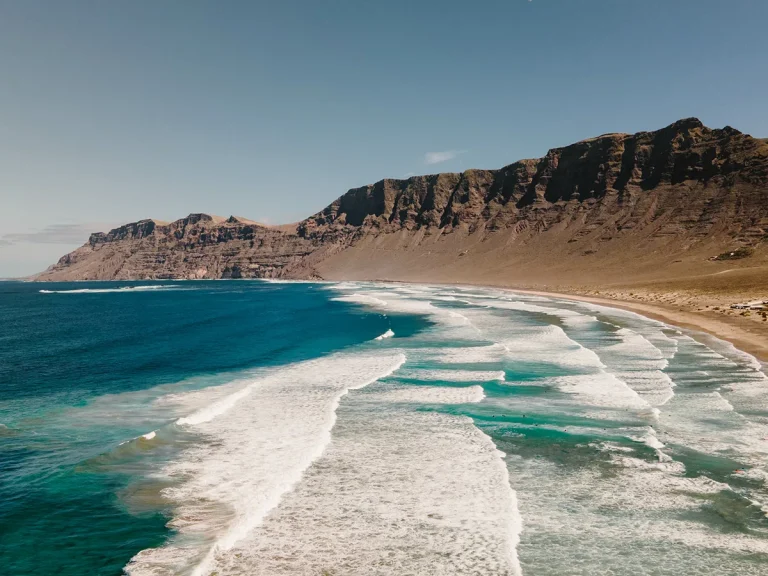
Picture a 30 km stretch of Atlantic coast running from Moulay Bouzerktoun in the north down to Cap Sim, just south of Sidi Kaouki. The medina sits roughly in the middle, with the city bay tucked behind it. North of town the coast turns rocky and exposed; south of town it softens into long sand beaches backed by dunes and argan trees. Five surf spots cover the full range: protected city beach, easy sand-bottom breaks, a long point, and a couple of reefs for stronger days. Most travelers base in Essaouira itself or at Sidi Kaouki village, then move between spots depending on swell and wind.
Here are the five breaks that define the area, from the windiest northern point down to the heaviest southern reef.
A rocky right-hand point that catches every bit of swell going. From April to September the alizé wind hammers it sideshore, so it becomes a kitesurf and windsurf zone (one of the best in the country). Come winter the wind backs off, the swell lines up clean, and you get serious, fast point waves over a reef bottom. Best left to advanced surfers when it’s working.
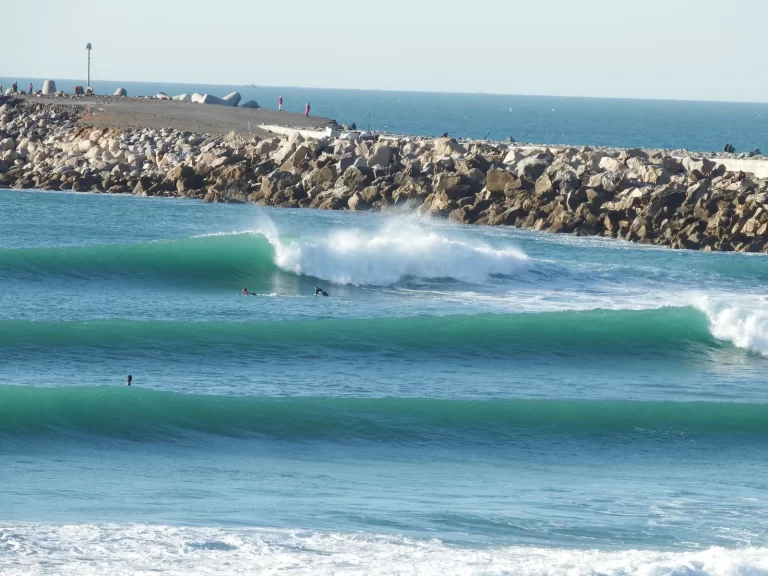
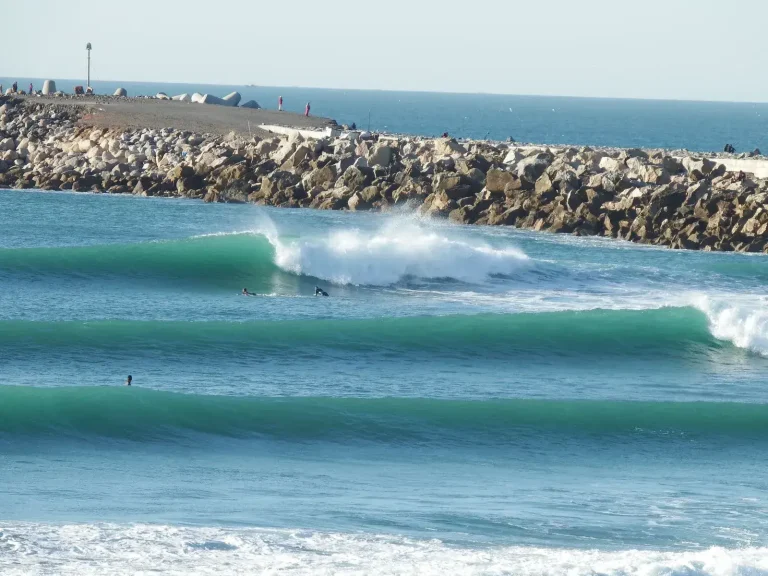
The wide bay right in front of the medina is the most protected stretch on the whole coast. Sandy bottom, gentle waves, plenty of whitewater for first lessons. It gets busy in summer with local kids, schools, and learners, and the wind that ruins surf elsewhere stays much lighter here thanks to the headland.
A long beach break in front of the old Diabat ruins, popular with intermediates and improving beginners. Sand bottom, fewer crowds than the city bay, and a nicer setting if you want to escape the medina buzz. Works on most tides, best with a small to medium NW swell.
The main event for most surf trips. A long soft sand point bleeds into an open beach break, so you get options for every level on the same stretch of sand. Wind tends to be cleaner here than in town, the village is small and chilled, and the spot works year round. If you only had one day, this is where you’d surf.
A reef setup with a powerful left that only really fires on bigger winter swells. Strong currents, urchins on the bottom, and a long paddle out. Advanced surfers only, and you want someone who knows the spot showing you in the first time.
| Spot | Type | Best tide | Level | From medina | Best wind |
|---|---|---|---|---|---|
| Moulay Bouzerktoun | Right point, reef | Mid to high | Advanced | 20 km N | Light S or E (winter) |
| Essaouira Bay | Beach, sand | All tides | Beginner | 0 km | Most directions OK |
| Diabat | Beach, sand | Mid | Beginner / intermediate | 5 km S | Light NE |
| Sidi Kaouki | Point and beach, sand | All tides | All levels | 25 km S | Light N or E |
| Cap Sim | Left reef | Mid to high | Advanced | 37 km S | Light E (offshore) |
Essaouira works all year, but the experience shifts a lot between the windy summer and the swell-heavy winter. Here’s the rhythm.
| Month | Weather | Swell | Wind (alizé) | Crowd | Best for |
|---|---|---|---|---|---|
| Jan | 15 to 18 C, rain showers | Solid, often head high+ | Lighter | Low | Real waves, fewer people |
| Feb | 15 to 19 C | Consistent | Lighter | Low | Same as Jan, slightly warmer |
| Mar | 17 to 20 C | Good shoulder swell | Picking up | Low to medium | Balanced trip |
| Apr | 18 to 22 C | Decent | Strong by afternoon | Medium | Dawn surf, then kite or beach |
| May | 19 to 23 C | Smaller | Strong (25 to 35 knots) | Medium | Kite-focused trip |
| Jun | 20 to 25 C | Smallest of the year | Strong, daily | High | Kitesurf and culture |
| Jul | 21 to 27 C | Small | Strong, daily | High | Kite, family beach time |
| Aug | 22 to 28 C | Small | Strong, daily | Peak | Kite, festivals, learners |
| Sep | 21 to 26 C | Returning, head high possible | Eases off | Medium | Sweet spot: warm + waves |
| Oct | 19 to 24 C | Solid and clean | Light | Medium | Best overall conditions |
| Nov | 17 to 22 C | Consistent winter swell starts | Light | Low | Quality waves, smaller crowds |
| Dec | 15 to 19 C | Biggest of the year possible | Light | Low | Winter swell chasers |
If you only want to surf, target September to early December or February to March. If you want surf and kite in the same trip, lock in May or June. For a full kitesurf trip in summer, read our Kitesurfing in Essaouira guide.
The Atlantic NW swell window is the engine. Wave size sits around 0.8 to 2 m most of the year, and can punch up to 3 or 4 m on the biggest winter days. Water temperature runs 17 to 21 C depending on season. The alizé is the variable that shifts everything: a steady N to NE wind that builds through the morning and tops out 25 to 35 knots through the afternoon from April to September. Mornings can still be glassy if you’re up by 7 am. Sidi Kaouki works on all tides, but most beach breaks here prefer mid to high. Surfline and Magicseaweed both forecast Essaouira reliably; cross-check with windguru for the alizé strength.
Beginners: yes, this is one of the easier spots in Morocco to learn. The bay, Diabat, and the sand sections of Sidi Kaouki give you soft waves and forgiving bottoms. Intermediates: also a strong fit, with enough variety across the five spots to get a different session every day. Advanced surfers: more limited. Cap Sim and Moulay Bouzerktoun deliver on clean winter days, but if you’re chasing classic right-hand points, Taghazout is the better base. Many surfers split a Morocco trip between the two and read our full Morocco spots guide for the round-up.
Surf schools cluster around the city bay and Sidi Kaouki village. Pricing is consistent across town, with small variations by season. Here’s the cheat sheet for 2026:
| Service | Typical price (EUR) | Notes |
|---|---|---|
| Group lesson, 2 hrs | 25 to 40 | Board and wetsuit included, max 6 per coach |
| Private lesson, 2 hrs | 50 to 80 | One on one or one on two |
| 5-day surf camp package | 350 to 700 | Lessons, accommodation, meals, board hire |
| Foamie or shortboard rental, per day | 10 to 15 | Lock available at most shops |
| Longboard or fish rental, per day | 15 to 20 | Limited stock, book ahead in peak season |
| Wetsuit rental, per day | 5 to 8 | Usually free if you take a lesson |
| Kitesurf beginner course (3 to 4 days) | 250 to 400 | Gear and IKO-style progression included |
Most travelers book a 5 to 7 day camp package because the per-day math beats stitching everything together solo. For full reviews and which camp matches your level, see our best surf camps near Essaouira and Sidi Kaouki.
Rental shops in Essaouira and Sidi Kaouki charge 10 to 15 EUR a day for foamies or shortboards, and 15 to 20 EUR a day for longboards or fish shapes. Most camps include boards in their package price. Bringing your own board only makes sense if you ride niche dimensions, a 7 ft+ longboard, or you’re staying more than 10 days. Airlines charge 50 to 100 EUR each way per board, so the math rarely works for a short trip.
From November to March the water sits around 17 to 18 C, so bring a 3/2 mm fullsuit. April to October the water warms to 19 to 21 C and a 2 mm shorty or springsuit is plenty for most. Booties are worth it for the urchins at Cap Sim and the rocky entries at Moulay Bouzerktoun. The Atlantic here is silty rather than reef-clear, but reef-safe sunscreen is still a smart choice. Don’t forget a wind layer for the afternoons: even in August the alizé pulls the perceived temperature down 5 to 8 degrees once you step out of the water.
Essaouira and Moulay Bouzerktoun rank among the best kitesurf spots in Africa thanks to that reliable alizé. From May to September the wind is so consistent that most surfers naturally pick up kite days during the trip, because the afternoon wind kills the surf anyway. Schools in town offer beginner kite courses (3 to 4 day intros, 250 to 400 EUR). For the full breakdown of kite spots, schools, and seasonality, read our kitesurfing in Essaouira guide.
Three ways to land at the surf:
This is part of the reason people come back. The medina is small enough to wander without a map (it doubled as Astapor in Game of Thrones), the port at sunset is its own show with fresh sardines grilled on the dock at about 5 EUR a plate, and the Gnawa music scene is real (the June festival pulls 400,000 people). Climb the Skala fort ramparts for the canon line views, ride camels or quads at Sidi Kaouki, or take a day trip to the argan oil cooperatives inland. A balanced 7-day visit looks like 4 surf days and 3 culture or rest days. If you want to range further, browse our Morocco adventure ideas.
Yes, it’s one of the easier places in Morocco to learn. The city bay, Diabat, and the sand sections of Sidi Kaouki all have soft, forgiving waves with sandy bottoms. Most surf schools here run beginner-focused lessons. The only catch is the afternoon alizé wind from April to September, so beginners should aim for morning sessions or visit in the calmer winter months.
September to early December is the sweet spot: warm water still sits around 20 to 21 C, the alizé wind eases, and the winter swell starts firing. February to March is the second window if you want quieter beaches. April to August has the smallest waves and the strongest wind, so it’s better suited to kite days or learning in the protected city bay.
Five spots cover the area: Moulay Bouzerktoun (advanced reef point, 20 km north), Essaouira Bay (beginner beach, in town), Diabat (soft beach break, 5 km south), Sidi Kaouki (long sand point for all levels, 25 km south), and Cap Sim (advanced reef left, 37 km south). Most trips bounce between the bay, Diabat, and Sidi Kaouki depending on wind and swell.
Taghazout has the bigger right-hand points (Anchor Point, Killer Point, Boilers), so it’s stronger for intermediate to advanced surfers chasing classic Moroccan waves. Essaouira is windier, friendlier to beginners, and has more cultural depth thanks to the medina and Gnawa music scene. Many surfers split a Morocco trip between the two: surf-heavy days in Taghazout, then a few days in Essaouira to slow down and explore.
Yes, year round. The Atlantic is colder than people expect because of the Canary Current. November to March bring a 3/2 mm fullsuit (water 17 to 18 C). April to October a 2 mm shorty or springsuit works fine (water 19 to 21 C). Booties are useful only for the reef spots like Cap Sim. Most surf schools and rental shops include wetsuits with the board.
Expect 25 to 40 EUR for a 2-hour group lesson with board and wetsuit, and 50 to 80 EUR for a private lesson. Full-week camp packages with lessons, accommodation, and meals usually work out cheaper per day than booking everything separately. Check our best surf camps near Essaouira and Sidi Kaouki for current pricing.
Yes, and it’s actually the natural rhythm here from April to September. Mornings are usually glassy and good for surf, then the alizé wind picks up by lunch and the afternoon belongs to kites. Several schools and camps offer combined surf and kite packages. For the full kitesurf breakdown, read our Kitesurfing in Essaouira guide.
Depends on what you want. Essaouira gives you the medina, restaurants, music, and easy access to the city bay and Diabat, but you’ll need to drive 25 km to Sidi Kaouki for the main point. Sidi Kaouki village is small and quiet, you can walk to the surf, and it’s calmer at night. Surfers usually pick Sidi Kaouki; couples and culture-curious travelers usually pick Essaouira. Browse all options on the Morocco surf camps page.

 English
 Français
  Deutsch
  Español
  Italiano