 By Yassine
Morocco is the rare yoga destination that gives you an Atlantic coastline, the High Atlas, and the Sahara within a few hours of one airport. You can roll out a mat on a Taghazout rooftop with Anchor Point peeling below, swap to a riad courtyard in Marrakech, then end the week with a sunrise meditation on the dunes of Erg Chebbi. Add Berber hospitality, around 300 sunny days a year, and prices that undercut European retreats by a wide margin, and you get a yoga retreat in Morocco that does not feel like every other one.
A few things set Morocco apart from the usual European or Asian retreat circuit:
Five zones, five very different weeks. Pick the one that matches what you actually want.
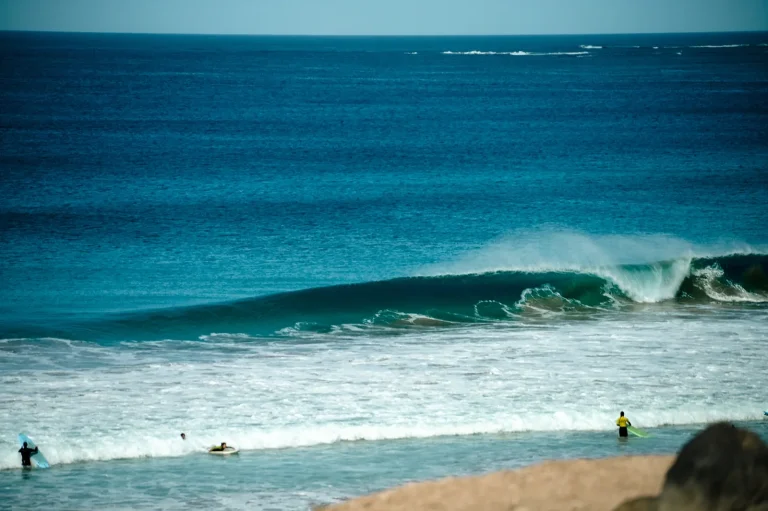
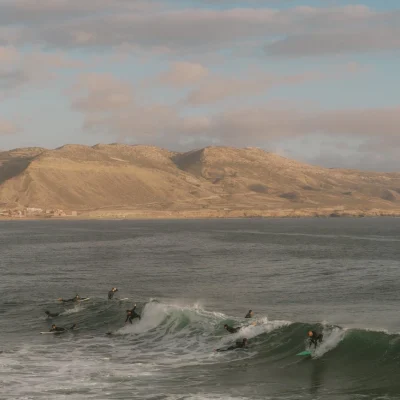
This is where most yoga retreats in Morocco actually happen. Taghazout and its quieter neighbour Tamraght sit on a 10 km stretch of right-hand points: Anchor Point, Killers, Panchos, Devil’s Rock. Sunrise rooftop yoga overlooking the ocean is the format. Surf at 9am, eat tagine at 1pm, sunset Yin at 6pm. Year-round surf, with the cleanest swells from September to April.
If Taghazout feels too busy, Imsouane is its quieter cousin. The Bay is the longest right in Africa, a slow-rolling longboard wave that suits beginners and recovering surfers. Pace is slower, fewer cafes, more time to actually read your journal. Best for first-time yoga retreaters who want headspace, not nightlife.
Essaouira is a fortified medina, a working fishing port, and the centre of Gnawa music. The wind that blows year-round makes it the kitesurf and windsurf capital of Morocco, and a handful of retreats combine yoga with kite lessons. Sidi Kaouki, 25 minutes south, is a one-street beach town that suits anyone who wants flat-out quiet plus the option of a day trip into the medina.
For pure yoga without surf, head inland. Riad retreats inside Marrakech use rooftop terraces and tiled courtyards. Up in the Atlas, the Imlil and Ourika valleys host retreats at 1,500 to 2,000 metres, with hikes, hot springs, and Berber villages on the doorstep. Cold mornings, hot middays, snow on the peaks from January to February. Getting there from the airport takes 1 to 2 hours, and you can read the route in our Taghazout to Marrakech transport guide if you plan to combine coast and mountains.
A niche option. A handful of operators run 3 to 5 night yoga and meditation stays in desert camps near Merzouga, with sunrise sessions facing the orange dunes of Erg Chebbi. Only viable October to April. May to September the desert hits 45 degrees by 10am. Often booked as a tail-end to a coast or Atlas week rather than a standalone retreat.
Different zones, different seasons. The table below cuts through the marketing fluff.
| Month | Atlantic coast | Atlas mountains | Sahara | Surf | Best for |
|---|---|---|---|---|---|
| Jan to Feb | 18C days, cool wet evenings | Snow, cold nights, hut closures | Cool, 18C | Big swell, advanced | Surf and yoga combo, advanced |
| Mar to Apr | 20C, sunny, light wind | Spring bloom, hikeable | Warm days, perfect | Solid all-level swell | Best all-round window |
| May to Jun | 22 to 25C, breezy | Warm, lush | Too hot by midday | Smaller, beginner friendly | Pure yoga, beginner surf |
| Jul to Aug | 25 to 28C, crowded | Hot, very dry | Avoid | Small, inconsistent | Family and budget weeks |
| Sep to Oct | 24C, sunny, low crowds | Warm, ideal hiking | Cooling down | First good autumn swells | Sweet spot of the year |
| Nov to Dec | 18 to 22C, occasional rain | Cold, snow above 2,500m | Cool, clear | Consistent NW swell | Quiet rooms, low prices |
If you can only pick one window, March to April or September to October hit the sweet spot: dry, sunny, surfable, and the Atlas is open.
This is the first call to make. Morocco’s yoga scene is heavily concentrated on the Atlantic coast, which means most retreats here are surf and yoga combos, not standalone yoga weeks. Taghazout, Tamraght, and Imsouane have around 30 active surf camps and almost all of them offer yoga sessions, from twice a week to twice a day.
Pure yoga retreats in Morocco mostly sit inland, in Marrakech riads or Atlas mountain ecolodges. The schedules are denser (two or three classes a day, workshops, meditation blocks) and the price-per-night tends to run higher because there’s no surf cost to absorb.
A simple way to choose:
Schedules vary, but a surf and yoga camp on the Atlantic coast usually runs something like this:
| Time | Activity |
|---|---|
| 07:00 | Sunrise Vinyasa on the rooftop, 60 to 75 minutes |
| 08:30 | Breakfast: msemen, eggs, fruit, mint tea |
| 09:30 | Surf session (lesson or guided), 2 to 3 hours |
| 13:00 | Lunch: tagine, salads, fresh bread |
| 14:00 to 17:00 | Free time: nap, journal, beach, hammam |
| 17:30 | Optional second surf or Yin yoga and meditation |
| 19:30 | Dinner together, family style |
| 21:00 onwards | Tea on the rooftop, early night |
Pure yoga retreats swap the surf block for a longer second practice plus workshops on philosophy, breathwork, or anatomy. Atlas retreats often add a half-day hike on day three or four.
Prices are typically quoted in euros, even though the local currency is the dirham (around 10.5 dirham to 1 euro in 2026). A full week (7 nights) runs roughly:
| Tier | Price per week | What’s included |
|---|---|---|
| Budget | 450 to 650 euro | Shared dorm, breakfast, 4 to 5 yoga sessions, no surf |
| Mid-range | 700 to 1,200 euro | Private or twin room, half board, daily yoga, 4 to 5 surf sessions |
| Premium | 1,400 to 2,500 euro | Boutique riad or villa, full board, daily yoga, daily surf, hammam, excursions |
For reference, a similar week in Portugal runs 900 to 1,800 euro at the same tier, and Bali sits at 1,200 to 3,000 euro. Flights from most European hubs to Agadir or Marrakech are 80 to 200 euro return outside peak season.
A quick decision framework based on who actually books these weeks:
Forget the generic packing list. Here’s what people actually use:
Shaka runs two houses, one in Tamraght with a rooftop overlooking Devil’s Rock, and a smaller setup in Imsouane near the Bay. Their Surf and Yoga package combines two daily surf sessions with sunrise and sunset rooftop yoga, taught by a rotating cast of European and Moroccan teachers. Half board, week-long packages, group sizes capped low. A good fit for solo travellers and couples wanting the full coast experience.
A boutique surf house in the middle of Tamraght with weekly rooftop yoga as an optional add-on. The vibe is intimate, the rooms are tight, and the cooking comes out of a home kitchen rather than a hotel pass. Good for travellers who want a real Moroccan house feel rather than a polished camp atmosphere. Yoga two to three times a week, daily surf, easy walk to Devil’s Rock and Banana Beach.
Ntona sits a few minutes from Imsouane Bay, in the quieter half of the village. Yoga lives in the extra activities list, so you can add sessions to a base surf week rather than book a fixed retreat package. The Bay’s slow-rolling waves suit beginners and longboarders, which makes Ntona a solid choice for anyone using yoga to support surf rather than the other way round.
Browse all Morocco surf and yoga camps to compare packages, dates, and rooms.
Five things to actually check before you book:
If you are unsure, start with a 1-week trial at a mid-tier surf and yoga camp in Taghazout or Tamraght. Easy to extend, easy to swap, no commitment to a fixed style or teacher.
Most retreats run 7 nights, Saturday to Saturday or Sunday to Sunday. For a first-timer, 7 nights is enough to feel reset without over-committing. Deeper change usually needs 10 to 14 nights. Some Atlas mountain retreats run 21-day silent formats for experienced practitioners.
No. Most camps run mixed-level classes with modifications, and surf and yoga retreats in particular skew toward beginners and intermediates. If you have never done yoga, say so when you book, and the camp will steer you to the right teacher. Inland ashram-style retreats are the exception and usually expect some prior practice.
Yes, with sensible precautions. Camps handle airport pickup, transfers, and accommodation, which removes the main friction points. Within camp grounds it is fully relaxed. In villages and medinas, dressing modestly (covered shoulders, long trousers or skirt) makes a real difference. Several Morocco retreats are female-led and female-only, which is a strong option if you want extra ease.
Vinyasa and Hatha are the most common, often paired with Yin for evening sessions. Kundalini and Ashtanga pop up at specialist retreats. Most surf and yoga camps run a flow class in the morning and a softer Yin or restorative session in the evening to balance the surf load.
Combine them if you want a balanced, social, outdoor week. The two pair well: surf opens the body, yoga restores it. Keep them separate if your goal is depth (silent meditation, intensive workshops, philosophy study), in which case head to an Atlas or Marrakech retreat without surf.
March to April and September to October are the sweet spot: warm, sunny, light wind, surfable, and the Atlas is hikeable. Winter (December to February) is quieter and cheaper, with bigger surf and colder mornings. July to August is hot, crowded, and best avoided for the Atlas and Sahara.
Yes, easily. Moroccan cuisine is heavy on vegetables, legumes, and grains, so a meat-free menu is the default at most yoga camps. Vegan needs a flag at booking (no butter in the bread, no honey in the breakfast). Gluten-free is harder but doable if you give the camp notice.
No. Yoga retreats run in English by default. French helps in cities and on transfers, but is not required. Camp staff speak English, Berber, and usually French and Spanish. A few words of Arabic (salam, shukran) go a long way in villages, but no one expects them.

 English
 Français
  Deutsch
  Español
  Italiano